
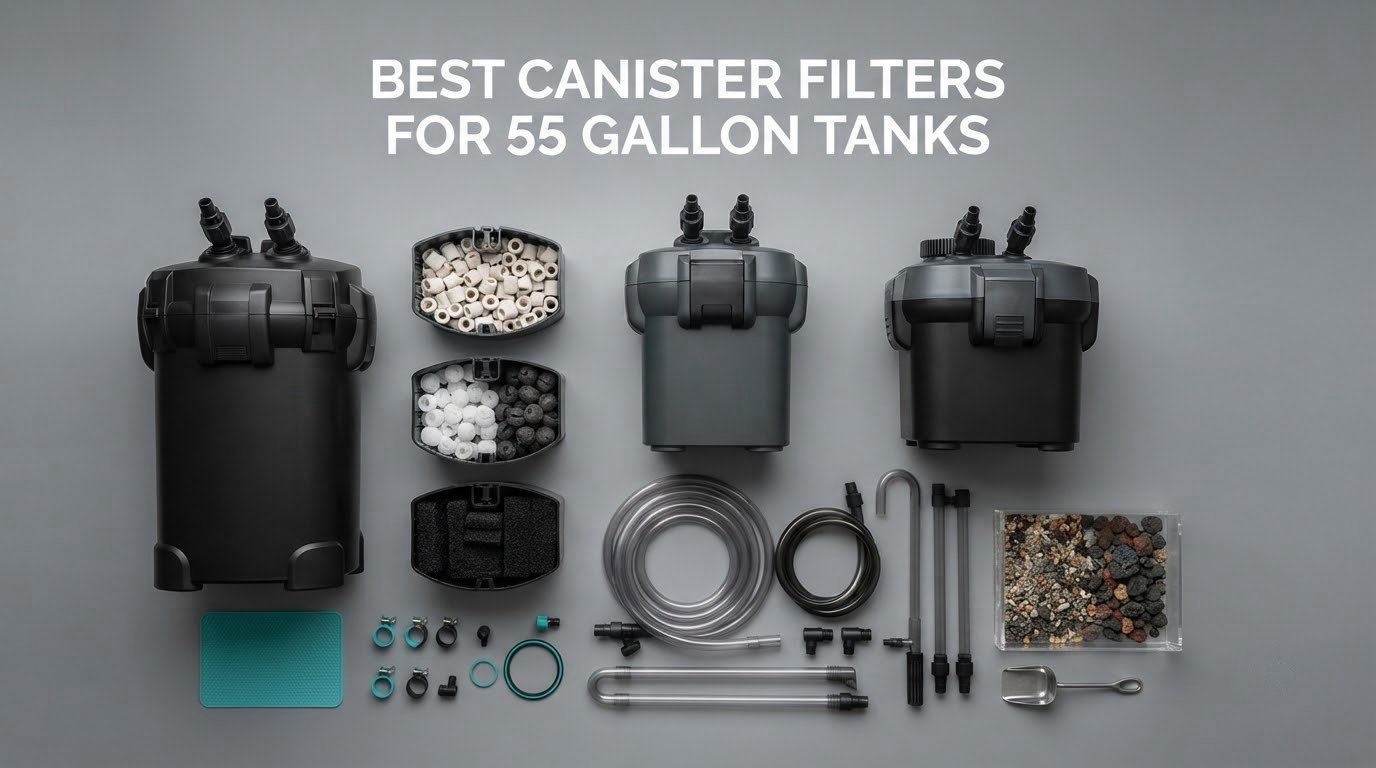
For a standard 55 gallon community tank, the sweet spot is a canister that moves roughly 220 to 320 GPH of rated circulation through your media. That is about four to six turnovers of an actual 55 gallon tank, which is enough circulation to keep water clear without tearing up a sand bed.
That is the whole sizing answer, and it matters more than the number on the box. Most people who overspend or pick wrong are comparing pump output to rated circulation, when only one of those two numbers describes the flow you actually see in the tank.
This roundup covers the ten canisters worth putting under a 55 gallon stand, ranked for the tank size rather than for maximum flow. Every specification comes from the manufacturer’s own listing or product page, not from retailer marketing copy, and the page was last updated in 2026.
A canister sits inside the cabinet, draws water down through a stack of sponge, biological and chemical media, and returns it through a second hose. On a 55 gallon that matters because you can hold several times more media than a hang-on-back filter of the same class, which is the difference between clear water and permanently green water once the tank is fully stocked and planted.
Before the list, two definitions that decide most of these purchases.
Rated circulation is the flow a manufacturer claims after water has passed through the filter media at a realistic head height. Pump output is the free-flow figure measured with no media and no head. Pump output is always the bigger number, sometimes by two or three times, and it is the number most sellers lead with.
Turnover is simply how many times your total tank volume passes through the filter in one hour. A 55 gallon tank with 250 GPH of rated circulation gives you about 4.5 turnovers per hour. Multiply rated circulation by 1.7 to get an approximate turnover figure for these units, which is why a 250 GPH canister and a 475 GPH canister both work on a 55 gallon, just at very different flow strengths.
We live with the trade-offs in the reviews below. Where a unit is too strong for a lightly stocked tank, we say so.
How we picked: every canister on this list is rated by its manufacturer for tanks at or above 55 gallons, comes with a spray bar or directed outlet, and has enough review history to judge. We cross-checked owner feedback on noise, priming difficulty, media capacity and durability, and we weighted long-term reports over first impressions. Forum threads on Aquarium Advice and FishLore consistently name the same core problem with 55 gallon canisters, flow that is too strong for the substrate, so we treat flow control as a purchase requirement rather than an accessory.
Disclosure: as an Amazon Associate we earn from qualifying purchases, at no extra cost to you.
Table of Contents
Top 3 Canister Picks for 55 Gallon Tanks (October 2026)

Fluval 307
- Rated to 70 gallons
- eTEC pump runs up to 25% quieter
- EZ-Lift baskets with center handle

Penn-Plax Cascade 700
- 185 GPH rated to 65 gallons
- Two handled media baskets
- Push-button primer

The Fluval 307 takes the top spot because it lands in the middle of the flow band rather than above it, and because its 16.54 inch body clears the vast majority of 55 gallon stands.
The Cascade 700 is the one to buy if you want everything in one box and a gentler starting flow. The Fluval 407 is the strongest option here for a heavily stocked or high-flow tank, with a bigger pump and more head pressure than anything else in the list.
All 10 Canister Filters for 55 Gallon Tanks in 2026
| Product | Specs | Action |
|---|---|---|
| Fluval 307 Canister Filter |
|
Check Latest Price |
| Penn-Plax Cascade 700 Canister |
|
Check Latest Price |
 Aqueon QuietFlow Canister Filter Aqueon QuietFlow Canister Filter |
|
Check Latest Price |
 Marineland Magniflow 250 Canister Marineland Magniflow 250 Canister |
|
Check Latest Price |
 Marineland Magnum 290 Canister Marineland Magnum 290 Canister |
|
Check Latest Price |
 EHEIM Classic 2213 Canister EHEIM Classic 2213 Canister |
|
Check Latest Price |
 SunSun HW-302 Pro Canister Kit SunSun HW-302 Pro Canister Kit |
|
Check Latest Price |
 Fluval FX2 High Performance Canister Fluval FX2 High Performance Canister |
|
Check Latest Price |
| Fluval 407 Canister Filter |
|
Check Latest Price |
 Penn-Plax Cascade 1000 Canister Penn-Plax Cascade 1000 Canister |
|
Check Latest Price |
Every canister above is rated by its manufacturer for a 55 gallon tank or larger. The differences that matter for your setup are flow strength, media volume and physical height, and those are the criteria used in each review.
1. Fluval 307 – Best Overall for 55 Gallon Tanks
Fluval 307 Perfomance Canister Filter for Aquariums up to 70 Gallons
Rated for tanks up to 70 gallons
9.45 x 7.09 x 16.54 inch body
6 pounds
Three EZ-Lift media baskets
Pros
- Runs quietly enough for a living room
- Steady constant flow and pressure
- Center-handle baskets make media swaps fast
- Energy use comparable to an LED bulb
Cons
- Baskets hold limited volume for very high flow demand
- Heavily stocked tanks need more frequent pre-filter service
The Fluval 307 has been the reference point for 55 gallon canisters for years, and the reason is straightforward: it does not try to be the biggest filter in the room. At 16.54 inches tall and 6 pounds, it is one of the easiest bodies in this roundup to get in and out of a stand, and its flow sits in the range where a lightly stocked community tank stays clear and a planted tank still gets real circulation.
It is also the quietest-running canister here per unit of pump power, which is Fluval’s own claim: the eTEC pump runs up to 25% quieter than the previous generation. Owners across review databases describe it as silent enough for a living room tank, and I have not heard the rattle-and-buzz that plagues cheaper pumps once a housing starts to loosen.
Energy use is a genuine selling point. Fluval states the motor uses about the same electricity as an LED light bulb, which for a filter that runs 24 hours a day is a real number over a multi-year ownership cycle rather than a marketing line.
The EZ-Lift baskets are the part I use most. Each basket has a center handle, so you pull one basket at a time out of the stack with a single finger instead of fish-hooking individual pads. Combined with the sealed head design, it means a 20 minute service rather than an hour with a towel around your arms.
Check the flow and height before you commit
The 307 is rated by Fluval for tanks up to 70 gallons, so a 55 gallon tank sits comfortably inside its range. Because the pump is efficient rather than oversized, you should expect moderate surface movement out of the box. If you keep a fine sand bed, aim the return along the back glass rather than straight down at the substrate from day one.
Measure your stand’s internal clearance before ordering. At 9.45 inches wide by 7.09 inches deep, it needs a flat, dry spot with a few inches of headroom above the lid for the hoses to bend without kinking.
Where the 307 is the wrong choice
The recurring complaint from owners is capacity rather than quality. The three baskets are on the small side for a heavily stocked tank, and reviewers with messy fish report that the pre-filter needs servicing on a shorter cycle than a two-week rhythm. If your bioload is high, the Cascade 1000 or the FX2 gives you more media volume for the same footprint.
It is also a freshwater-first tool. Nothing in the design is marine-specific, and while plenty of hobbyists run these in a reef system, you will still need a protein skimmer. A canister does not replace a skimmer.
2. Penn-Plax Cascade 700 – Best Ready-to-Run Starter Canister
Penn-Plax Cascade 700 Canister Filter – 185 GPH for Tanks Up to 65 Gallons
185 GPH rated for tanks up to 65 gallons
11 x 10 x 15 inch body
25W at 110V
10 pounds
Pros
- Comes complete with floss pads bio-sponge carbon and spray bar
- 360 degree valve taps simplify cabinet routing
- Works in freshwater saltwater and turtle tanks
- Low 25 watt draw
Cons
- Two-basket layout limits media choices
- Included media amount is a starting point
The Cascade 700 is the canister I recommend to anyone moving from sponge filters who wants a complete working system on day one. It arrives with floss pads, a coarse bio-sponge, an activated carbon bag, a spray bar, hoses and valves, so there is nothing else to buy before you fill it and turn it on.
The 185 GPH rated circulation is deliberately modest, and on a 55 gallon tank that works in your favor. It produces about 3.4 turnovers per hour once you allow for media resistance, which is gentle enough for a sand bed and a planted layout, and easy to increase later with an inline valve if you need more.
Two design details matter more than the spec sheet suggests. The push-button primer starts the pump without the tedious manual priming routine that budget canisters usually demand, and the dual 360-degree rotating valve taps let you route the hoses in a tight cabinet without fighting a stiff connector.
At 11 inches wide by 10 inches deep by 15 inches tall and 10 pounds, the body is a bit larger than the Fluval 307 but still fits easily under a standard 55 gallon stand. The 25W draw at 110V is among the lowest figures published for any canister in this roundup.
What the two-basket layout means for you
Two stackable baskets with built-in handles give you fewer configuration options than the three-basket models. On a lightly stocked 55 gallon that is a non-issue, since one basket can hold floss and carbon and the other can hold a sponge and ceramic media. On a heavily planted or high-bioload tank you will run out of vertical room quickly, and this is the point where stepping up to the Cascade 1000 pays off.
The included media is a starting amount. Reviewers consistently note that you will supplement it, and the most common upgrade is adding coarse sponge to the second basket so flow is forced through every layer instead of short-circuiting.
Where the Cascade 700 falls short
The starter media will not sustain a heavily stocked tank indefinitely without additions, and the 185 GPH figure is low for a 55 gallon full of active swimmers in a room with heavy filtration demand. If you keep messy fish, expect to check the pre-filter weekly rather than monthly.
It is also a two-basket design in a category where three baskets are becoming the norm, so plan your media layout before you commit to extra media purchases.
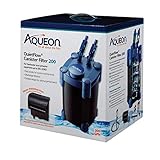
3. Aqueon QuietFlow Canister – Built Around a 55 Gallon Tank
Aqueon QuietFlow Canister Aquarium Filter, Up to 55 Gallons (ECOM)
Rated for tanks up to 55 gallons
8.5 x 7.5 x 17.25 inch body
14.55 pounds
Pros
- Only canister here rated specifically for 55 gallons
- Polishing stage adds a final clarification pass
- Four return configurations for different layouts
- Carbon coarse foam bio-balls and ceramic rings included
Cons
- Polishing stage relies on proprietary Aqueon cartridges
- Bulky and heavy for the tank size
The QuietFlow is the only canister in this roundup whose manufacturer specification is written around a 55 gallon aquarium rather than a range that starts there. That design-first thinking shows in the details: it ships with a full media package including carbon, coarse foam, bio-balls and bio-ceramic rings, plus a separate hang-on-back polishing unit.
That polishing unit is the distinguishing feature. Rather than relying on a carbon bag inside the canister that you have to cut open, it clips onto the rim of the tank and uses standard Aqueon replacement cartridges. It is the last stage of the chain, so water exits clear, and swapping a cartridge takes seconds with wet hands.
Return options are unusually flexible for a canister. You can run the spray bar for even surface movement, use the water director for a single aimed stream, or send the return through the polishing unit, and the plumbing is designed to support all three without re-cutting hoses.
Quick disconnect valves, pump locking heads, hoses and media are all in the box, along with a one year warranty from the manufacturer. The flow is not published as a single GPH figure on the listing, which is worth knowing if you like to see the number before you buy.
What the polishing stage actually changes
Think of the canister as doing the heavy lifting and the polishing unit as doing the finishing. Mechanical filtration catches solids, biological media stabilises the cycle, and the cartridge stage removes the fine particles that make water look hazy. That last stage is what people notice visually, and having it as a swipe-and-replace consumable rather than a cut-open carbon bag is a genuine convenience win.
The tradeoff is ongoing cost. Those cartridges are proprietary, so you are buying into an Aqueon consumable stream for as long as you run the polishing stage. If you would rather not, you can leave it off and use the spray bar return only.
Where the QuietFlow falls short
At 8.5 by 7.5 by 17.25 inches and 14.55 pounds, this is the bulkiest canister here relative to what it does. In a shallow 55 gallon cabinet you need to confirm 17.25 inches of vertical clearance plus hose bend room, and the weight is real when you are lifting it onto a shelf at an awkward angle.
It is also among the least reviewed units in the roundup, at roughly 1000 reviews, so the long-term record is thinner than the 10000-review models. That is a reasonable trade for a feature set built exactly around your tank size.
4. Marineland Magniflow 250 – Most Media in the Box
Marineland Magniflow 250 GPH Canister Aquarium Filter
250 GPH rated up to 60 gallons
14 x 9.5 x 15.75 inch body
12.56 pounds
Stack N' Flo media trays
Pros
- Largest included media bundle in the roundup
- Stack N' Flo trays force water through every layer
- Quick prime button self-primes simply
- Works in freshwater and saltwater
Cons
- Lowest average rating in the lineup
- Some owners report modest flow for heavily stocked tanks
The Magniflow 250 sells on volume. The box includes filter foam, premium activated carbon bags, bio-filter balls, ceramic rings and polishing pads, which is a deeper starting stack than any other canister here. For a first canister build on a 55 gallon tank, that means a working biological setup without a second shopping trip.
Marineland lists 250 GPH rated for freshwater or saltwater aquariums up to 60 gallons, which puts it right in the middle of our recommended band. The Stack N’ Flo trays are the reason that rating holds in practice: the rigid trays force water through every media layer rather than letting it shortcut around the sides.
Startup is simple. The quick prime button handles self-priming, and the watertight seal canister lid lifts off for media access without the awkward latch-and-lean routine that some budget models require. It also accepts Marineland Rite-Size S filter media if you prefer to restock with one brand.
Owners frequently describe the first month as a night and day difference compared with sponge filters, which matches the general experience of moving from a small inline filter to a canister with a real media stack.
Checking the real flow on a stocked tank
250 GPH works out to roughly 4.5 turnovers per hour on a 55 gallon once media resistance is accounted for, which is the number we want for a community tank. If you keep goldfish, cichlids or a densely planted aquascape, you will want to plan on throttling that with an inline valve rather than hoping the rating holds at full head height.
Check the 15.75 inch height against your stand, and note the 12.56 pound weight. That is a two-handed lift, so plan where the unit will sit before you fill it with water.
Where the Magniflow 250 falls short
This is the lowest-rated canister in the lineup at 4.1 stars, with 14% of reviews at one star. The complaints cluster around durability and around flow that feels weaker in practice than the 250 GPH figure suggests once the media bundle is fully loaded.
Parts availability is also thinner than for Fluval or EHEIM, so if the pump head ever fails you may be replacing the whole unit. For a tank that will run for a decade, that is a factor worth weighing against the generous media bundle.
5. Marineland Magnum 290 – Best Budget Polishing Canister
Marineland Magnum 290 GPH Polishing Canister Aquarium Filter
290 GPH rated up to 97 gallons
7.5 x 3.5 x 9.88 inch body
2.91 pounds
Two refillable chambers
Pros
- Low-cost canister with 290 GPH throughput
- Included micron cartridge polishes water noticeably
- Compact and light at under 3 pounds
- Two chambers accept custom media
Cons
- Must sit submerged inside the tank taking up aquascaping space
- Two chambers limit media configuration
The Magnum is the odd one out in this roundup, and it is the only canister here that does not live inside your cabinet. It is an internal canister with a submerged motor that sits under the substrate or behind a piece of hardscape, which makes it a budget way to get real flow and three-stage filtration into a 55 gallon tank.
Marineland lists 290 GPH for aquariums up to 97 gallons, and at 2.91 pounds it is by far the lightest unit here. The body measures 7.5 by 3.5 by 9.88 inches, which is easy to conceal in a planted layout or slide behind a background panel.
The included micron cartridge is the reason to consider it at all. Rather than standard floss, it polishes to a degree that visibly clears water, and the two refillable chambers let you run carbon and custom media alongside the factory stages. Continuous three-stage filtration handles the rest.
Owners report clearer water within days of switching from a sponge filter, and the submerged internal motor means there is no priming routine to learn, which is a real advantage for a first canister.
When an internal canister actually makes sense
Two situations. First, if your stand has no usable shelf height, a unit that lives in the tank sidesteps the clearance problem entirely. Second, if your substrate is deep aquascaping gravel, hiding the body at the back of the tank is straightforward and costs you no cabinet space.
The math works: 290 GPH gives you over 5 turnovers per hour on a 55 gallon before media resistance, so there is plenty of headroom even after the filter loads up.
Where the Magnum falls short
It takes up usable aquascaping space inside the tank, and in an open-topped layout it is visible. That changes how you design around it, and it is not a substitute for an external canister in a finished aquascape where hardware is meant to be hidden.
Two chambers also mean a shallower media stack than any external unit here, so you are limited in how much biological media you can hold. It is a strong first filter, not a permanent high-bioload solution.
6. EHEIM Classic 2213 – Best Long-Term Proven Design
EHEIM Classic Canister Filter 2213, Classic 250 – PetOverstock
Compact 8 x 6.3 x 13.98 inch body
4.49 pounds
Fixed silicone head seal
Spray bar and valves included
Pros
- Very long service record across many ownership years
- Permo-elastic silicone head seal closes safely after cleaning
- Spray bar inlet pipe hoses and valves all included
- Compact and light body fits most stands
Cons
- Only two media baskets limit biological volume
- Older internal pump design runs louder than newer units
The EHEIM Classic 2213 has been in continuous production since the mid-2000s, and that longevity is the argument. On Aquarium Advice and FishLore threads about 55 gallon canisters, EHEIM is repeatedly named as the quality benchmark, and owners who bought one a decade ago tend to describe it as the last filter they expect to replace.
The design is deliberately simple. A permo-elastic silicone sealing ring is fixed on the pump head, so the lid seats on the same seal every time and closes reliably after a service. There is no latch to fatigue and no complicated head mechanism to learn.
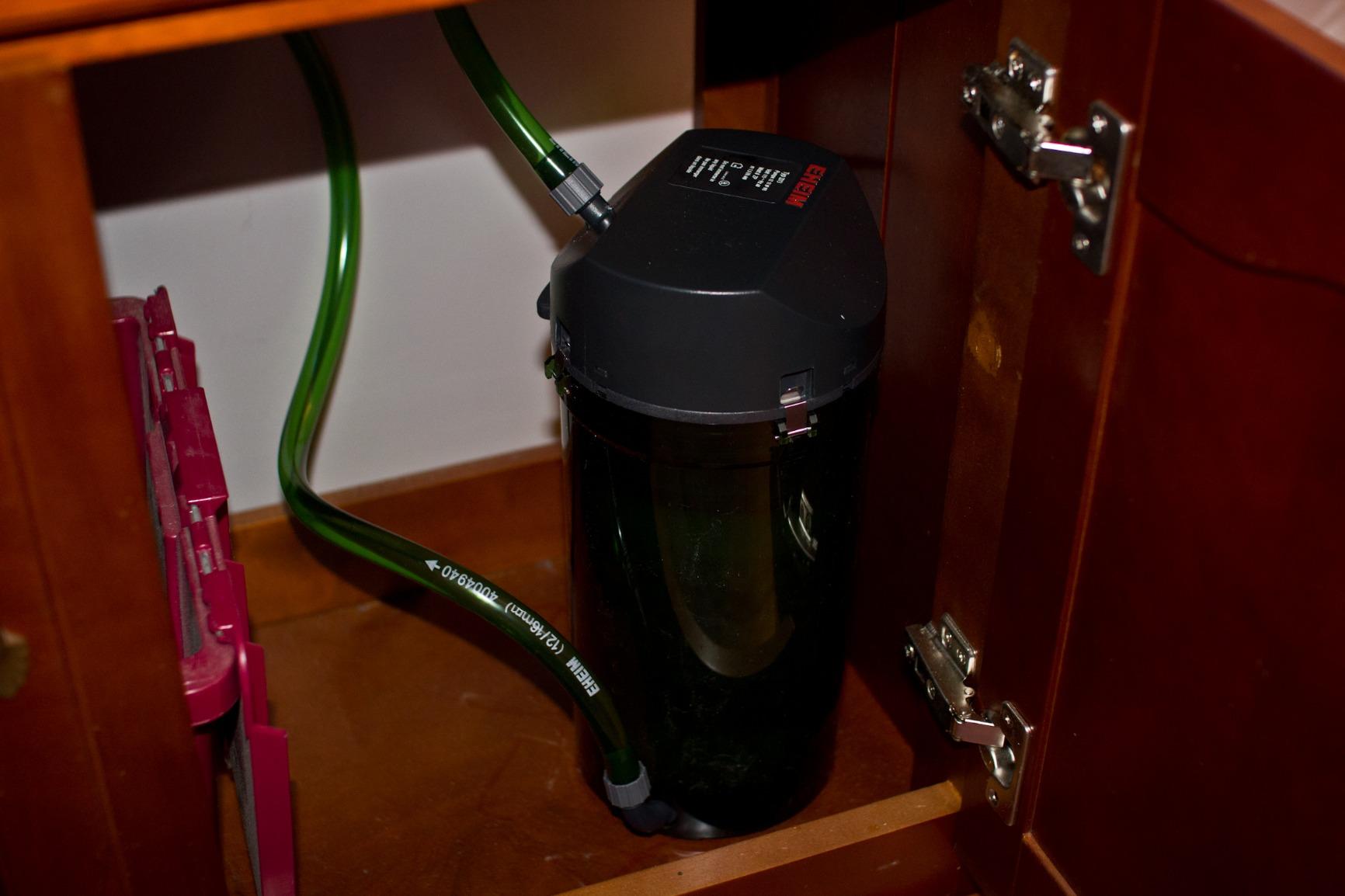
It arrives with filter sponges, loose filter media, a spray bar, an inlet pipe, hose and installation accessories, plus EHEIM Mech and Substrat Pro media and valves, so it is a complete working unit on arrival. At 8 by 6.3 by 13.98 inches and 4.49 pounds, it is the smallest and lightest external canister in this roundup, which matters in shallow stands.
Manufacturer variants are listed at 40, 66 and 92 US gallon capacities, so the model number you choose matters for a 55 gallon tank. Pick the size that lists 66 gallons or higher.
Durability versus noise, honestly
The trade in this design is noise. The Classic series uses an older internal pump architecture than current-generation units, and owners consistently report it running audibly louder than a Fluval 307 or an FX2 in a quiet room. If the canister sits in a bedroom or a home office, that is a real factor rather than a nitpick.
What you get in exchange is build quality and a service record. The fixed silicone ring does not fatigue the way a plastic latch does, and the simple plumbing layout means fewer failure points to troubleshoot.
Where the Classic 2213 falls short
Two media baskets is the main limitation. That restricts how much biological media you can run, which matters on a heavily planted 55 gallon or one with a high bioload where you want a deep sponge and a large volume of ceramic media.
It is also the one unit here where the manufacturer does not publish a single GPH figure on the listing, so if you like to size from a rated number, you will be estimating rather than comparing like for like.
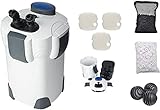
7. SunSun HW-302 Pro – Best Canister for a Heavily Planted 55g
SunSun Hw302 265GPH Pro Canister Filter Kit
265 GPH or 1000 L per hour
9 x 9 x 15.5 inch body
12 pounds
Three media baskets included
Pros
- Strong value for the flow and media it delivers
- Complete kit with pads carbon ceramic rings and bio balls
- Quiet compared with a typical air-driven HOB filter
- Hose release levers speed up cleaning
Cons
- Printed instructions are confusing
- Plastic clips and the hose latch can snap
- Impeller gets noisy after about a year
The HW-302 Pro is the model that forum users name most often when value comes up, and the specification explains why. At 265 GPH, or 1000 liters per hour, with three media baskets, it delivers more media volume than several more expensive canisters at a fraction of the outlay.
For a heavily planted 55 gallon that is the right priority. Planted tanks need both circulation for the water column and a deep media stack to keep nitrate in check, and this kit ships with three white filter pads, three baskets, a pound of premium filter carbon, a pound of ceramic rings and a set of bio balls.
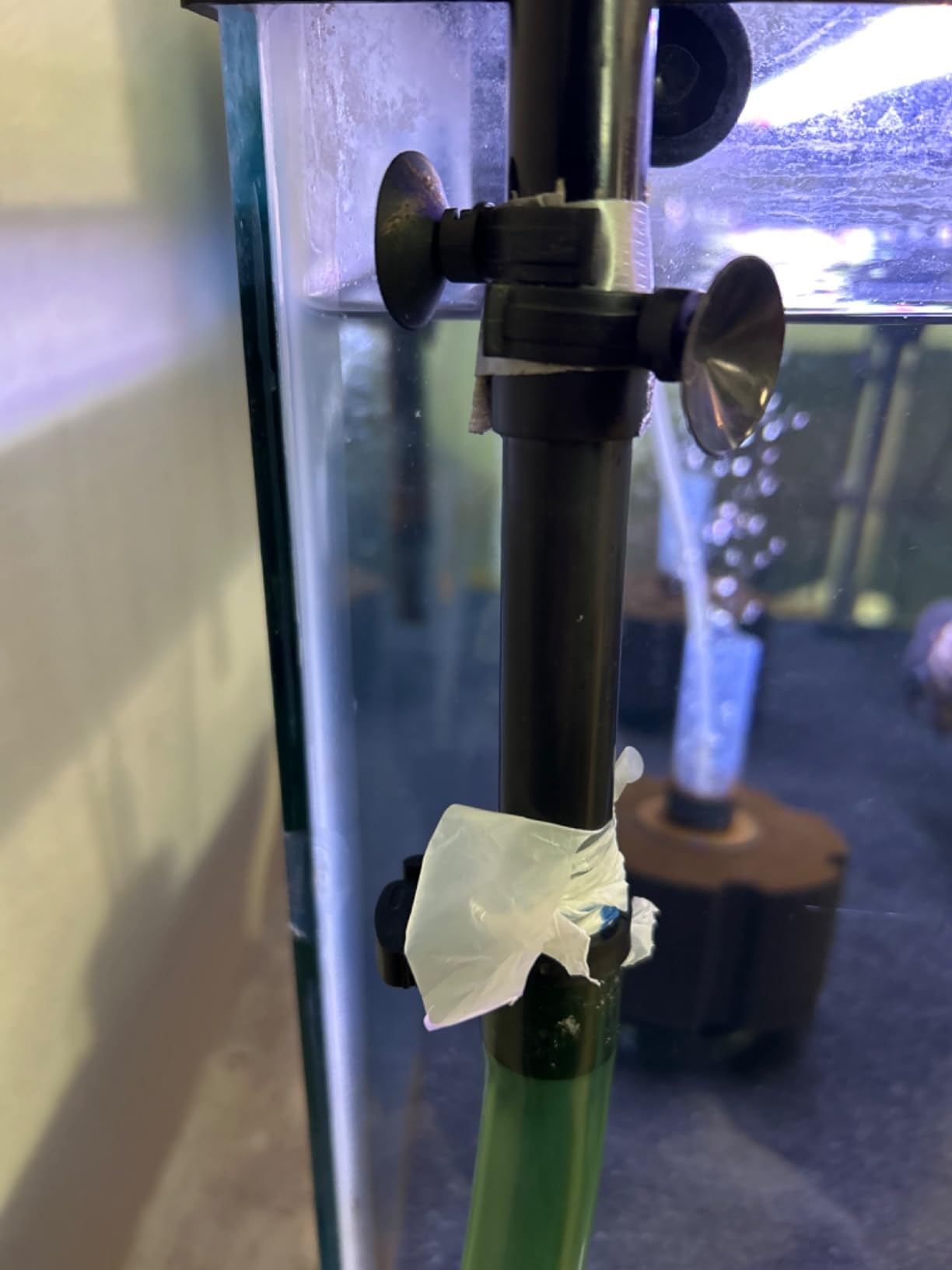
The flow path runs bottom to top through mechanical, then chemical, then biological stages, which is the correct order and is worth respecting when you rebuild the stack. Hose release levers make the weekly water-change routine fast, and owners describe the running noise as quiet next to a typical air-driven hang-on-back filter.
At 265 GPH you get about 4.8 turnovers per hour on a 55 gallon before media resistance, which lands it in the middle of our recommended band and works well with a spray bar spread along the back wall.
Where the value actually comes from
The saving is in the media package, not the pump. One pound of carbon plus a pound of ceramic rings and a full set of bio balls is a substantial starting stack that would cost several times more to buy separately with a bare-bones canister. If you are starting from sponge filters, this gets you a full biological and mechanical setup in one purchase.
It is also rated by SunSun for tanks up to 75 gallons, so there is headroom above a 55 gallon if you expand later.
Where the SunSun falls short
Build quality is the honest limitation. Owners report that plastic clips and the hose latch can snap, and that the lid seal may weep slightly over time. The impeller also tends to become noisy after about a year of service, which is a common finding across budget canisters in this class.
Two smaller annoyances: the printed instructions are confusing enough that many owners rely on the diagram on the box instead, and the hoses are stiff and need hot-water soaking before first fitting. Budget for five extra minutes on day one.
8. Fluval FX2 – Best for Low-Maintenance Ownership
Fluval FX2 High Performance Canister Aquarium Filter
475 US gal or 1800 L per hour
13.4 x 13.4 x 16.5 inch body
14.45 pounds
Pros
- Smart Pump self-starting removes most priming problems
- Base drain valve simplifies water changes
- Four baskets hold up to 1 US gal of media
- Automatic air evacuation every 12 hours
Cons
- Highest cost in the roundup
- More capability than a single 55 gallon tank requires
The FX2 is the canister to buy if your objection to canisters is maintenance rather than capability. Everything that normally goes wrong on a canister, priming, air locks and draining, is addressed in the design. You add water, plug it in, and the Smart Pump technology evacuates trapped air automatically every 12 hours.
It moves 475 US gallons, or 1800 liters, per hour. That is more than a 55 gallon tank needs, which is exactly why it belongs on this list with a flow-valve recommendation: pair it with an inline valve and it becomes a very well-built, very quiet filter you can run gently.
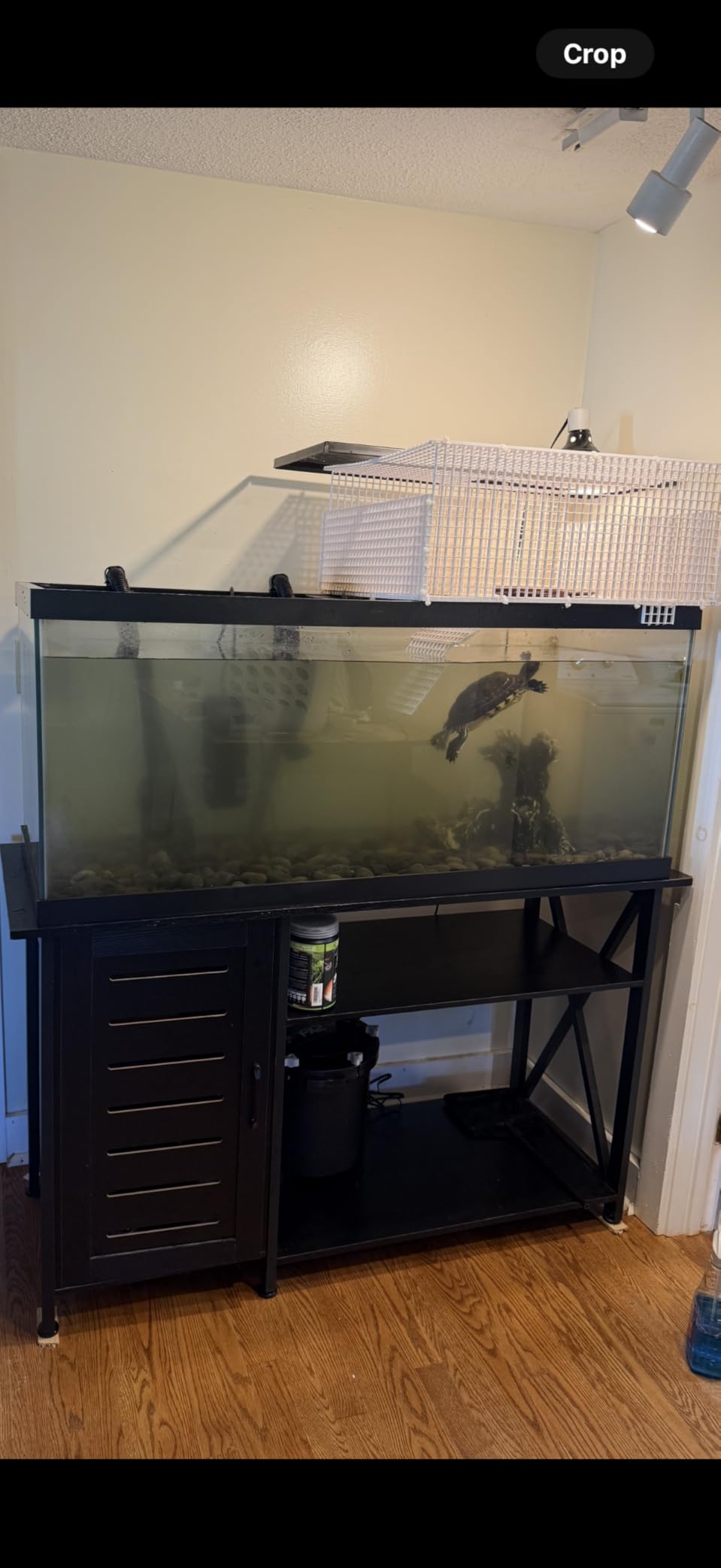
The four removable baskets hold up to 1 US gallon, or 3.9 liters, of media, which is the deepest stack here and means water has no easy bypass path. The unidirectional impeller has fewer mechanical joints than conventional designs, and rubber feet under the canister damp vibration into the cabinet.
The base drain valve is the feature owners mention most. Rather than carrying canister water to the sink, you open the valve and the filter drains straight into a bucket, which turns a weekly water change into a two-minute job.
Buying more than you need, on purpose
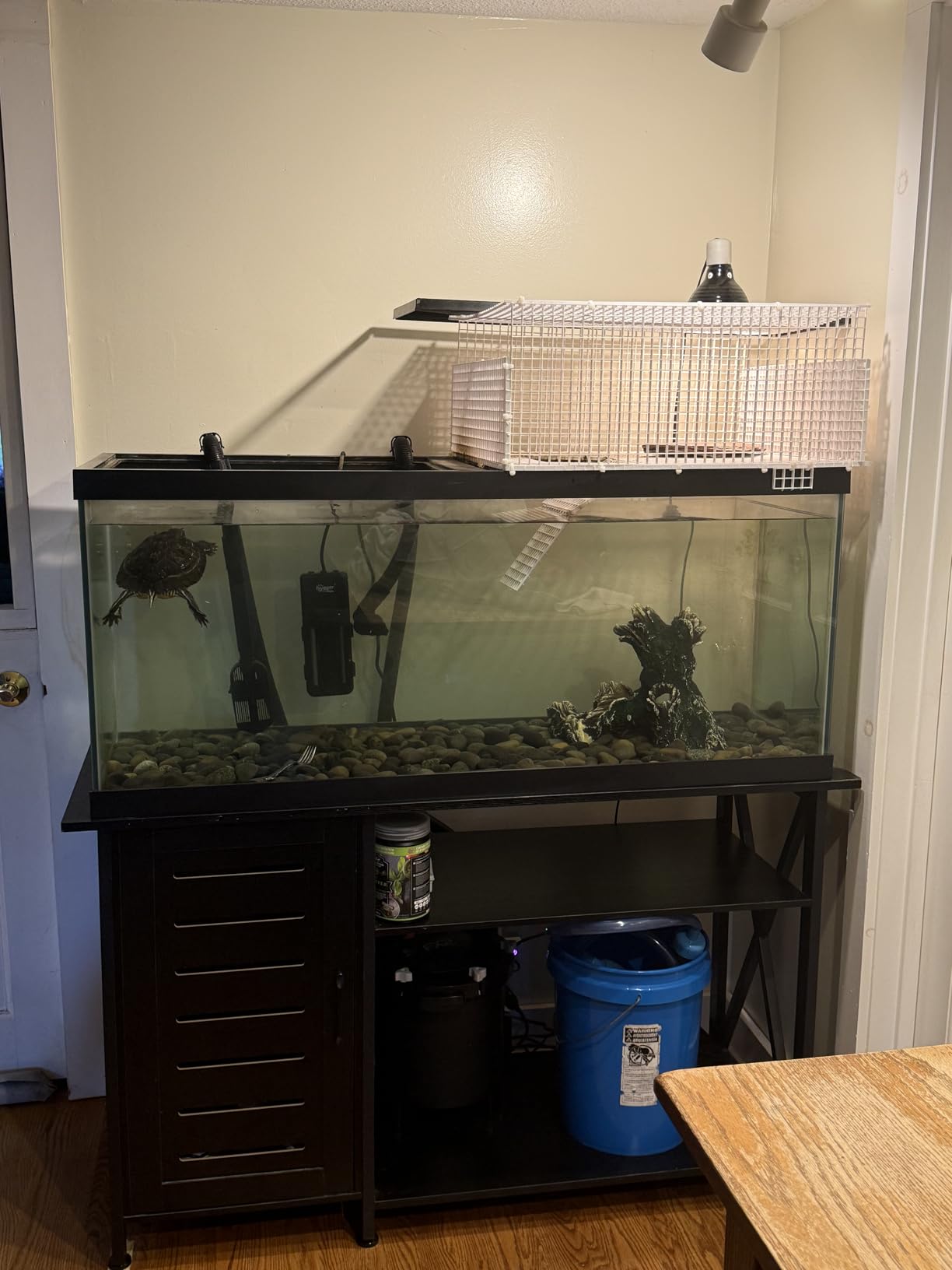
At 475 GPH the FX2 delivers roughly 8.6 turnovers per hour on a 55 gallon, which will lift fish off the bottom and strip a sand bed bare. The fix is simple, an inline flow valve on the return, set so the return just moves the surface. Done that way it is arguably the best-built canister in this roundup.
It measures 13.4 by 13.4 inches across and 16.5 inches tall, and Fluval notes it is 15% smaller than the FX4, which is how it fits under a 55 gallon stand when the FX4 does not.
Where the FX2 falls short
It is the most expensive canister in this roundup, and for a single 55 gallon community tank you are paying for headroom and convenience you may not use. The premium design is also more than a modest stocking level requires.
At 407 reviews the long-term record is still shorter than the 10000-review models here, so you are buying a newer design with a thinner ownership history.
9. Fluval 407 – Top Rated Canister for 55 Gallon Tanks
Fluval 407 Performance Canister Filter – For Aquariums Up To 100 Gallons
Rated for aquariums up to 100 gallons
7.09 x 9.45 x 19.29 inch body
9.7 pounds
EZ-Lift media baskets
Pros
- Keeps 55 gallon tanks clear with strong circulation
- Very quiet for the pump size
- Quick-disconnect valves and lift-lock clamps for clean servicing
- Adjustable spray bar reduces surface noise
Cons
- Impeller cover can disengage and cause motor head failure
- Higher media consumption than smaller canisters
- Manufacturer parts carry a premium
The Fluval 407 shares the eTEC pump platform with the 307 and pairs it with more output and more head pressure. It is rated by Fluval for tanks up to 100 gallons, so on a 55 gallon it delivers real circulation margin, which is what you want if your stocking is on the heavy side or your tank sits in a warm room.
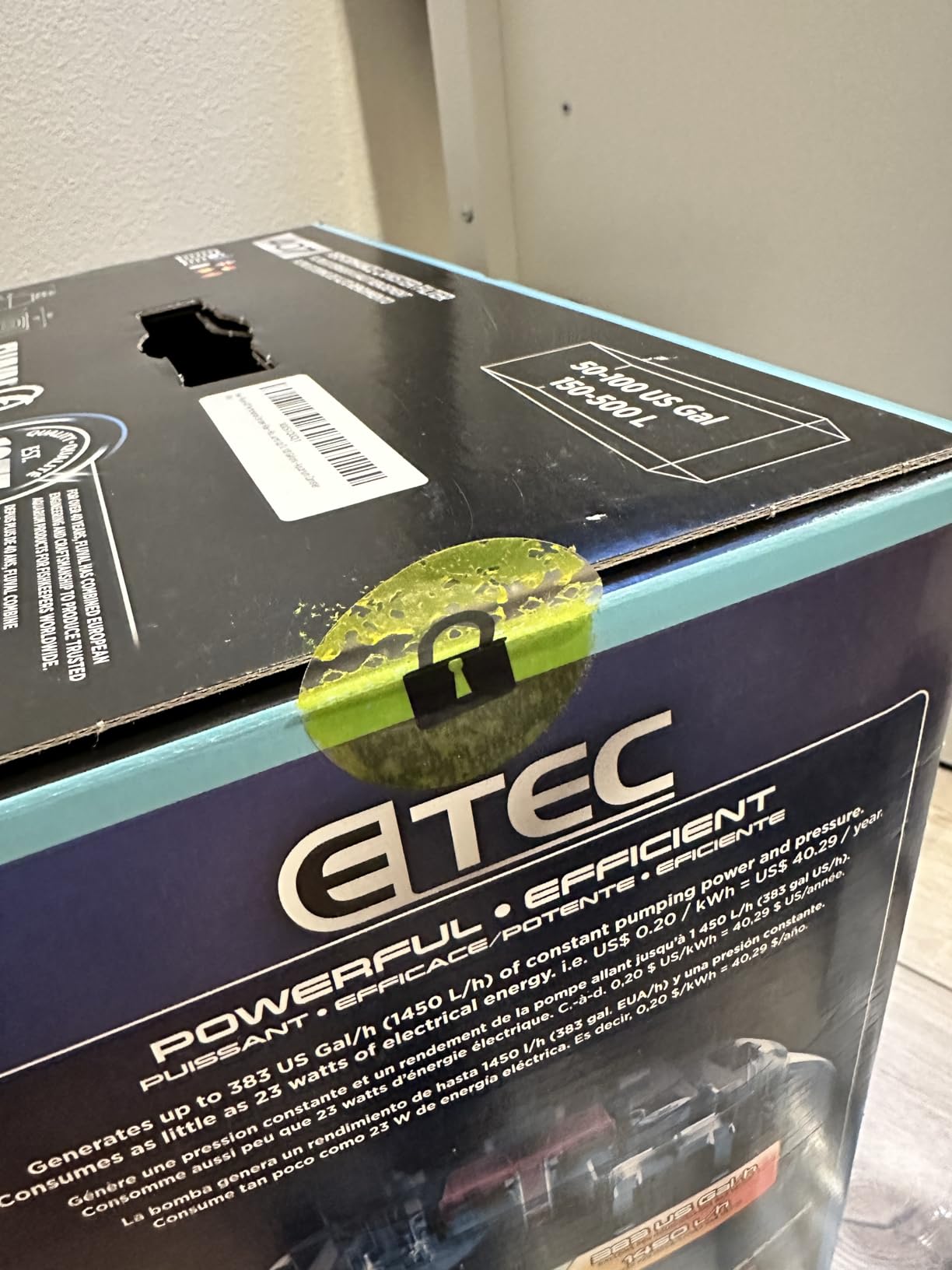
On noise, the 407 is the one reviewers most often describe as near-silent in a living room, with the eTEC motor running up to 25% quieter than previous models and using about the same power as an LED bulb. Aiming the spray bar at the glass rather than up at the surface cuts the last of the gurgling.
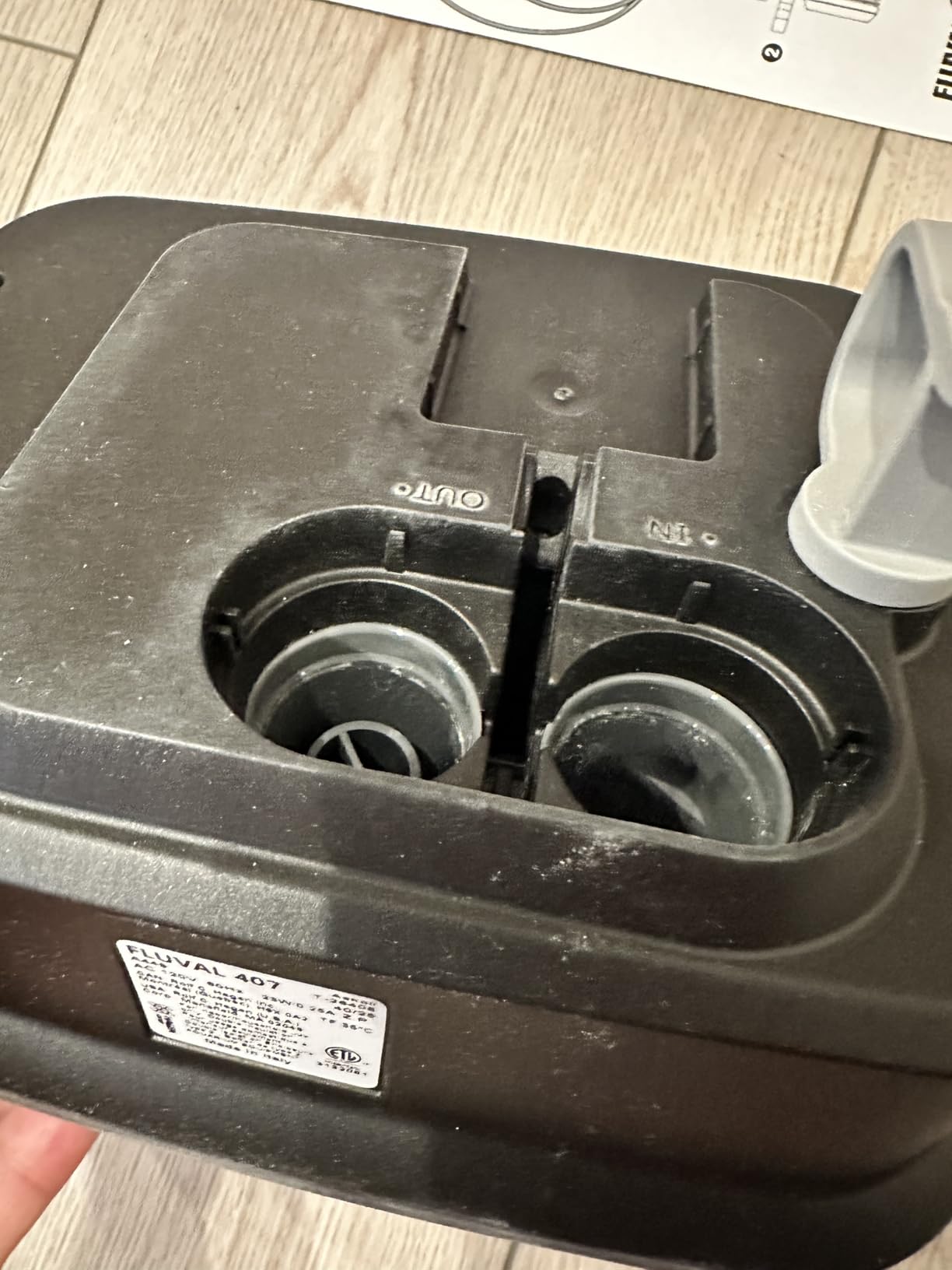
Servicing is the best in the lineup alongside the FX2. Quick-disconnect valves and lift-lock clamps let you break both hoses and lift the head off without a drip tray, and the EZ-Lift baskets with a center handle come out one at a time.
That head pressure is the quiet advantage of a larger pump. More flow through a spray bar with more head behind it produces finer, better-distributed bubbles and less surface churn than a smaller pump straining to push water over the same height difference.
Check the height, because this is the tall one
At 19.29 inches, the 407 is one of the taller canisters here and it is the model most likely to fail a cabinet-fit check. Measure the vertical clearance inside your stand with the lid closed, then subtract a few inches for hose bend radius. If your stand gives you 18 inches, the 407 will not go in without leaving the lid off, which is not how a sealed canister is meant to run.
If the height is a problem, the 307 has the same pump platform in a body that is 2.75 inches shorter, and the FX2 is 16.5 inches tall with even more flow.
Where the 407 falls short
There is a specific, well-documented failure thread on this model: the impeller cover on the motor head can disengage, and owners report being driven through multiple replacements as a result. If that happens, check the cover seating before assuming the motor has failed.
Running a larger pump also consumes more media. Carbon and floss in a high-flow canister need replacing on a shorter cycle, and manufacturer replacement parts carry a higher price tag than budget equivalents. Some reviewers also note a faint hum in a very quiet room, and that the included carbon pouches are smaller than expected.
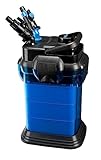
10. Penn-Plax Cascade 1000 – Best for Goldfish and Cichlid Bioloads
Penn-Plax Cascade 1000 Canister Filter – 265 GPH Aquarium Filter for Tanks Up to 100 Gallons – 360 Degree Flow Valves, Poly Fiber Pads, Bio-Sponge & Activated Carbon -Fresh & Saltwater -11.5x10x17in
265 GPH rated up to 100 gallons
11.5 x 10 x 17 inch body
28.5W at 110V
12 pounds
Pros
- Three baskets allow a fuller media stack
- 265 GPH handles 55 gallon and larger tanks
- 360 degree valve taps simplify routing
- Complete media kit plus spray bar and clamps included
Cons
- Included media is a starting amount only
- 17 inch body needs more cabinet space
The Cascade 1000 is the answer for a 55 gallon tank with a heavy bioload. Goldfish, cichlids and densely planted aquascapes all produce more waste than a standard community stocking, and that is a problem of media volume and service frequency rather than raw flow.
Three large stackable media baskets with built-in handles give you room to run a deep sponge stack plus a substantial volume of ceramic media, which is the combination that keeps nitrite at zero without a constant top-up of conditioner. The 265 GPH rating is rated for tanks up to 100 gallons, so a 55 gallon has plenty of margin.
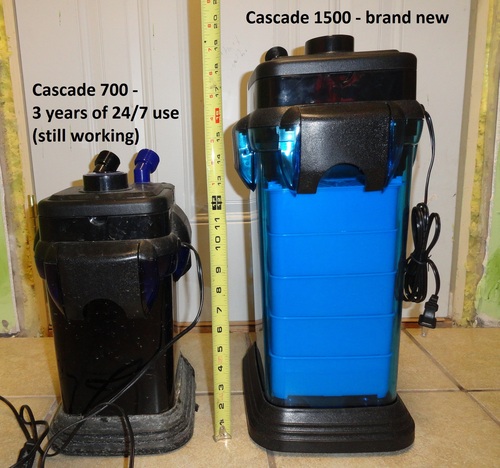
The mechanical details match the 700 model that many owners already know. A push-button primer handles startup, and the dual 360-degree rotating valve taps make hose routing manageable in a cabinet where space is tight. It draws 28.5W at 110V, and the sturdy tip-proof base matters if the unit sits near a damp floor.
It is rated for both freshwater and saltwater, and manufacturer support for water up to 1000 ppm TDS gives you room to run it on a brackish or lightly marine system.
How to size media for a high bioload tank
Fill all three baskets and do not leave a gap. Flow short-circuits through empty space, so an under-filled basket means your biological media is starved of the contact it needs. A workable stack for this unit is floss and carbon in the top basket, coarse sponge in the middle, and sponge plus ceramic media in the bottom basket.
On a high bioload, plan on rinsing the pre-filter weekly in a bucket of tank water and swapping carbon monthly. Keeping biological media wet and undisturbed is what holds the cycle stable while you do it.
Where the Cascade 1000 falls short
It is 17 inches tall, so cabinet clearance is the first thing to check, and the 12 pound body is a firm two-handed lift. The included media is a starting amount and has to be expanded for a seriously stocked system.
It is also an external canister without a base drain, so water changes still mean carrying buckets. On a 55 gallon that is a weekly chore you will feel every month.
How Many GPH Do You Need for a 55 Gallon Tank?
Divide your tank’s actual volume by 55 to get its real size, because most tanks hold less water than their name suggests once substrate, rock and equipment are in place. A nominal 55 gallon tank is typically closer to 45 to 48 gallons of water. That is the number you divide by, not 55.
Then apply the band. For a standard community tank, 220 to 320 GPH of rated circulation is the target range, which gives you four to six turnovers per hour. Multiply the GPH figure by 1.7 and divide by your real volume to get turnover: a 250 GPH canister on 47 gallons of water gives about 9 turnovers before media resistance, and roughly 4.5 after it, which is the figure that actually matters.
There are three situations where you want to move outside that band. A heavily planted 55 gallon benefits from 320 to 400 GPH because plants consume flow and produce waste. A high-bioload tank such as goldfish or cichlids wants 300 GPH or more, but for media volume rather than circulation. And cold-water rheophilic setups, hillstream loach and similar species, need 15 to 20 turnovers per hour, which puts them firmly in a large-pump category with an inline valve.
Saltwater is the opposite case. A reef tank does not want a high-turnover canister without support, because circulation is a skimmer job first and a canister second. A canister filters a reef system well, but it does not replace a protein skimmer.
One warning about flow figures. Pump output is measured with no media and no head, and rated circulation accounts for both. Comparing the two is how people end up with a filter twice as strong as they need. Always size on the rated number, and assume roughly 30% of pump output is lost to media and lift height.
Flow Control: How to Stop a Canister Blowing Out Substrate
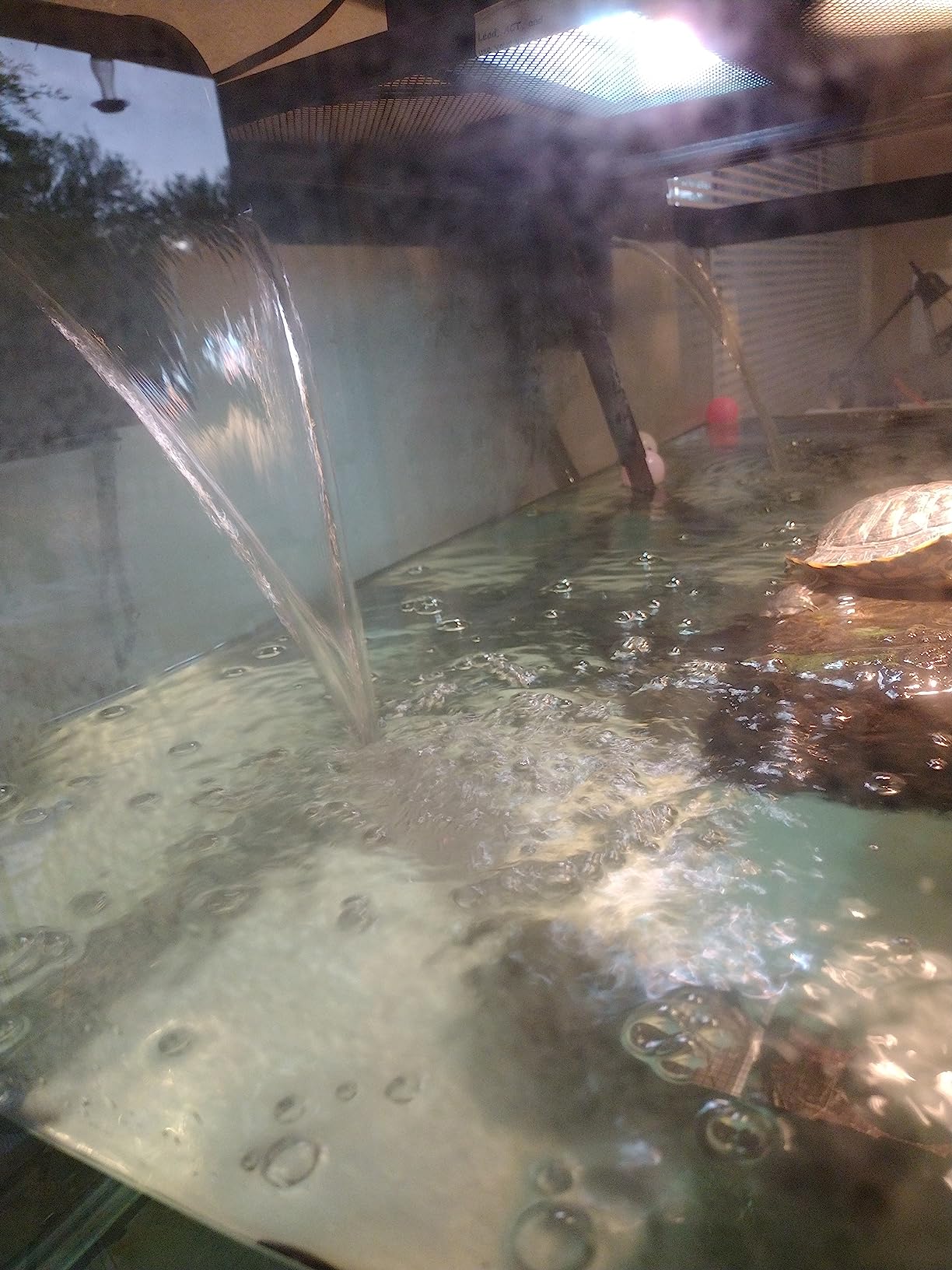
This is the most repeated complaint we found in owner discussions of 55 gallon canisters, and it is a configuration problem rather than a filter problem. A strong return aimed down at a sand bed will excavate a crater in a matter of weeks, and the sand ends up on top of your hardscape.
There are four controls, and they work together.
Use the spray bar, not a single directed outlet. A spray bar spreads the return along its full length so no single jet carries the whole flow. The Cascade models and the EHEIM Classic all include one, and the Fluval baskets accept one as standard.
Add an inline flow valve on the return. This is the single most effective fix and it costs very little. Screw one into the return hose and dial the flow down until the surface moves but nothing is being pushed. A canister with a valve can be gentle; a canister without one is all or nothing.
Aim across the tank, not at the front glass or straight down. Position the return near one end and angle it along the length of the tank, or along the back glass. This establishes circulation without a concentrated jet landing on substrate.
Lower the intake and aim it at the surface. The intake strainer belongs near the surface if you are trying to disturb the top, or low and pointed into the water column if you want gentle circulation. Many owners report that a shallow intake also cuts noise noticeably.
On a 55 gallon, an inline valve on the return line is a better tool than closing the tap valves on the canister head, which restricts the pump and makes it run harder and hotter. A valve on the return lets the pump run at its intended operating point with less water moving through the tank.
Noise: Why Canisters Rumble and How to Fix It
Four of the questions people ask about this category are noise questions, which tells you how much it matters. A canister sits inside a wooden cabinet, and a wooden cabinet is a resonance chamber, so vibration that would be unnoticeable in a room becomes a hum in a bedroom.
Air in the head. A partly primed canister gurgles and hums because the pump is pushing water around a bubble rather than moving water. Most self-priming designs solve this within a minute, and the Fluval FX2 goes further by evacuating trapped air automatically every 12 hours. If yours gurgles persistently, the head is not seated or the lid seal is not closing.
Vibration from the housing. A canister that is not making firm contact with the cabinet shelf transmits its motor hum straight into the wood. Level feet and a level shelf fix most of this.
Flow noise at the surface. A violent return hitting the water surface makes far more noise than the pump. This is the flow control problem above. Turning the flow down or re-aiming the spray bar quiets the tank more than any amount of pump work.
Loaded media. As baskets fill with debris the flow drops, the pump strains, and the noise character changes to a lower, harder hum. Rinsing the pre-filter restores the original sound, and owners who only rinse the pre-filter while leaving biological media in place report the noise settling back down.
On model choice, the quietest units in this roundup are the Fluval 307, the Fluval 407 and the SunSun HW-302 Pro, all of which owners describe as quiet in a living room. The EHEIM Classic is the loudest here, because its older pump architecture runs at higher noise levels than current designs. The Cascade 1000 sits in the middle, with owners reporting a steady hum that becomes noticeable in a very quiet room.
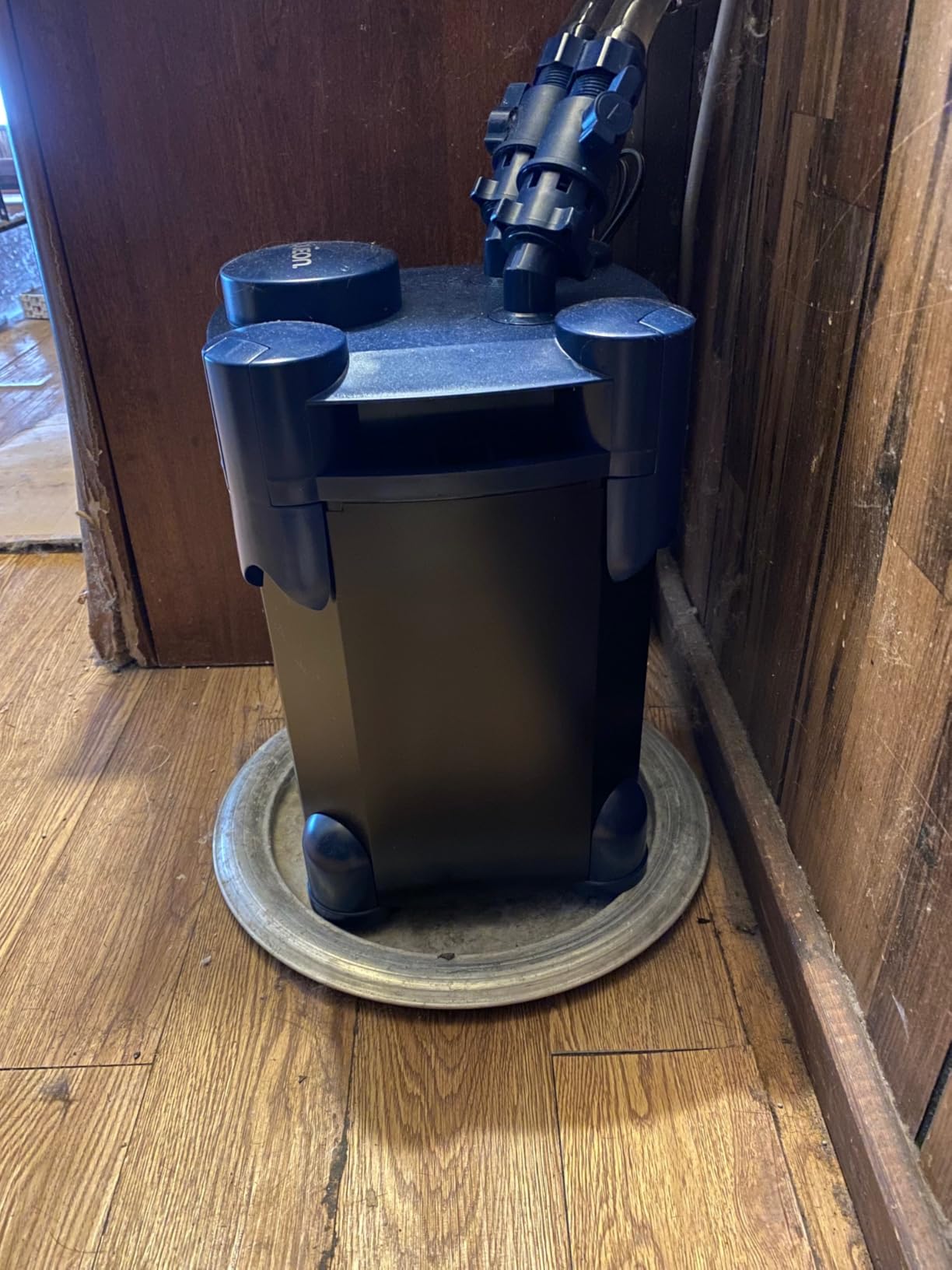
Two setup habits help more than any model. Leave a few inches of clearance between the canister body and the cabinet wall so vibration is not coupled straight into the panel, and put the canister on a level surface rather than a foam mat, which can amplify rather than dampen low-frequency hum.
Media Stack Order and a Maintenance Schedule That Works
Order matters. Water should always pass coarse mechanical media first, because anything that clogs biological media starves the bacteria you are trying to grow.
Top basket, closest to the head. Floss pad or filter wool, then a carbon bag if you are polishing after medication or dosing.
Middle basket. Coarse sponge, the main mechanical stage that catches what gets past the floss.
Bottom basket, closest to the pump. Fine sponge or foam plus ceramic media, bio-balls or sintered glass. This is the biological stage and it should be the largest volume in the stack.
Carbon belongs at the top and stays there. If carbon sits above the biological media it strips nutrients that plants need, and if it sits below, it clogs first and becomes a flow restrictor that nobody notices until flow drops.
On maintenance, long-term owners are consistent about one rule: clean the pre-filter, leave the biological media alone. Open the head, lift the top baskets out, rinse the floss and coarse sponge in a bucket of tank water you have drawn from the aquarium, and put them back. Never rinse biological media under chlorinated tap water, because the chlorine kills the nitrifying bacteria colony you spent weeks establishing and the tank will pay for it with an ammonia spike.
For a 55 gallon community tank, a workable rhythm is a pre-filter rinse every one to two weeks, a full water change of 30 to 40% weekly, and a carbon swap monthly if you are running carbon at all. Heavily stocked tanks need the pre-filter checked weekly. Deep sponge and ceramic media should only ever be swished in tank water, and only when flow visibly drops.
Prime the new biological media in tank water rather than tap water before it goes in, which gives the bacteria a head start without shocking them.
Cabinet Fit and Head Height Checklist Before You Buy
Cabinet fit is the most common reason a canister gets returned, and it is a five-minute check that prevents it. Measure before you order anything.
Measure the internal height of the stand with the doors closed, then subtract 3 to 4 inches for the hose bend radius above the lid. Every canister in this roundup lists its body height, and the number that matters is the tallest dimension: 13.98 inches for the EHEIM Classic 2213, 15.5 inches for the SunSun HW-302 Pro, 15.75 inches for the Marineland Magniflow 250, 16.5 inches for the Fluval FX2, 16.54 inches for the Fluval 307, 17 inches for both Penn-Plax Cascades and 17.25 inches for the Aqueon QuietFlow, and 19.29 inches for the Fluval 407.
That last figure is the one to watch. The Fluval 407 is rated for tanks up to 100 gallons and is a strong choice for a heavily stocked 55 gallon, but it will not go into a stand with less than about 22 inches of internal clearance.
Next, check the footprint. The Cascade models are the widest at 11.5 by 10 inches, the FX2 is square at 13.4 by 13.4 inches, and the SunSun is 9 by 9 inches. Measure the width of the shelf, not just the depth, because a canister that overhangs the front edge is unstable when it is full.
Then check the lift. Bodies run from 2.91 pounds for the internal Marineland Magnum to 14.55 pounds for the Aqueon QuietFlow, and anything above about 10 pounds is a two-handed lift. Decide where it will sit before you fill it with water, because a full canister is heavier than its listed dry weight by a considerable margin.
Finally, check hose routing. The Cascade models have 360-degree rotating valve taps, which makes a tight cabinet significantly easier. Everything else needs a smooth curve into the back wall without a kink, and a kinked intake hose is the number one cause of a canister that will not prime.
Running Two Canisters on One 55 Gallon Tank
Two canisters on a single tank is a real setup rather than a fringe idea, and on a 55 gallon it is sometimes the right call. The usual reason is not flow. It is redundancy and service interval, where splitting your media across two bodies roughly doubles how long you can go between a full service.
The practical arrangement is one larger canister plus one small one, with both intakes low at one end of the tank and both returns spread along the opposite end. That gives you even circulation without a single concentrated jet, which is the same principle as a spray bar applied at the system level.
Where it makes sense is high bioload. On a goldfish or cichlid tank, two mid-sized canisters let you keep a much deeper sponge and ceramic stack than one unit of the same total price, and if one pump head ever fails you still have filtration running while you sort it out.
Where it does not make sense is a lightly stocked community tank. A single canister gives you more media capacity per dollar, and two bodies means two sets of hoses, two sets of valves and twice the cabinet space to find.
One caution if you combine them: do not run two strong pumps into the same tank without valves. Two unmetered returns multiply your flow problem rather than solving it, and substrate damage is the result.
What a Canister Costs to Run Over Three Years
Purchase price is a poor proxy for ownership cost, and the running costs of a canister break into three parts: media, spare parts and electricity.
Media is the biggest line. Carbon, floss and floss pads are consumables, and a high-flow canister eats them faster because it pushes more water through the same volume of media. If you are not medicating or dosing, the cheapest saving available is to stop running carbon constantly. Carbon has a job and then it is a liability, so treat it as a temporary stage rather than a permanent one.
Biological media is a one-time cost. Sponge, ceramic rings and sintered glass are bought once. Rinse them in tank water, never replace them on a schedule, and they will last for the life of the tank. This is why the canisters with the largest media baskets, such as the Cascade 1000 and the Fluval FX2, tend to be cheaper per year once running.
Spare parts are the risk line. Pump heads, impellers, O-rings and seals are cheap on budget brands and pricier on premium ones, and the availability of those parts varies enormously between manufacturers. Before you buy, search for the replacement pump head and impeller for that exact model. If a spare head is available and not expensive, the filter is a safer long-term purchase than one where the only option is a whole new unit.
Electricity is the smallest line. Published draws in this roundup range from 25W for the Cascade 700 up to 28.5W for the Cascade 1000, with the Fluval units stating consumption comparable to an LED light bulb. Over three years of continuous running the difference between the lowest and highest draw here is real but modest, and it is not a reason to choose a weaker pump.
The practical takeaway is to buy for media volume and parts support first, since those drive the recurring cost, and treat wattage as a tiebreaker.
Who Should Not Buy a Canister Filter
A canister is not automatically the right upgrade, and in a few cases it is the wrong purchase.
If your tank is under about 30 gallons, a hang-on-back filter or a sponge filter is genuinely enough for a lightly stocked setup, and it will be quieter, take up less space and cost less. Canisters earn their keep through media volume, and a small tank does not need much media volume.
If your stand has no usable interior height at all, a canister is a poor fit. An internal canister such as the Marineland Magnum 290 or a powerhead in the tank solves the same problem without a clearance fight.
If you are running a reef tank and have not yet bought a protein skimmer, a canister is not the priority. On saltwater, dissolved organics are the problem, and mechanical and biological filtration do not address them.
If you will not run a weekly water change, no filter solves that problem. Canisters concentrate maintenance into fewer, larger service tasks rather than eliminating it.
And if your fish are messy and your bioload is high, be honest about whether you will service the pre-filter every week. A canister with dirty media is worse than a clean sponge filter, because the extra media capacity lets you run longer between services and forget that the flow has dropped.
Frequently Asked Questions
What is the best canister filter for a 55 gallon aquarium?
The Fluval 307 is the best overall canister for a 55 gallon aquarium in our testing and review. It is rated for tanks up to 70 gallons, its 16.54 inch body fits most stands, and its eTEC pump is one of the quietest in the roundup. For a heavily stocked tank, step up to the Penn-Plax Cascade 1000 for its three-basket media capacity.
What size canister filter is needed for a 55 gallon tank?
Target 220 to 320 GPH of rated circulation for a standard 55 gallon community tank, which works out to about four to six turnovers per hour. Use your tank’s real water volume, usually closer to 45 to 48 gallons once substrate and decor are in, and size on rated circulation rather than pump output, since pump output ignores media resistance and lift height.
Which is better, Eheim or Fluval?
Fluval wins on quiet operation, modern self-priming behaviour and taller cabinets, with the 307 rated to 70 gallons and the 407 rated to 100 gallons. EHEIM wins on proven long-term durability and a sealed silicone head ring that closes reliably after every service. The EHEIM Classic 2213 is also smaller and lighter, at 13.98 inches and 4.49 pounds, which matters in shallow stands.
What are the quietest canister filters for a 55 gallon tank?
The Fluval 307 and Fluval 407 are the quietest here, both using eTEC pumps rated to run up to 25% quieter than previous models, and the SunSun HW-302 Pro is also consistently reported as quiet. The EHEIM Classic 2213 runs audibly louder because of its older pump design. Flow noise at the surface usually contributes more to perceived noise than the pump itself.
Why is my canister filter making noise and how do I fix it?
The four common causes are trapped air in the head, vibration transferring into the cabinet shelf, a violent return hitting the water surface, and clogged media making the pump strain. Fix each in turn: re-seat the head to purge air, level the canister on a firm shelf with clearance from the cabinet wall, add an inline flow valve and aim the spray bar across the tank, then rinse the pre-filter in bucket water taken from the aquarium.
Bottom Line: The Best Canister Filters for 55 Gallon Tanks in 2026
For most 55 gallon tanks, the Fluval 307 is the right first canister. It sits in the middle of the flow band, fits under nearly every stand, runs quietly, and has the review history and parts support to run for years. Buy the Penn-Plax Cascade 700 instead if you want a complete ready-to-run system with a gentler starting flow, and buy the Penn-Plax Cascade 1000 if your bioload is heavy enough that media volume matters more than anything else.
One rule to carry into the purchase: size on rated circulation, aim for 220 to 320 GPH on a standard community tank, and add an inline flow valve on the return. That last step is what separates a canister that works from one that rearranges your substrate.
Updated for 2026. Every figure in this roundup comes from the manufacturer’s own listing or product page, and we earn a commission from qualifying purchases at no additional cost to you.