
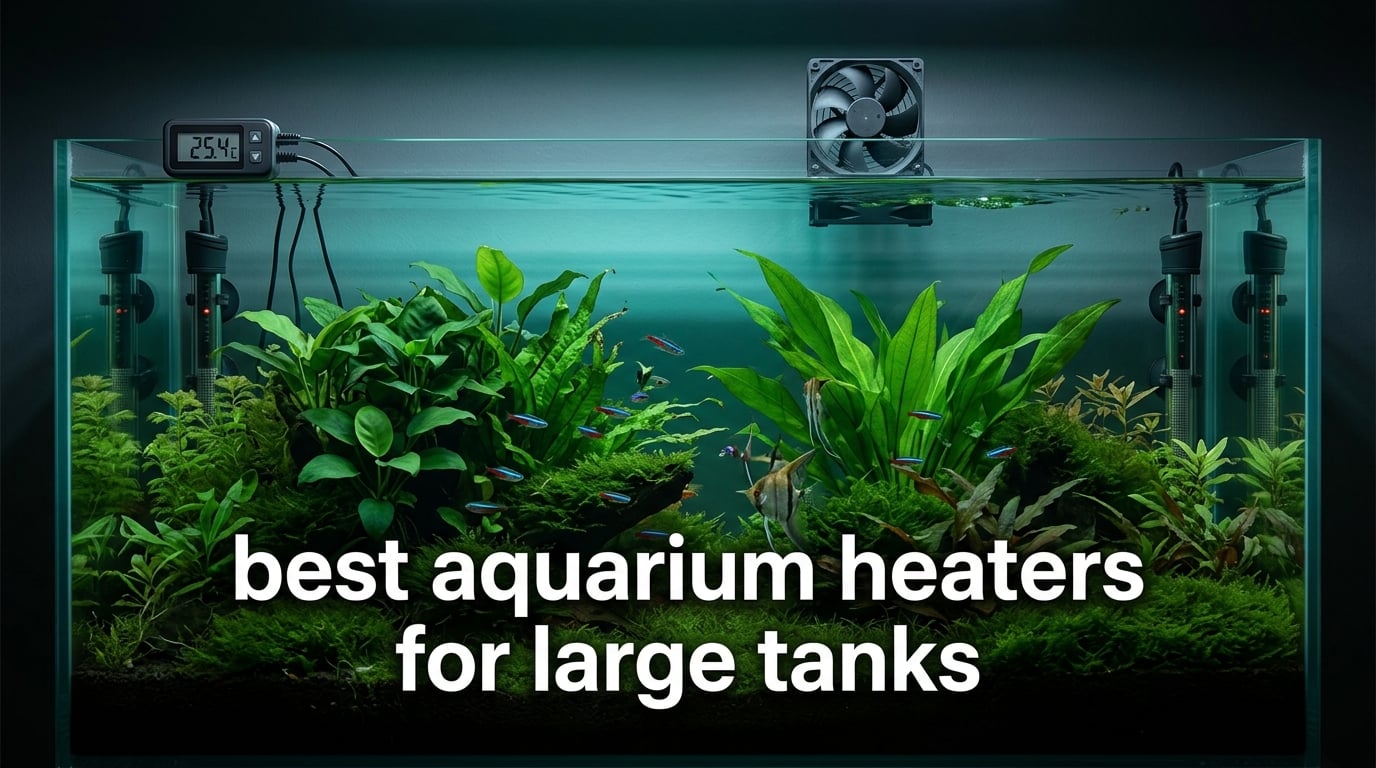
For tanks of 75 gallons or more, run two medium-sized heaters instead of one massive heater, because a thermostat that sticks on in a half-size heater takes roughly twice as long to cook the tank. That single rule shaped every pick in this roundup of the best aquarium heaters for large tanks, and it is the same rule the most experienced keepers on r/Aquariums and FishLore arrive at after they have lost livestock to a heater that would not switch off.
Getting the size right matters just as much as getting the brand right. A 150 gallon tank in a 68F room is a different problem from a 150 gallon tank in a 72F room, and a reef full of expensive corals is a different problem again from a freshwater community tank of hardy fish. So before we get into individual products, here is the short answer: the best aquarium heater for large tanks is a titanium-element or PTC heater in the 300W to 500W range, split across a pair, driven by an external controller, and never sized large enough to raise the whole tank more than 8F above ambient.
We spent weeks reading the spec sheets, the failure reports and the warranty complaints behind ten large-tank heaters, then sorted them by the tank band each one genuinely fits. What follows maps every heater to the gallons it is safe for, explains the five ways heaters fail, and gives you a watts-per-gallon sizing guide you can size any tank from. We earn a commission from some of the links here, and it does not change the order of the list.
Table of Contents
Top 3 Picks for the Best Aquarium Heater for Large Tanks (October 2026)
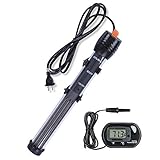
Orlushy 500W Quartz Glass
- 500W for 40-75 gallons
- 2mm explosion-proof quartz glass
- 68-89F dial within 1 degree
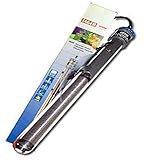
Eheim Jager 300W
- Rated for 159-264 gallon tanks
- 20 inch shatterproof glass element
- Thermo safety control guards dry running
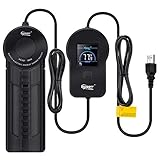
Hygger 800W with LED Controller
- 800W for 120-180 gallon tanks
- Titanium steel element
- Dual probe accuracy within 1 degree
The 10 Best Aquarium Heaters for Large Tanks in 2026
Every heater below is rated by the manufacturer for a specific volume, and we have paired each one with the tank band it makes sense in rather than sorting them by brand name. Wattage per gallon, or WPG, is the number to look at first: most of these are designed to sit in the 3 to 5 WPG range so the heater can lift the tank 8F to 10F above a cool room without running continuously.
| Product | Specs | Action |
|---|---|---|
| Orlushy 500W Quartz Glass Heater |
|
Check Latest Price |
| Eheim Jager 300W |
|
Check Latest Price |
| Hygger 800W with LED Controller |
|
Check Latest Price |
 Finnex TH-0500S Titanium 500W Finnex TH-0500S Titanium 500W |
|
Check Latest Price |
 HANLESHUKA 500W with Dry-Run Sensor HANLESHUKA 500W with Dry-Run Sensor |
|
Check Latest Price |
 AQQA 100W to 1200W Series AQQA 100W to 1200W Series |
|
Check Latest Price |
 HiTauing 300W and 500W HiTauing 300W and 500W |
|
Check Latest Price |
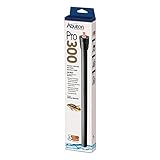 Aqueon Pro 300 Submersible Aqueon Pro 300 Submersible |
|
Check Latest Price |
 Eheim Thermocontrol e300 Eheim Thermocontrol e300 |
|
Check Latest Price |
 NICREW 300W with In-Cord Controller NICREW 300W with In-Cord Controller |
|
Check Latest Price |
1. Orlushy 500W Quartz Glass – Best Overall for Tanks Up to 75 Gallons
Orlushy Submersible Aquarium Heater,500W Fish Tahk Heater with Adjust Knob Thermostat 2 Suction Cups and Free Thermometer Suitable for Marine Saltwater and Freshwater (500W)
500W for 40-75 gallon tanks
2mm explosion-proof quartz glass
Dial control 68-89F
Fresh and saltwater
Pros
- Adjustable dial with 1-degree precision
- Automatic shut-off at set temperature
- Explosion-proof quartz glass
- Suction cups make it easy to hide
- Best seller rank number 9 in aquarium heaters
Cons
- Basic analog dial with no digital display
- Glass element is a risk with large aggressive fish
This is the heater we reach for when someone asks us for a single safe answer on a large tank, and it earned the top slot on evidence rather than hype. With 3040 reviews and a 4.5 average, it has the deepest owner history of anything on this list, and 76 percent of those reviews are five star. Owners keep coming back for one reason: it holds temperature and it shuts off.
The build is straightforward. A 500W element sits inside a 2mm thickened quartz glass tube rated for both freshwater and saltwater, with an adjustable dial covering 68F to 89F in one-degree steps and an automatic cut-off at the set point. The package measures 14.41 by 3.7 by 2.24 inches and weighs 1.12 pounds, which is compact enough to disappear behind a piece of driftwood.
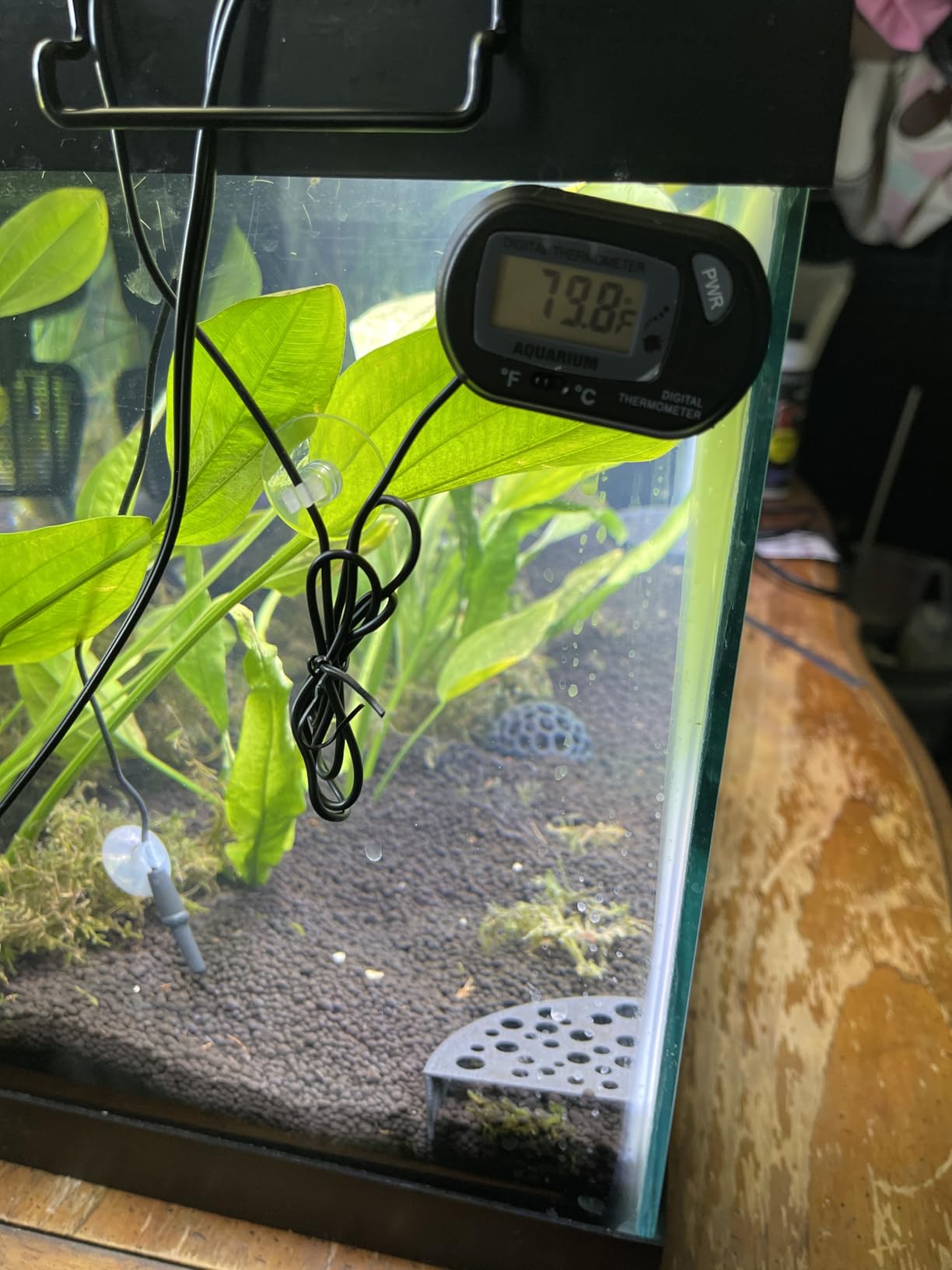
What makes this heater interesting in a large-tank conversation is the arithmetic, not the features. At 500W in a 60 gallon tank you are sitting near 8 watts per gallon, which is a strong recovery rate for a room-temperature home, and it is why this heater is the one we split into a pair for tanks in the 80 to 130 gallon range. Two of them at 300W each give you more warning time if a thermostat ever welds itself closed.
The honest limitation is that there is no digital readout anywhere in the chain. You are trusting a mechanical dial, and reviewers who prefer the feedback loop of an LED controller call the dial imprecise by comparison. We still rate it first for large tanks because analog feedback that you already know how to read beats a digital display on a heater that has a mediocre failure record.

Who this heater suits
This is the right pick for a 55 to 75 gallon freshwater or marine tank on a normal household budget, and it is a strong second heater for an 80 to 130 gallon tank run as a pair. If your fish are hardy community species and nobody is going to be upset by a two-degree swing, the simplicity is a feature.
It also suits anyone who wants a proven, boring heater. There is nothing clever about it, which means there is less that can go wrong in a part nobody has taken apart.
Who should skip it
Skip it if you keep oscars, arowana, pacu or any large cichlid that has room to accelerate. A glass tube in a tank with a fish that treats the tank like a territory is a gamble, and a titanium element is the cheaper answer.
Skip it if you need a hard high-temperature cutoff. A dial and a bimetallic strip are all you get, so the protection layer has to come from a separate controller and a cooling fan.
2. Eheim Jager 300W – Best Glass Heater for 159 to 264 Gallon Tanks
Eheim 3619090 Jager Aquarium Thermostat Heater 300W, Black
300W rated for 159-264 gallons
20 inch shatterproof glass element
Thermo safety dry-run control
Shock resistant for fresh or marine
Pros
- Very accurate and stable regulation once set
- Long element gives a large heating surface
- Heavy glass build resists cracking
- Quiet operation with no audible clicking
- Backed by a long warranty
Cons
- 20 inch length is hard to fit in shallow tanks
- Dial is deliberately awkward to turn
- Indicator light only glows while heating
The Jager is the heater that forum regulars name when someone wants reliable glass, and the 2387 reviews at a 4.4 average back that up. Owners consistently describe it as a German-made workhorse that runs quietly, holds its setpoint, and never once has surprised them. Seventy-one percent of reviews are five star.
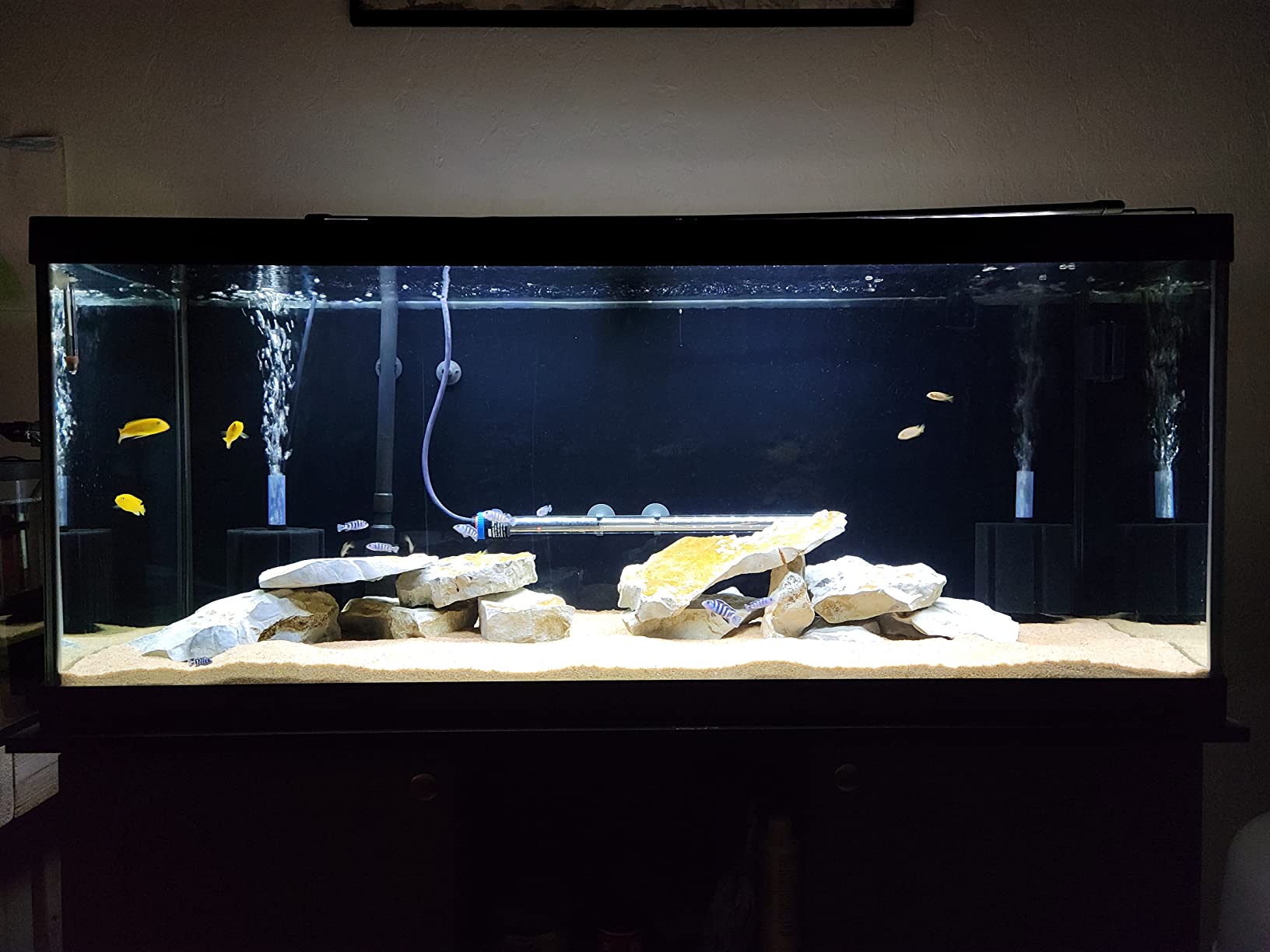
The specification that matters here is unusual: this 300W heater is intended for tanks between 159 and 264 gallons. That is a far bigger volume than most 300W heaters claim, and the reason is the element itself. At 20 inches long by 1.4 inches in diameter, it presents a much larger heating surface than a compact rod, so it moves heat more evenly through a deep tank.
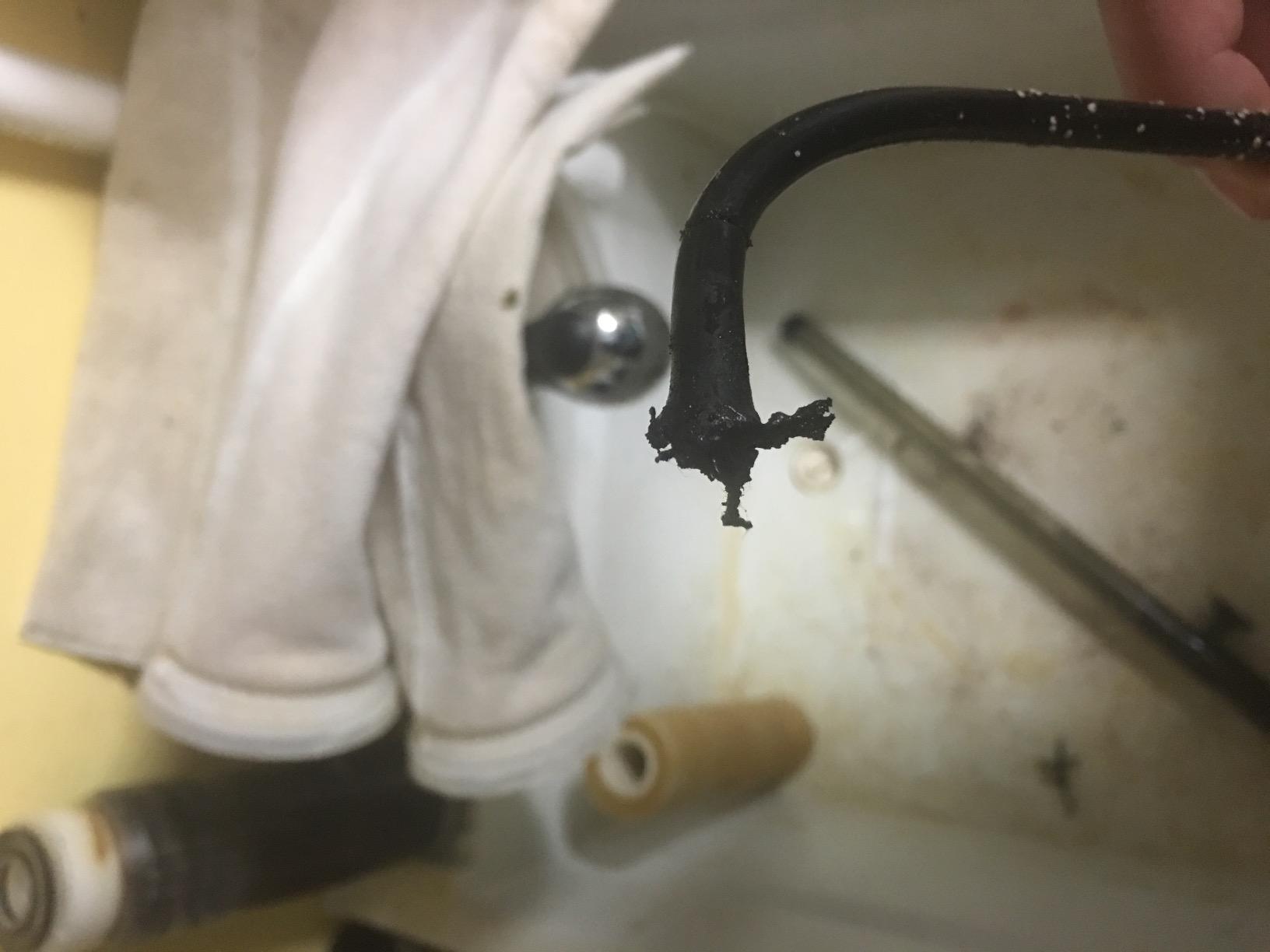
It is fully submersible, switches off automatically when the water level dips too low, and adds a thermo safety control as a second layer of dry-run protection. The glass is described by the manufacturer as shock resistant and shatterproof, and it works in fresh or marine water. An on and off indicator light gives at-a-glance status.
Two design choices are deliberate rather than careless. The adjustment dial is intentionally awkward so nobody knocks it out of position during a water change, and the indicator light only glows while the element is heating, so a dark light at temperature is normal rather than a fault. Both frustrate people for an afternoon and then never bother them again.
Who this heater suits
It suits deep, tall tanks from 125 to 180 gallons where a compact 300W rod would struggle to distribute heat, and any 200 to 264 gallon setup that wants glass rather than titanium. The long element is genuinely better in a tall body of water.
It also suits anyone who plans to keep this heater for years. The long warranty and the volume of long-term owners are the reason this is the second recommendation on the list.
Who should skip it
Skip it for shallow tanks or low cabinets. A 20 inch tube will not fit, and forcing it into a short tank is how glass heaters get cracked before they ever heat up.
Skip it if you want a digital readout or a high-temperature alarm. This is a mechanical thermostat with a safety cutoff, not a monitored system, so the third layer of protection has to come from elsewhere.
3. Hygger 800W – Best for 120 to 180 Gallon Tanks With a Digital Controller
hygger 800W Aquarium Heater, Submersible Fish Tank Water Heater with External Color LED Digital Temperature Controller, Fast Heating for 120-180 Gallon
800W for 120-180 gallon tanks
Titanium steel element
LED readout to 0.1F
Dual probe within 1 degree
Pros
- External digital controller with live readout
- 800W output sized for 120-180 gallons
- Automatic over-temperature shutoff
- Dry-run detection stops heating in air
- Titanium steel element resists corrosion
Cons
- Lowest average rating here at 4.1 with 14 percent one star
- External controller is not waterproof
- Reports of units drifting off setpoint
Nothing else on this list puts 800W behind a digital controller at this weight class, which is why the Hygger earns the 120 to 180 gallon slot. The HG921 uses a titanium steel heating element rated for 120 to 180 gallon tanks, with a three-digit LED display that reports to 0.1 degrees F. Owners who like visible feedback get it here for the first time.
The safety layer is more substantial than the analog heaters on this list. An over-temperature cut-off throws an EE fault code above 93.5F and stops heating entirely above 97F, and an anti-dry mode shows ER and shuts down when the element is exposed to air. A dual temperature probe holds accuracy within plus or minus 1 degree F, and a power-off memory function restores your setpoint after an outage.
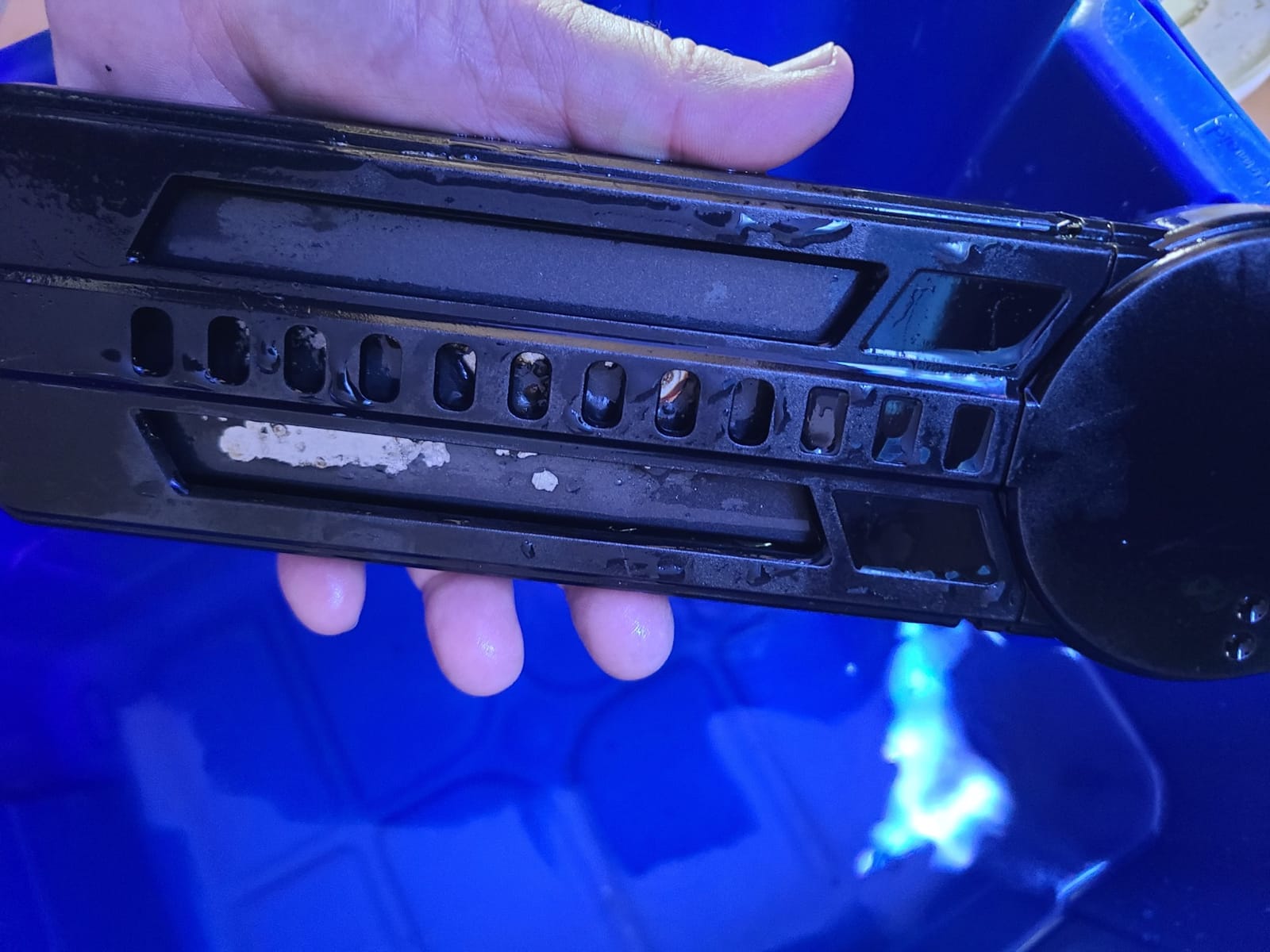
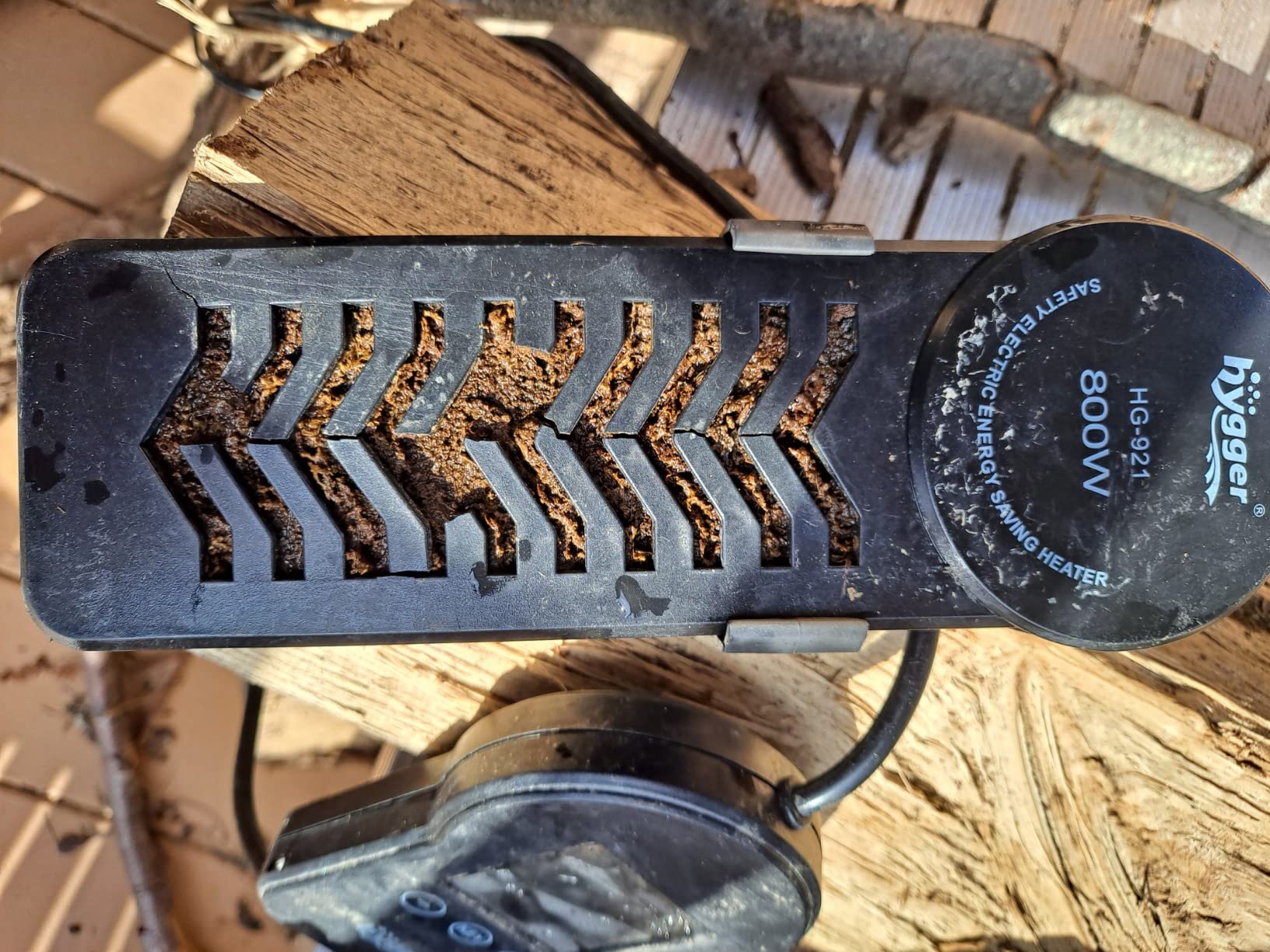
Here is the part we will not soft-pedal. At 4.1 average with 773 reviews, this is the lowest-rated heater on the list, and 14 percent of reviews are one star. Those reviews concentrate on two things: heating elements or controllers that stop working, and units that gradually drift away from the setpoint. A titanium element that heats in about five seconds and then fails is a specific kind of frustration.
That record matters enormously on a large tank, where a failure has more water and more livestock behind it. The 4.1 rating is not a dealbreaker on its own, but it means this heater belongs in a redundant pair with a second layer of control, never as the only thing between your fish and the room temperature.
Who this heater suits
It suits a 120 to 180 gallon tank where you want one device to handle recovery and monitoring, especially in a cold room where you need the wattage to come back quickly. It also suits anyone who insists on a titanium element and a digital readout in the same package.
For a 180 gallon plus setup, run two of these rather than one and accept the controller cost as part of the build.
Who should skip it
Skip it if your tank is full of expensive livestock and you want the strongest reliability record available. The one-star complaints on this listing are about failure, not about temperature holding, and that is the wrong risk profile for a reef.
Skip it if your controller shelf is anywhere near water. The external controller is not waterproof and must stay dry, which is a real constraint in a sump setup with a lot of spray.
4. Finnex TH-0500S 500W – Best Titanium Element for 70 to 130 Gallon Tanks
Finnex Premium Titanium Aquarium Heater, TH Series, Deluxe Nickel Coil, Heater Guard, Made in Taiwan (500 Watts)
500W titanium build for 70-130 gallons
Corrosion-resistant element
Deluxe nickel coil and heater guard
Lifts water plus or minus 8F
Pros
- Titanium element resists corrosion in fresh and salt
- Built for large tanks at 70-130 gallons
- Slim profile with integrated heater guard
- Consistent Taiwan build quality
- Standard in reef and marine setups
Cons
- No digital display or external controller
- Costs more per watt than digital alternatives
The Finnex TH is the titanium specialist in this group, and reef keepers treat that element as a different category of object from glass. At 500W it carries a suggested water volume of 70 to 130 gallons, which puts it squarely in the middle of every large tank we get asked about. The build is made in Taiwan, and the review base of 133 at a 4.4 average reflects a settled, satisfied ownership group.
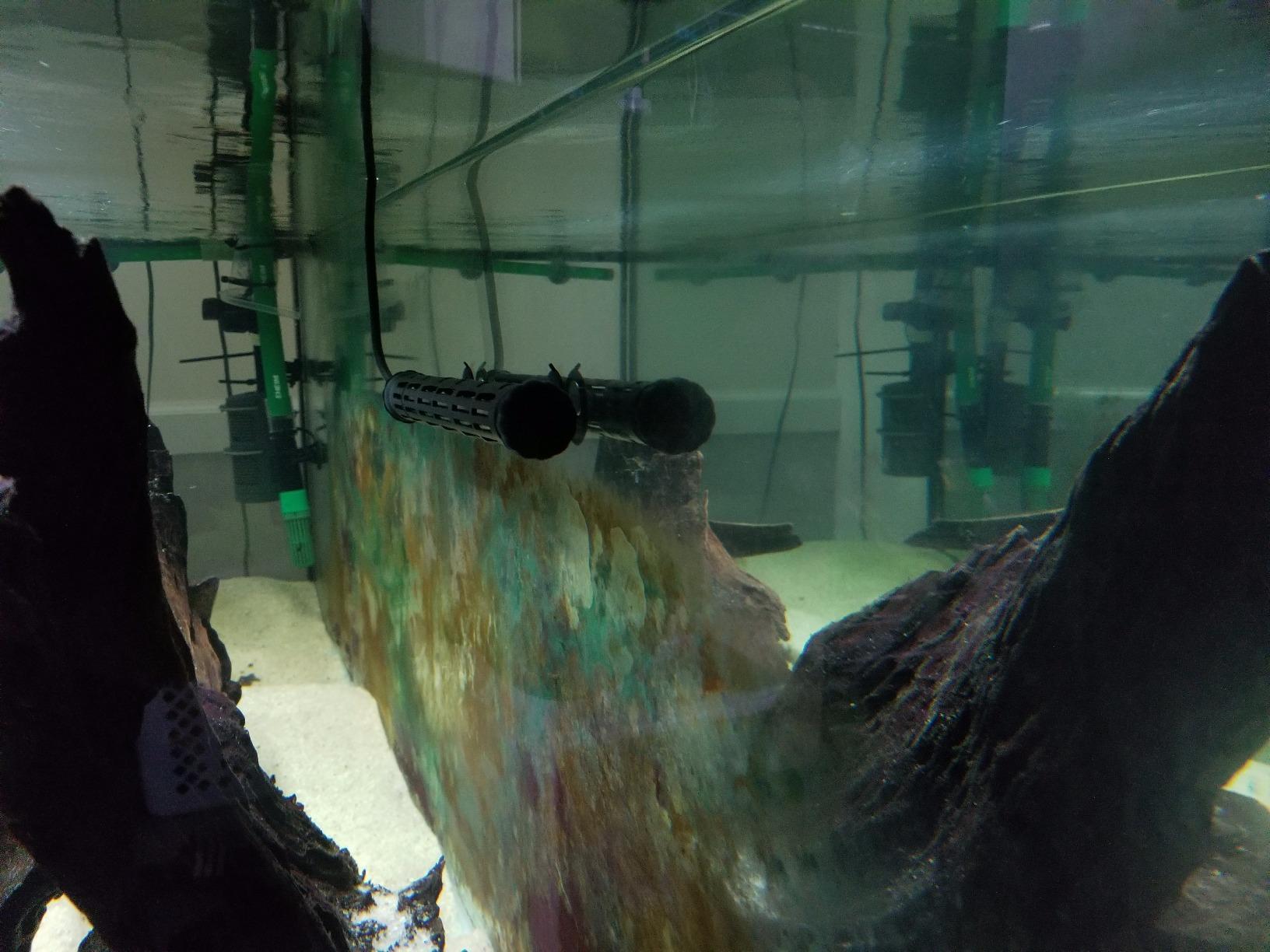
What you are buying is corrosion resistance. A titanium element does not crack when a fish rams it, does not corrode from salt, and does not care that you have a large cichlid with an attitude. The deluxe nickel coil and integrated heater guard add a physical layer around the element, and the whole package measures 13.5 by 1 by 1 inches at 1.23 pounds.
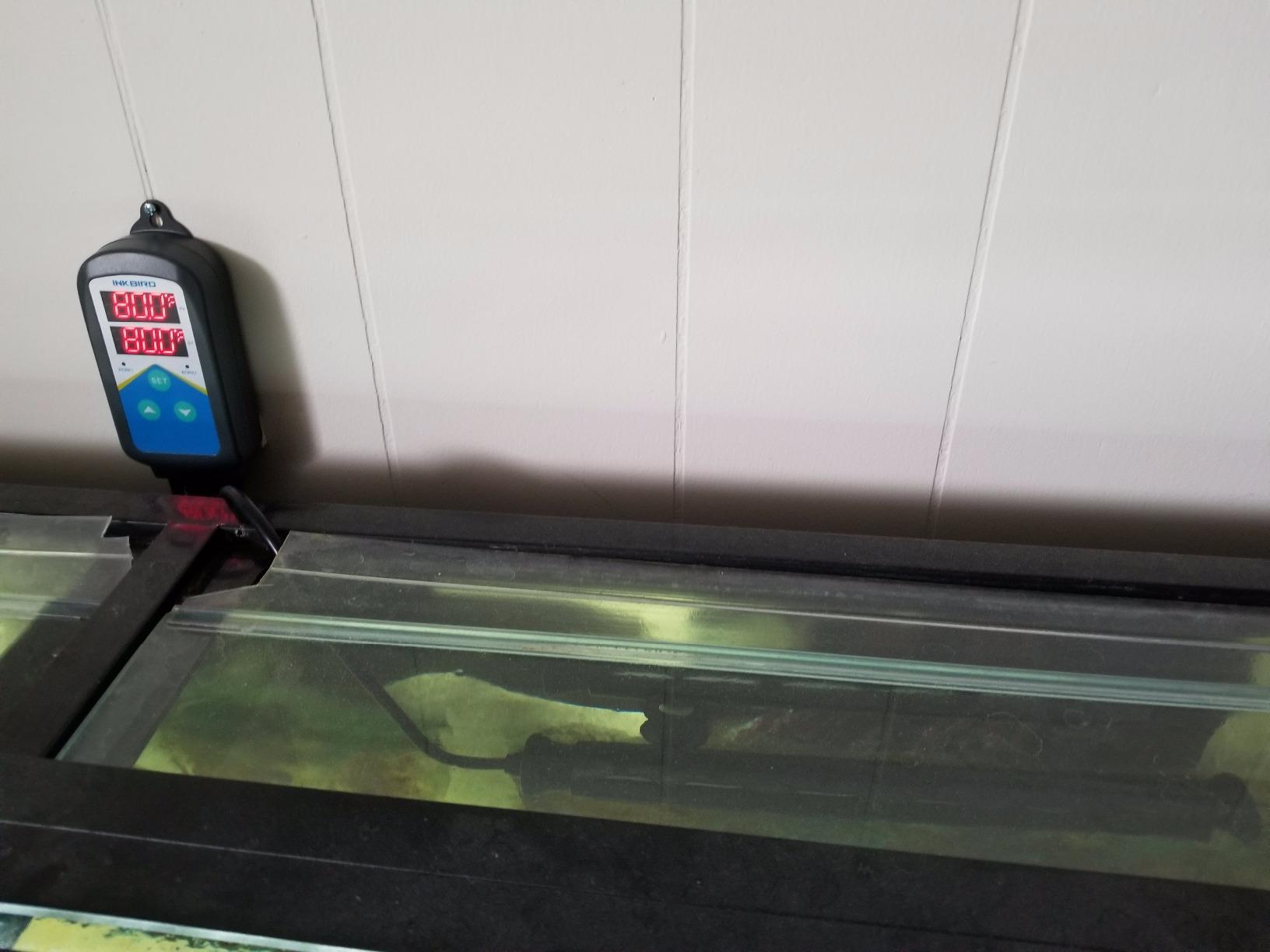
One spec gets overlooked. The manufacturer states heating capacity of up to plus or minus 8F above ambient room temperature, which is the honest ceiling for any large-tank heater and the reason we never recommend oversizing past that number. If your room drops to 66F and you want 78F of water, a heater that can only lift 6F will run nonstop and still miss target.
The same line also comes in 300W, 700W and 800W versions, so if your tank sits between the bands this one covers, the family covers the gap without changing element material. We would pair two 300W Finnex TH heaters on a 150 gallon tank rather than chase a single oversized one.
Who this heater suits
It suits anyone with large aggressive species, since titanium is the answer to the fish that breaks glass. It also suits a 70 to 130 gallon marine or reef tank where corrosion resistance matters more than a digital readout.
It suits owners who want one purchase that will not need replacing in three years, and reef keepers who already trust the brand for other equipment.
Who should skip it
Skip it if you need a display you can check at a glance. There is no screen and no external controller, so you need an independent thermometer and a monitored socket to get that.
Skip it if you are running a single heater above 130 gallons. At that point you want two of these on separate controllers, and the total spend tells you whether that is realistic.
5. HANLESHUKA 500W – Best Dry-Run Protection for 70 to 120 Gallon Tanks
HANLESHUKA 500W Aquarium Heater for 70-120 Gallon with Auto Shut-Off When Leaving Water—Submersible Fish Tank Heater, Dry-Burn & Overheat Protection, Explosion-Proof, Freshwater Saltwater Large Tank
500W for 70-120 gallon tanks
Cuts power the moment it leaves water
External digital controller
2mm quartz glass under seashell guard
Pros
- Instant power cut when it leaves the water with audible alarm
- Triple safety with dry-burn overheat and max temperature
- Seashell guard protects fish from hot surfaces
- External controller shows real-time and target
- Strong capability for 70-120 gallon tanks
Cons
- Newer brand with a small review base
- Suction cups can shift in heavy rockwork
This is the heater with the most aggressive safety behaviour in the group, and on a big tank that is the feature that should drive the decision. The dry-burn sensor cuts power the instant the heater leaves the water, sounds an audible alarm, and restarts automatically once it is submerged again. Water changes are exactly when most aquarium heaters meet their worst moment, and this one simply refuses to participate.
It stacks three protections: dry-burn prevention, overheat protection that stops heating when the water exceeds the setpoint by 1 degree F, and a maximum temperature stop. The 500W rating covers 70 to 120 gallon tanks, and the same family runs from 100W to 500W if your tank is smaller than the headline number suggests.
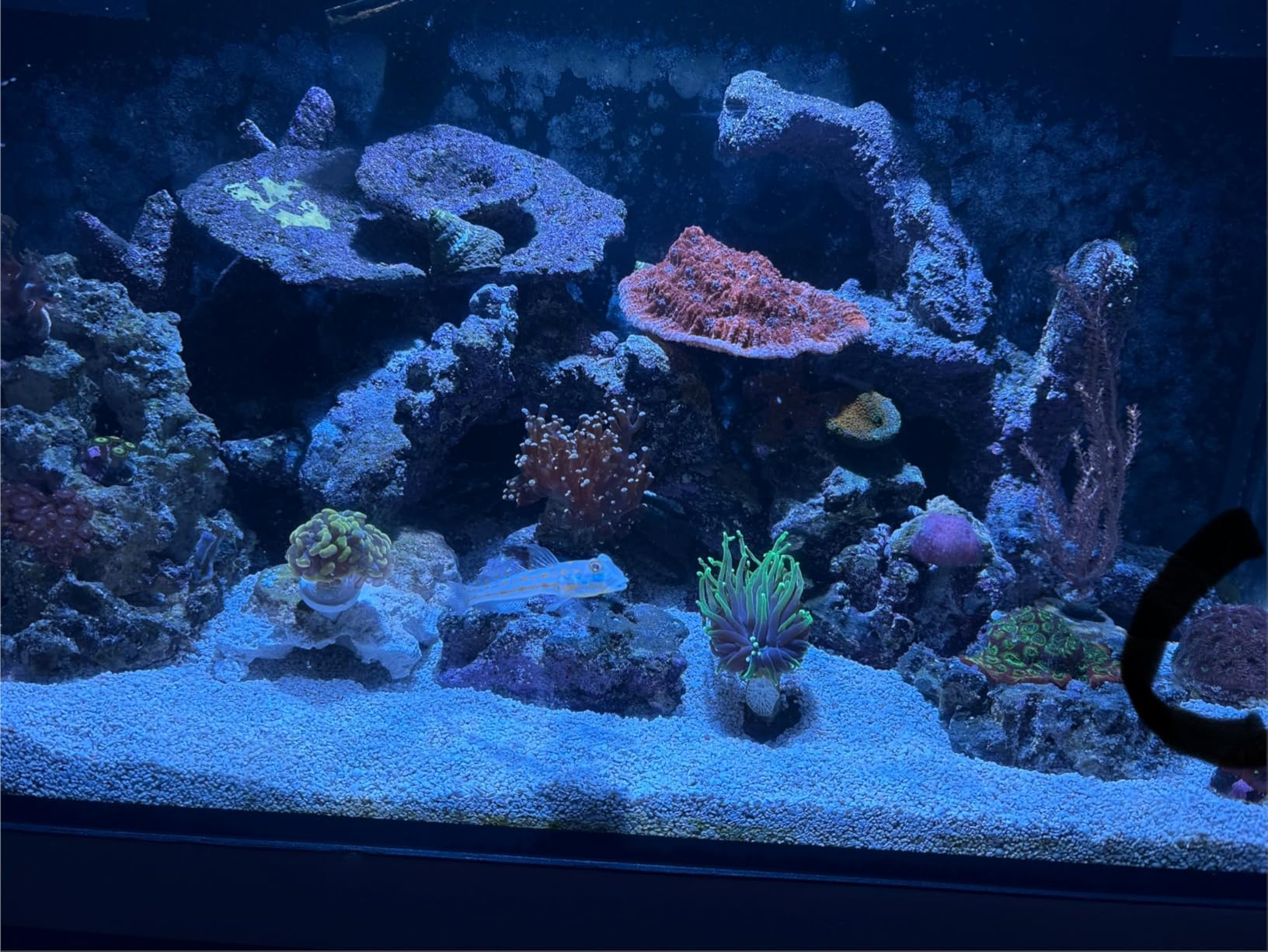
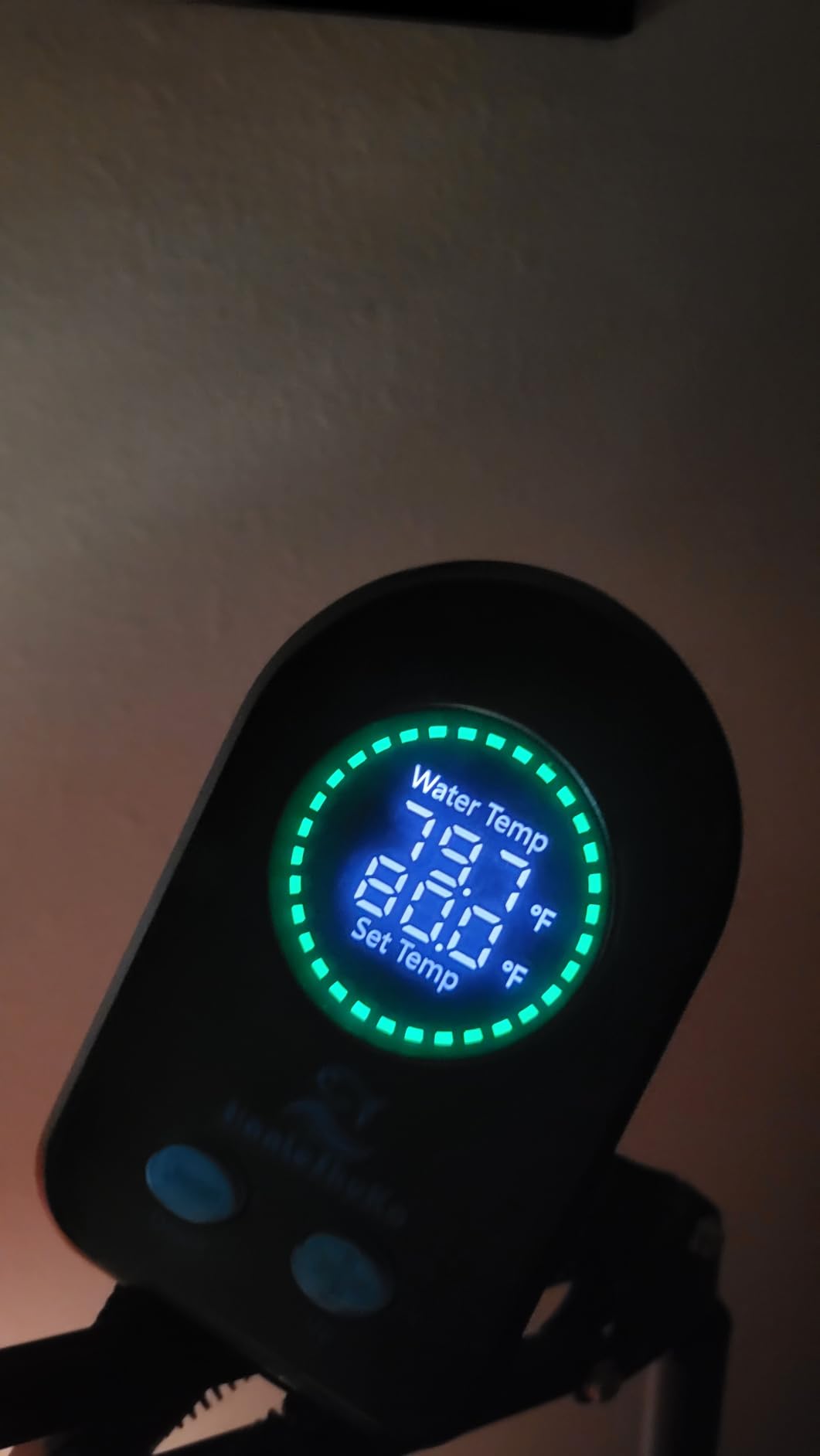
Around the 2mm explosion-proof quartz glass sits a seashell-pattern guard, and the two jobs it does are both practical. It shields livestock from a hot glass surface, and it breaks up the rising heat into a more even distribution instead of letting it column straight to the surface. The external digital controller runs within plus or minus 1 degree F and shows red while heating and green when ready, which removes the guesswork that plagues analog dials.
We are cautious about the small base of 280 reviews at a 4.4 average. A newer brand with a thin history cannot show you what happens in year five, and the range tops out at 500W, so this is a component heater for a 70 to 120 gallon tank rather than the whole answer above 150 gallons.
Who this heater suits
It suits anyone who does water changes in a large tank and has lost a heater to a splash before. The audible alarm and instant cut-off turn a silent failure into something you notice immediately.
It also suits a 70 to 120 gallon tank where you want a digital controller and triple safety without stepping up to a 300W titanium element.
Who should skip it
Skip it if your tank is over 120 gallons. The wattage ceiling here means you would be running two or three, and at that point you should be looking at a titanium element instead.
Skip it if you want a brand with a decade of service history behind the warranty. A 280-review base cannot tell you how the company behaves at year six.
6. AQQA 100W to 1200W – Highest Wattage Range for Tanks Up to 264 Gallons
AQQA Submersible Aquarium Heater,100W/200W/300W/500W/800W/1000W/1200W
100W to 1200W in one family
1200W rated for 132-264 gallons
Quartz glass with LED controller
Dry-run E1 fault with auto recovery
Pros
- Widest wattage ladder available up to 1200W
- LED controller shows current and set temperature
- Dry-burn protection and memory function
- Adjustable hook hangs the controller on the rim
- High temperature resistant PC shell
Cons
- External controller is not waterproof
- Dial and buttons feel imprecise against touch controllers
Nothing else in this roundup solves the 200 to 264 gallon problem in a single purchase, and that is the entire argument for the AQQA family. It runs from 100W to 1200W, with a 500W version for 66 to 135 gallon tanks and a 1200W version rated for 132 to 264 gallons. When forum keepers ask what the largest aquarium heater available looks like, this is the honest ceiling in a residential tank.
The element is explosion-proof quartz glass with nickel-chromium heating wire and silicon carbide for heat conduction, rated to raise temperature 1 degree C in about two hours. That is a slower climb than a compact rod, which is exactly why you want it on a big volume rather than a small one: it is built to be patient rather than violent. Control comes through an external LED controller with a clear colour language: red while heating, blue at constant temperature, and flashing blue when the heater is not submerged. A memory function retains your set temperature after a power cut, which quietly removes one of the most common ways a tank overheats after an outage. The adjustable hook lets the controller hang on the tank rim, and a high temperature resistant PC shell keeps fish away from the hot surface.
The honest weakness is control ergonomics. Dial-and-button adjustment feels imprecise next to a full touch controller, and the external controller is not waterproof, which matters if your equipment lives near a sump with spray. The 4.4 average across 252 reviews reflects a value-focused design rather than a premium one.
Who this heater suits
It suits a 200 to 264 gallon tank where you want one device to cover the whole volume and you have decided, deliberately, to accept a single point of failure. On a setup that valuable, we would still add a controller and a cooling layer on top.
It also suits anyone who owns tanks across several sizes and wants one brand and one spare part across all of them.
Who should skip it
Skip it for a tank with large aggressive fish. A quartz glass element is the wrong choice when the fish can reach it, no matter how well the guard is shaped.
Skip it if you need fine control. This is a coarse instrument, and anyone chasing half-degree precision should buy a digital controller and a smaller heater instead.
7. HiTauing 300W and 500W – Best Digital Readout for 40 to 135 Gallon Tanks
HiTauing Aquarium Heater, Upgraded 300W/500W Fish Tank Heater with Intelligent Leaving Water Automatically Stop Heating and Advanced Temperature Control System, Suitable for Saltwater and Freshwater
300W for 40-75 gallons and 500W for 75-135
Quartz glass with black ABS shell
Dual LED display 63-94F
Shuts down when lifted from water
Pros
- Digital LED controller shows real-time and set temperature
- Automatically stops heating when out of the water
- Explosion-proof quartz glass with ABS shell
- Wide 63-94F range with F and C toggle
- Removable housing and strong suction cups
Cons
- Black outer shell traps heat during handling
- Digital readings can drift from an external thermometer
The HiTauing covers two useful bands with one design: 300W for 40 to 75 gallon tanks and 500W for 75 to 135 gallons. At a 4.5 average across 466 reviews with 79 percent five star, it has a better satisfaction record than most of the heaters above it, and the reason is that the display and the cut-offs do the work the dial cannot.
Both readings appear on the digital LED controller at once, so you can see the setpoint and the current water temperature without walking to a separate thermometer. The range runs 63F to 94F with a Fahrenheit and Celsius toggle, which is wide enough for a cold room and for the tropical end without swapping hardware. The temperature probe shuts heating off and shows E1 when the heater sits 5cm above the surface.
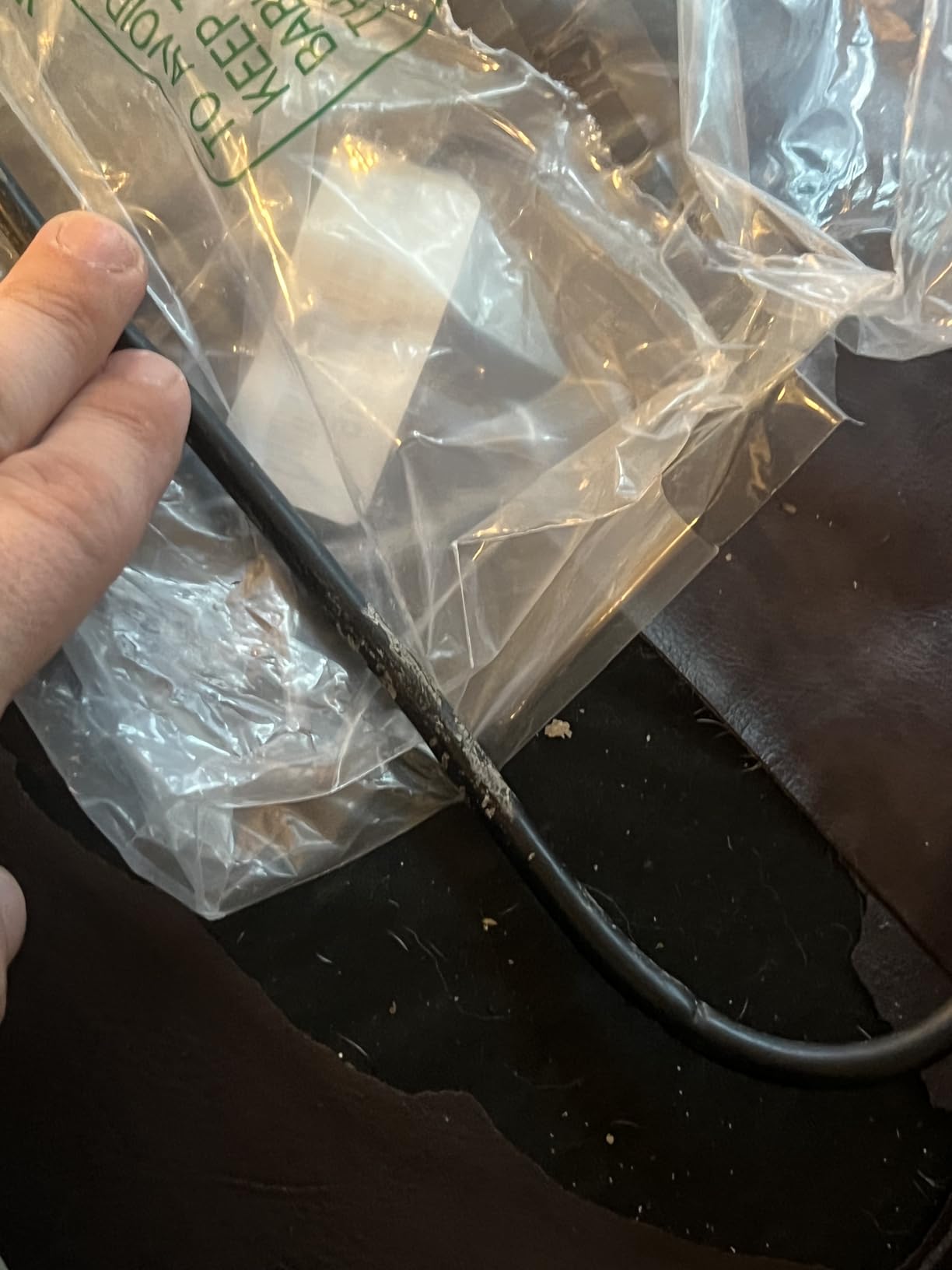
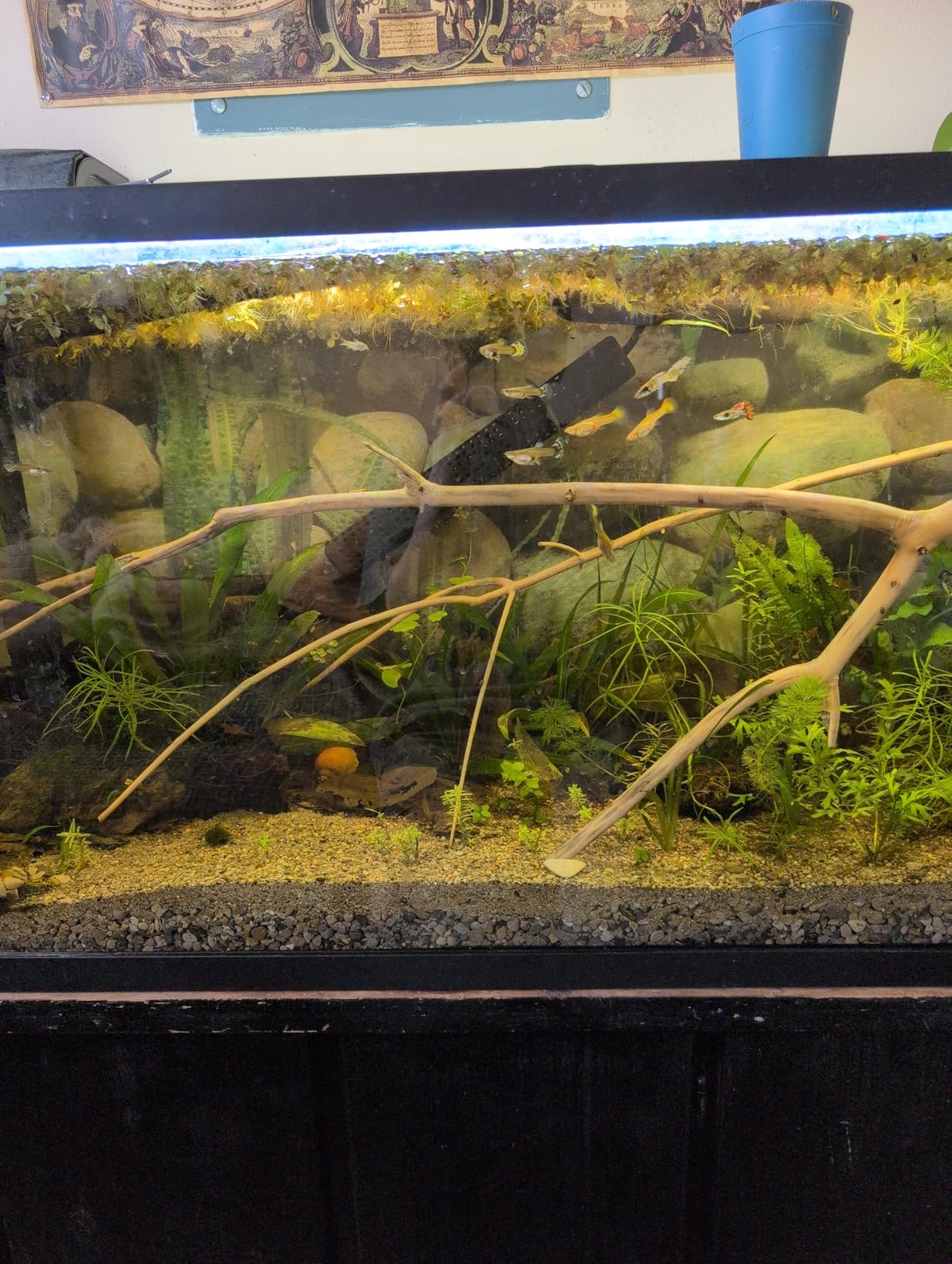
Construction is an explosion-proof quartz glass tube inside a black ABS protective shell, on a 12.99 inch rod with a 98.5 inch cord, running on 100-120V at 50-60Hz with a universal two-pin plug. The housing disassembles into four sections with two strong suction cups, so you can place the element for flow rather than for convenience and still keep the controller readable from outside the tank.
Two reviewer complaints are worth repeating verbatim rather than smoothing over. The black outer shell retains heat, so you need to be careful handling it out of the water, and the digital reading can sit a few degrees away from a good external thermometer. If you care about absolute accuracy, calibrate against a separate thermometer and trust that one instead.
Who this heater suits
It suits a 75 to 135 gallon tank that needs a visible readout and automatic dry-run shutdown, and it suits cold rooms where a 63F lower bound is genuinely useful rather than decorative.
It also suits anyone setting up a two-heater build on a budget, because two of these give you two independent digital readouts for less than one premium element.
Who should skip it
Skip it above 135 gallons. The wattage ceiling means you would need three heaters, and past that point a titanium element is the correct material.
Skip it if you need saltwater-grade corrosion resistance over many years. The quartz glass and ABS shell will do its job, but it is not the choice for a display reef you plan to keep running for a decade.
8. Aqueon Pro 300 – Best Slim Design for Tanks Up to 100 Gallons
Aqueon Pro 300 Submersible Fish Tank Heater, 300 Watts
300W for tanks up to 100 gallons
Shatterproof metal housing
Electronic thermostat within 1 degree
Auto shut-off on overheating
Pros
- Slim low-profile design hides well in planted tanks
- Simple dial with 2 degree increments
- Red LED glows while actively heating
- Dual auto shut-off for overheating and mishandling
- Shatterproof construction with suction cups
Cons
- Several owners report failure after about a year of use
- Some units crack or lose calibration within months
- Dial can feel stiff and hard to adjust
The Aqueon Pro 300 is the aesthetic answer in this roundup. At 1.5 by 1.5 by 15 inches and 12 ounces, it is the smallest profile here, which matters more than it sounds when you are trying to hide heating equipment behind rockwork in a display tank. It is also the heater a lot of keepers bought specifically for the warranty, and that story has since turned complicated.
The electronics are better than the size suggests. The electronic thermostat is accurate to plus or minus 1 degree F across a 68F to 88F range, the housing is shatterproof metal rather than glass, and there are two automatic shut-offs: one for overheating and one for mishandling, with a reset once it cools. A red LED glows while the element is actively heating, and suction cups are included.
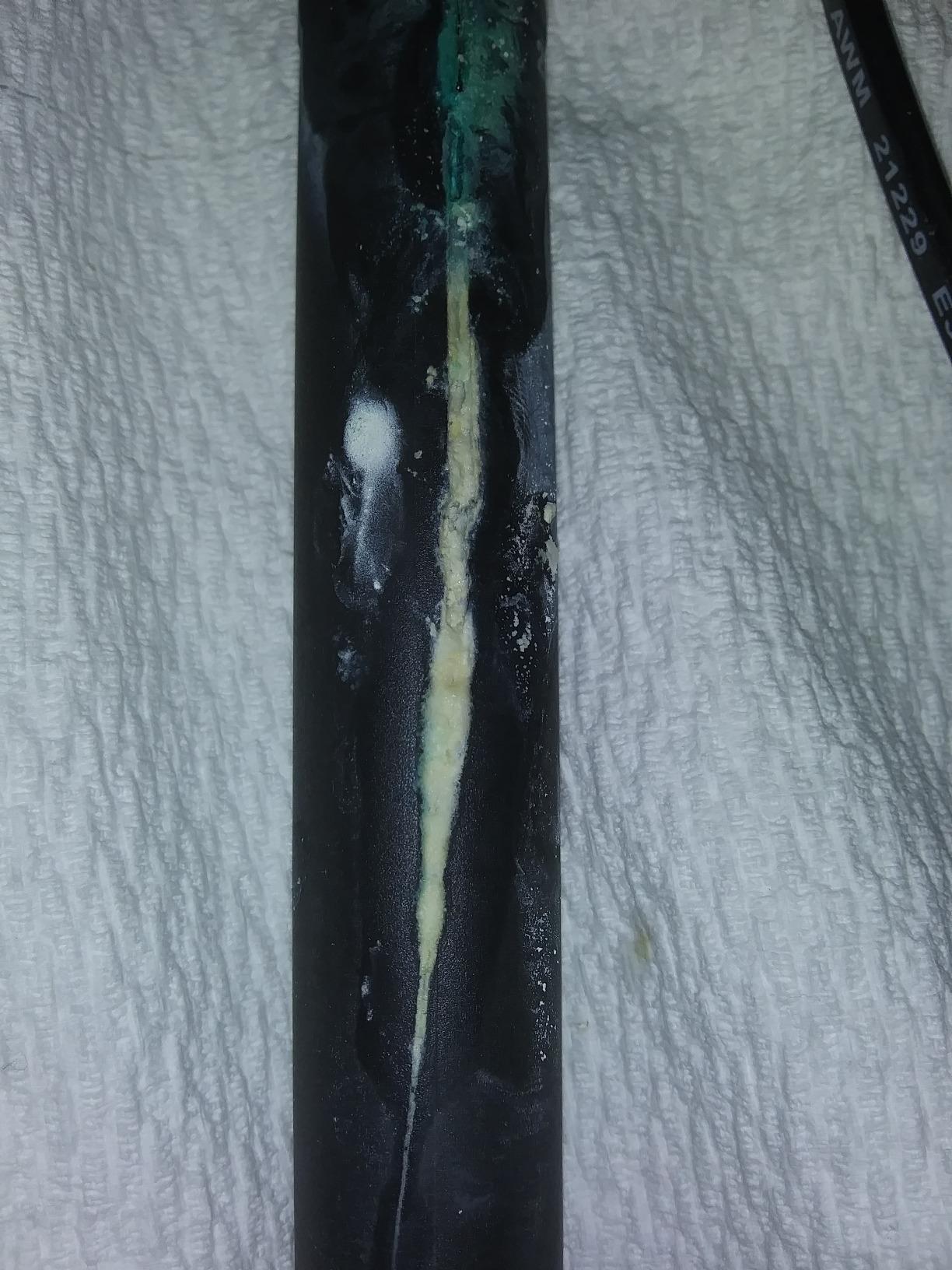
Now the part nobody in this niche says out loud. Aqueon has historically been advertised with a lifetime warranty, and a FishLore member reports emailing the company about five or six dead Pro heaters only to find the service department had been outsourced and the labelling changed to a limited warranty. We are not repeating the lifetime warranty claim on that basis, and neither should you when you weigh this heater against the others.
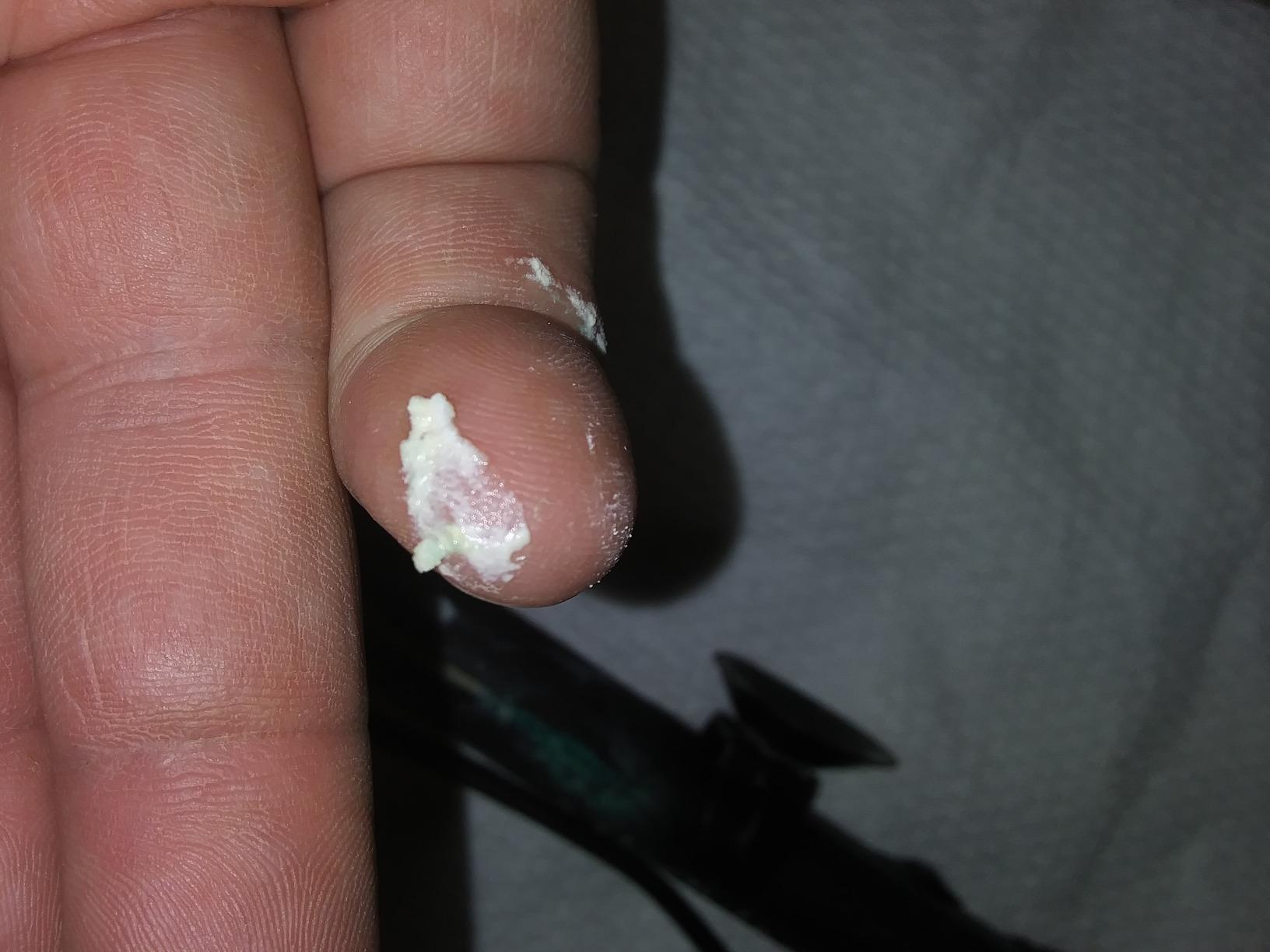
Durability is the other recurring theme. Several owners report units ceasing to work after about a year of seasonal use, and some cracking or losing calibration within months, against a 4.4 average across 429 reviews with 75 percent five star. That is a mixed record rather than a bad one, but on a 100 gallon tank it is a real consideration, which is exactly why multiple keepers recommend budgeting for annual replacement.
Who this heater suits
It suits a display tank up to 100 gallons where the heater has to disappear, and anyone with a sump or a heavily decorated aquascape where a 1.5 inch profile is the difference between a clean look and an obvious box of electronics in the corner.
It also suits owners who prioritise a physical dial over a screen, because the red heating light tells you the state of the tank at a glance.
Who should skip it
Skip it if long-term reliability is the deciding factor, and give the warranty question a careful look before you buy on the strength of a marketing claim. Two years is roughly what a lot of owners report getting.
Skip it above 100 gallons. The manufacturer recommends tanks up to 100 gallons, and running it beyond that means it never catches up.
9. Eheim Thermocontrol e300 – Best Simple Analog Heater for Large Tanks
Eheim Thermocontrol e300 Heater
Adjusts from 68F to 89F
Works in fresh and marine tanks
Single red dial with small window
No calibration function
Pros
- Well-made engineering that feels dependable
- Accurate and steady once calibrated against a thermometer
- Works in both freshwater and marine tanks
- Quiet operation with one easy dial
Cons
- Reads about 2F off with no calibration function
- Dial markings poorly labeled and window is tiny
- Must be removed from the tank to adjust
- Some reports of condensation inside the glass
The e300 is the older, simpler sibling to the Jager, and it earns a place for a specific reason: fewer things can go wrong. There is one red adjustment dial, a small temperature window, and a 68F to 89F range covering 20C to 32C. Seventy-one percent of its 153 reviews are five star, and owners describe the build quality in words like dependable rather than exciting.
It suits both freshwater and marine aquariums, which makes it a flexible choice when a tank gets converted. The controls are deliberately minimal, and the whole point is that after ten minutes of setting it, you never touch it again. At 4.3 across 153 reviews, it has the second lowest rating here, and the reason is the absence of features rather than the presence of faults.
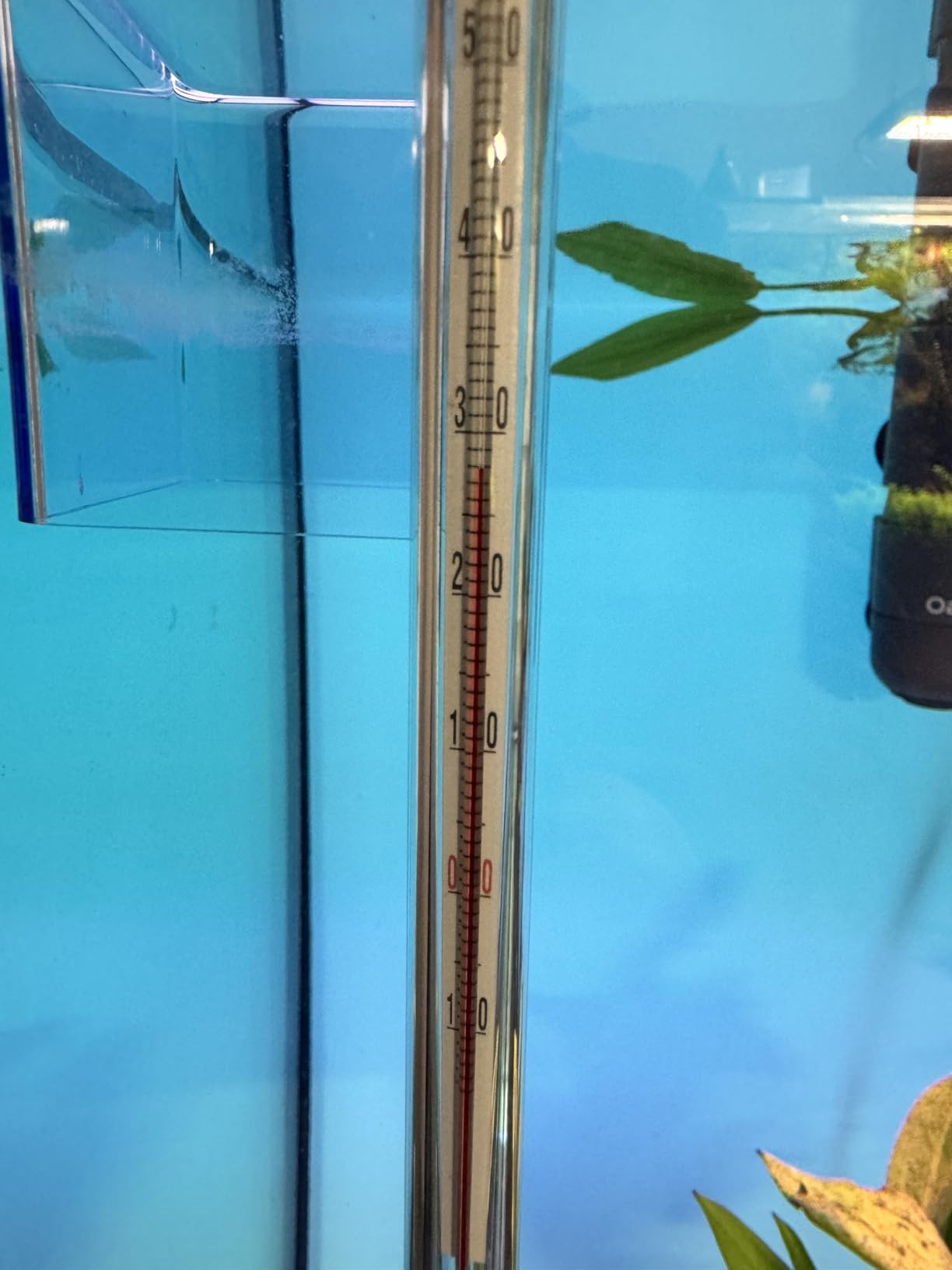
The most common complaint is accuracy. There is no calibration function on this model, so if the internal reading sits about 2 degrees away from a good external thermometer, you correct for it once with the dial and then live with the offset. The dial markings are also poorly labeled and the temperature window is small, so setting it accurately in a dim cabinet takes patience. It also has to be pulled out of the tank to adjust, and the top water mark matters.
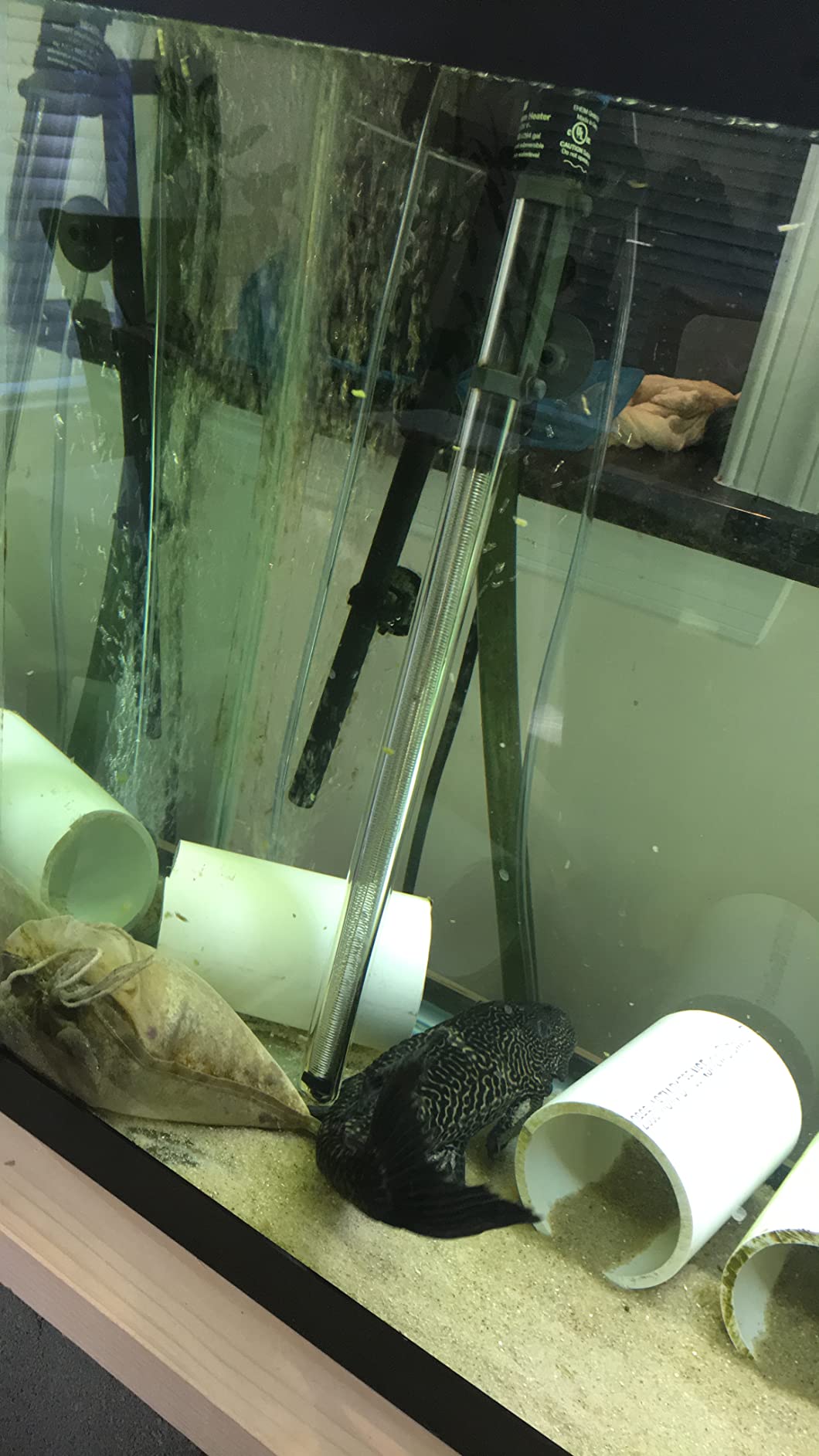
There is a smaller but more serious thread of reports about condensation forming inside the glass and heaters that stop heating entirely. It is not the dominant pattern, but on a large tank we would pair it rather than trust it alone, and we would keep an independent thermometer on the tank at all times.
Who this heater suits
It suits someone who wants a straightforward German-engineered analog heater with no controller to mount, no display to read, and nothing to reset after a power cut. Set it, verify it once, and forget about it.
It also suits a mixed-use setup where the same tank might see both freshwater and marine periods, since the unit handles either.
Who should skip it
Skip it if you care about a precise setpoint without offset correction. The lack of a calibration function is a real limitation when a reef runs at 78.5F rather than 78F.
Skip it if you want a dry-run alarm. Nothing here tells you the heater is out of the water; it just keeps heating according to the dial.
10. NICREW 300W – Most Versatile for 50 to 80 Gallon Tanks
NICREW Aquarium Heater 300W with Adjustable Temp Controller, 50-80 Gallon
300W covers 50-80 gallon tanks
In-cord digital controller
Overheat cut-off above 98F
Dual temperature sensor
Pros
- In-cord controller adjusts without putting hands in water
- Display shows current temperature and holds it steadily
- Suction cups stay attached in active tanks
- Small black body is easy to hide
- Support replaced a faulty heater quickly
Cons
- Controller reads 2-3 degrees off an external thermometer
- No 500W option above 80 gallon tanks
- Occasional reports of failure or dim displays
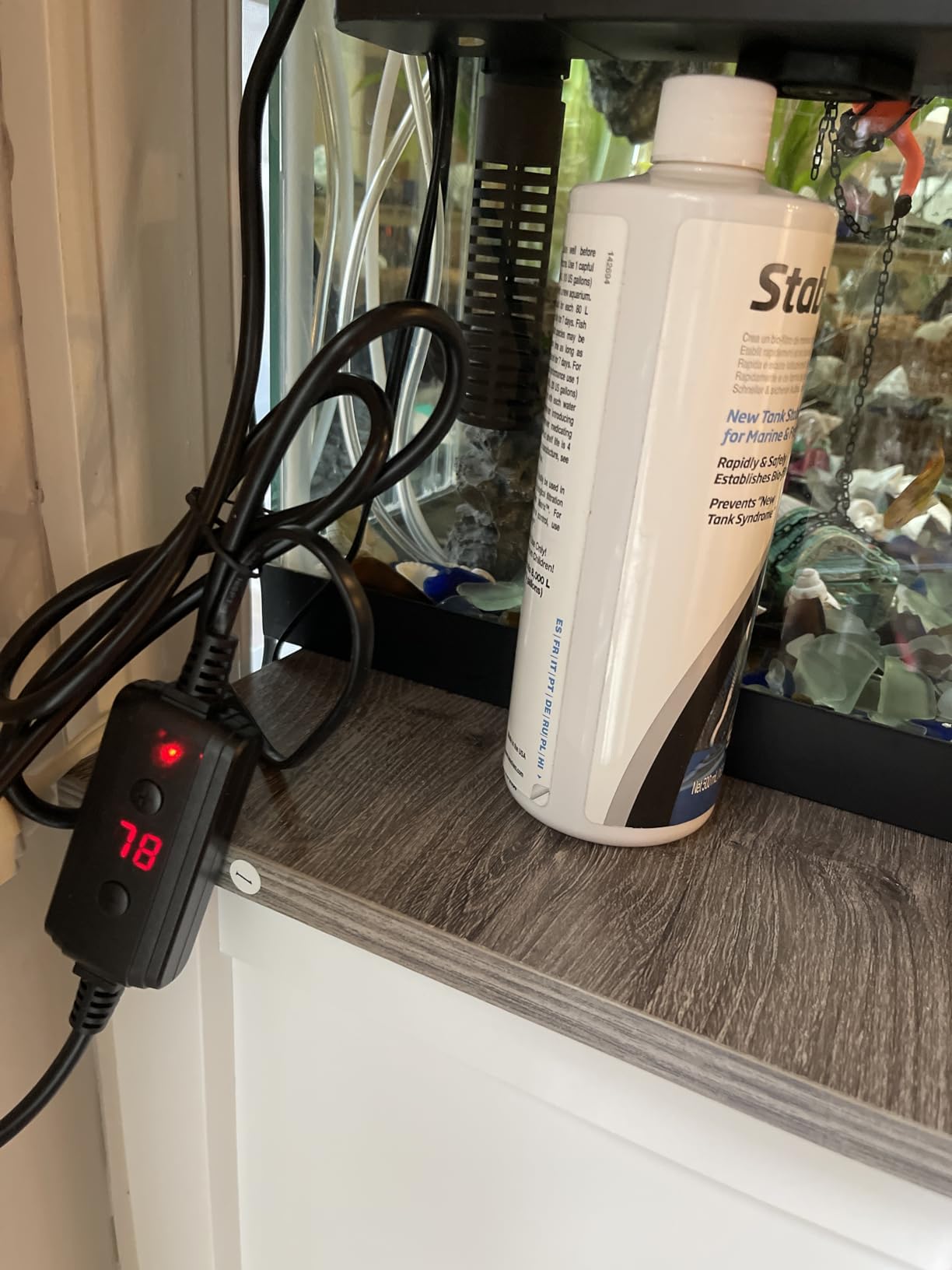
The NICREW earns the budget slot because it does something almost nothing else in this roundup does: the digital controller is in the cord, so you can change the setpoint from outside the tank with dry hands. On a large tank that is a genuine safety improvement during a water change, where reaching into the water to adjust a controller is how people get into trouble.
The 300W rating covers 50 to 80 gallon tanks, so think of this as the second heater in a redundant pair for a 100 to 130 gallon setup rather than a whole-tank solution. It uses a nickel-chromium alloy element with magnesium oxide filling for fast heat transfer, dual temperature sensors for reading accuracy, and overheat protection that switches off above 98F. A power-off memory function restores your setting after an outage.
The build is unremarkable in the best way. Small, black, and easy to hide, with suction cups that reportedly stay attached even in tanks with active turtles, which is a more demanding test than most aquascapes. At a 4.5 average across 542 reviews with 75 percent five star, satisfaction runs high, and one reviewer reports customer support replacing a faulty heater quickly.
The recurring note is that the controller temperature reads about 2 to 3 degrees away from a real thermometer. That is consistent across the digital heaters in this list, and it is worth internalising as a rule: the controller tells you the heater believes the temperature, and a separate thermometer tells you what the tank actually is.
Who this heater suits
It suits a 50 to 80 gallon tank on a strict budget that still wants a digital readout and an overheat cutoff rather than a bare analog dial. It also suits anyone building a two-heater pair on a 100 to 130 gallon tank and needs two matching controllers.
Turtle tanks are a genuinely good fit, given how well the suction cups hold in active water.
Who should skip it
Skip it above 80 gallons. There is no 500W version in this line, so a larger tank means buying something else, not a bigger one of this.
Skip it if you need saltwater-grade titanium. The nickel-chromium element is competent but not what you want in a display reef with expensive corals.
Why You Should Not Buy One Giant Heater for a Large Tank
Here is the arithmetic that decides this whole question. Water weighs about 8.34 pounds per gallon, and raising one degree F takes roughly 1 pound per gallon of energy once you account for the glass, the substrate and the rockwork. A 100 gallon tank therefore needs about 834 BTU to move one degree, and every extra degree of unwanted rise costs you that much more time. Now look at what wattage does to the clock.
A 1500W stuck-on heater on a 100 gallon tank is delivering about 1023 BTU per minute. Even after real-world losses through glass, stand, and room air, you are looking at a tank moving several degrees per hour, and overnight that is a dead tank. A 500W stuck-on heater on that same tank delivers roughly a third of the heat, so the same run takes meaningfully longer. That is the entire argument for splitting the load: not efficiency, but time to notice.
The forum record backs it up with a real case rather than a theory. A FishLore thread titled Heater Stuck On – Killed All Fish Including Several Discus describes a 500W unit in a 60 gallon tank, three years old, with the thermometer reading 105F and every fish in the tank dead. A member did the math and concluded the heater was seriously oversized for the volume, which needed roughly 250W for a 10 degree rise. The oversized heater did not create the failure, but it decided how lethal the failure was.
Oversizing is seductive because it feels generous. More watts, faster recovery, no waiting on a cold morning. But a heater that can lift a tank 20F above room temperature has no way to signal a problem, because it never runs long enough to feel wrong. The sweet spot is a unit sized to raise your coldest expected water temperature by about 8F, which is the ceiling the Finnex TH manufacturer states outright and the number we use throughout this guide.
The same principle explains the forum consensus that two smaller heaters beat one large one on anything over 50 gallons. It is not that the pair is more efficient. It is that when one fails, the temperature curve halves, and a twelve-hour disaster becomes a window long enough to wake up, read a thermometer, and pull a plug.
How Many Watts per Gallon Does a Large Tank Heater Need?
The sizing rule is 3 to 5 watts per gallon, and the number you use depends on how cold the room gets and how much of a temperature rise you need. The sizing guide below is the short version for large tanks. Multiply gallons by 3 for a standard room and by 5 for a cold room or a cold climate, then split the total across two heaters.
75 gallon: 225W at 3 watts per gallon, 375W at 5 watts per gallon, split as two 150W heaters
100 gallon: 300W at 3 watts per gallon, 500W at 5 watts per gallon, split as two 300W heaters
120 to 125 gallon: 375W at 3 watts per gallon, 625W at 5 watts per gallon, split as two 300W to 400W heaters
150 gallon: 450W at 3 watts per gallon, 750W at 5 watts per gallon, split as two 300W to 500W heaters
180 gallon: 540W at 3 watts per gallon, 900W at 5 watts per gallon, split as two 500W heaters
200 gallon: 600W at 3 watts per gallon, 1000W at 5 watts per gallon, split as two 500W heaters
300 gallon: 900W at 3 watts per gallon, 1500W at 5 watts per gallon, three 500W heaters across two circuits
For the 200 gallon question specifically, a 600W to 1000W total load split across two 500W heaters is the answer, and both should run on separate circuits or at least separate outlets. For a 120 gallon tank, which does not exist as a standard size, treat it as 125 gallons and plan for 375W to 625W, again split in two.
One caveat on the 3 watts per gallon figure: it assumes a heater that can run for a long stretch. Some units with a short duty cycle need to be sized up, because they cannot deliver their rated wattage continuously. If your heater is running flat out whenever the room is cold, it is undersized for its duty cycle, and the fix is more wattage or a second heater, never a bigger dial.
How To Fool-Proof a Large Tank Against Heater Failure
There are five ways a large-tank heater lets you down, and each one has a counter. Knowing which failure you are defending against tells you exactly where to spend money.
Stuck on. The bimetallic strip or electronic sensor welds closed and the element never stops. This is the one that kills tanks, and the only real defence is reduced wattage per heater plus something else watching the temperature.
Cracked element. Glass tubes break from thermal shock or from a fish. Titanium removes this failure mode entirely.
Dead sensor. The heater reads wrong and cycles on bad information. A controller with an independent probe catches this.
Power-outage reset. The heater comes back on at a factory default far too warm for the tank. Memory functions, which the Hygger, AQQA and NICREW all have, fix exactly this.
Dry burn. The heater is lifted out during a water change and cooks itself. The HiTauing, HANLESHUKA and Hygger all detect this and shut down.
With the failure modes named, the defence is a three-layer failsafe. The first layer is two heaters, each sized to half the total, on two separate circuits. The second is an external controller. The third is cooling.
On the controller, take the expert view from the forums seriously: a controller with a normally-open relay wears out just like the heater’s own relay, so using one as your primary thermostat adds a failure point rather than removing one. The recommended configuration is to run the heater on its own dial and set the controller a couple of degrees above the heater target, purely as overheat protection with an alarm.
For cooling, a single fan aimed across the water surface will drop a tank several degrees and buy you the hours you need to react. It is the cheapest layer of the three and the one most people skip. A chiller is the version of this for a 300 gallon reef in a warm room, and it is a genuine option rather than an extravagance once livestock value is involved.
Finally, budget for annual replacement. Multiple keepers recommend it independently, and the logic is simple: a heater is a consumable with a failure mode that has no warning shot, so replacing one a year costs less than a single emergency. Put it on the same maintenance list as filter media and salt.
Buying Guide: How To Choose a Large Tank Heater in 2026
Once you have the wattage number and the pair decision made, four choices remain, and they are the ones that determine whether the heater still works in year four.
Glass, titanium or PTC: which element material
Glass is cheap, heats evenly, and cracks. That third point is why glass is fine for a community tank of tetras and wrong for a tank of oscars, arowana, large cichlids or pacu, any of which will treat a heater tube as an obstacle. It also corrodes slowly in salt, which is why marine keepers move to titanium as a matter of course.
Titanium resists corrosion in both fresh and salt water and shrugs off impact, which makes it the default recommendation here for anything with a large, boisterous or expensive inhabitant. It costs more per watt and, on analog models like the Finnex TH, gives you no digital readout, so you pair it with an external thermometer.
PTC, a positive temperature coefficient ceramic chip, self-limits its output as it heats, so it is far less likely to run away in the first place. The trade-off is lower peak output, which means more of them or a larger body. None of the heaters in this roundup uses a PTC element, which is worth knowing if you were expecting one from the wider market.
How many heaters your tank actually needs
One heater is defensible up to about 50 gallons, where a failure is survivable and a fast recovery is affordable. Above 75 gallons, we would not run a single element regardless of how good the thermostat is. The split is what gives you time, and time is the only thing that matters when something fails at 2am in August.
Placement matters as much as count. Put the second heater on the opposite end of the tank so you get circulation rather than two hot spots, and keep both in the water column where flow is moving past them.
Onboard thermostat or external controller
Onboard means fewer things to fail, fewer things to mount, and no dependency on a device that may reset to the wrong default after a power cut. That is the case for the analog heaters in this list, and it is why the Eheim units remain relevant after a decade.
External means a display you can actually read, a memory function that survives an outage, a dry-run fault code, and an independent probe that catches a dead onboard sensor. It also means a device to keep dry, mount somewhere sensible, and replace eventually. Reef keepers on r/ReefTank run their titanium heaters in pairs on separate controllers for exactly this reason, with the two controllers on independent control so a controller failure does not take both heaters offline.
Where to place it, and how to hide it
Mount it horizontally along the tank bottom if you can. A FishLore veteran recommends it for good reasons: it is the easiest placement to hide behind substrate and rockwork, and it means a water change never requires you to reach into the water or lift a heater out. Horizontal bottom mounting also removes the need to unplug during water changes, which is a genuinely divided practice in the forums.
Vertical mounting is fine and often better for circulation, but plan on a place where the controller and the heater are both out of sight. Vertical only units should have the top water mark respected, since exposing the upper portion of the element to air is what triggers dry-run faults and wasted element life.
What your circuit can carry
This is where real large-tank builds get surprised. A 15 amp household circuit at 120V supports about 1800W on paper, but continuous loads are usually treated as 80 percent, so you are working with roughly 1440W for heaters alone before adding canister pumps, lighting, a chiller, and anything else on the same run.
That ceiling is why the 300 gallon line in our sizing guide calls for three 500W heaters on two circuits. A 900W heater load plus two pumps and lighting will trip a breaker, and a tripped breaker during a cold snap is a failed heater. Check your actual panel before you buy, and split the load across circuits rather than discovering the limit in February.
Maintenance and replacement
Expect a fish tank heater to last somewhere around two to five years, with the honest answer being that cheap glass units often fail sooner and premium titanium units last longer. Inspect the element for scale and mineral build-up twice a year, check the setpoint against a real thermometer rather than the built-in reading, and keep the controller dry.
Most importantly, replace on a schedule rather than on a failure. Two 300W heaters replaced every year costs less than one 100 gallon tank after an unattended overnight failure, and the calculation is not close.
Frequently Asked Questions
What kind of heater is best for a 200 gallon aquarium?
Two heaters of about 500W each, sized at roughly 3 to 5 watts per gallon, run on separate circuits. A single unit large enough to heat 200 gallons has to be able to lift the tank far above room temperature, which means a stuck-on thermostat becomes lethal fast. Splitting the load halves the rate of temperature rise if either heater fails.
What is the largest aquarium heater available?
Residential aquarium heaters reach about 1200W, which covers tanks in the 132 to 264 gallon range. Above that, experienced keepers switch to in-line heaters on a canister filter or move heating into a sump, because a single submersible element becomes too powerful to size safely for the volume.
Is a 50W heater too big for a 5 gallon tank?
Yes, and the danger is the same oversizing problem large-tank keepers worry about, only faster. A 5 gallon tank holds about 42 pounds of water, so a 50W element can raise the temperature past survivable levels in well under an hour if the thermostat fails. Small tanks should use 25W to 50W at most, with a thermometer and controller.
What kind of heater is best for a 20-gallon long aquarium?
A 100W or 150W heater is the right range for a 20 gallon long tank, which puts you at 5 to 7.5 watts per gallon. Because that is a high wattage density, use a unit with dry-run detection and overheat cutoff, and confirm full immersion so the element never breaks the surface.
What is the best aquarium heater for a large aquarium?
For tanks of 75 gallons or more, run two medium heaters rather than one oversized unit, and pick a titanium element if you keep large aggressive fish or expensive livestock. Size each heater at 3 to 5 watts per gallon for the total volume, then add an external controller set a couple of degrees above the heater target as overheat protection.
What size heater do I need for a 120 gallon aquarium?
There is no standard 120 gallon tank, so treat it as 125 gallons. That works out to 375W at 3 watts per gallon or 625W at 5 watts per gallon, and you should split that into two heaters of roughly 300W to 400W each rather than running a single 625W element.
Which titanium aquarium heater is the best?
For large tanks the Finnex TH titanium series is the pick, with the 500W covering 70 to 130 gallons and a corrosion-resistant element that survives both salt water and impact from large fish. It is analog, so pair it with a separate thermometer and an external controller. The Hygger 800W is the alternative when you want a digital readout and a titanium steel element in one package.
Are titanium water heater elements worth it?
Yes, if you keep large aggressive fish, arowana, oscars, or big cichlids, or if you run salt water and you want corrosion resistance. A titanium tube will not shatter when a fish hits it and will not corrode in salt, and it typically outlasts glass. The trade-off is a higher cost per watt and, on many models, no digital display.
How to reset an aquarium heater?
Unplug it and let it sit for ten to fifteen minutes so the element and thermostat cool, then plug it back in and re-check the setpoint against a real thermometer. Digital heaters with a memory function will restore the previous setting, while ones without it may return to a factory default. If the heater still runs continuously after a reset, the thermostat has failed and the heater needs replacing.
What is the average lifespan of a fish tank heater?
Budget for two to five years, with budget glass units often failing sooner and titanium or PTC heaters lasting longer. Rather than waiting for a failure, replace heaters on a schedule as part of routine maintenance, since a failure on a large tank is far more expensive than an annual replacement.
The Verdict on the Best Aquarium Heaters for Large Tanks in 2026
Our pick for the best aquarium heaters for large tanks is the Orlushy 500W, because a 4.5 rating across 3040 reviews is the strongest reliability record on this list and it costs the least to replace when the time comes. The Eheim Jager 300W is the value answer for deep tanks up to 264 gallons, and the Hygger 800W is the one to buy when you want a digital readout in the same box.
Whichever you choose, keep the rule that shapes every one of these recommendations: two heaters instead of one giant, each sized to half the total wattage, on separate circuits, with an external controller set a couple of degrees above your target as overheat protection and a fan aimed at the surface as your third layer. Check your wattage against the sizing guide above, verify the setpoint with a real thermometer, and put annual replacement on your maintenance list before you need it.