
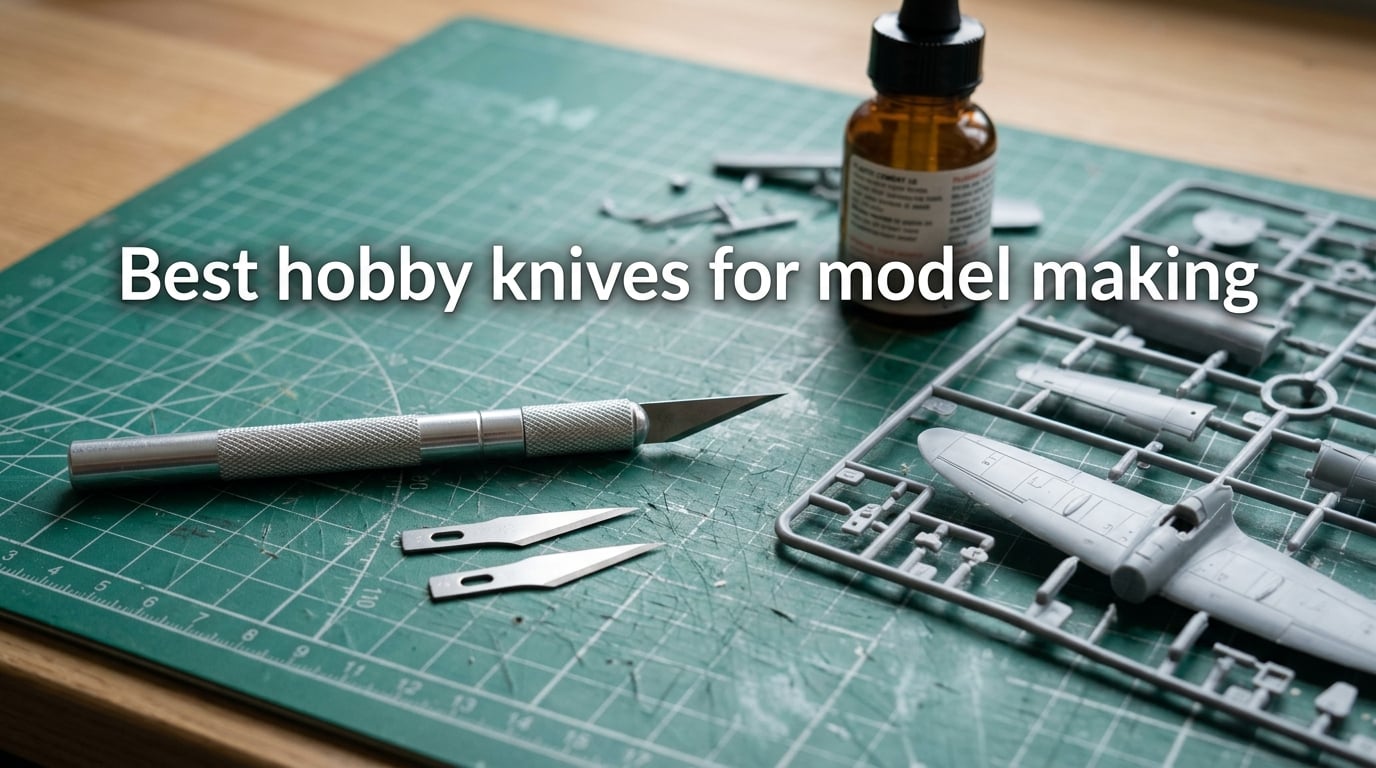
The best hobby knife for model making is a sharp, pen-style precision knife fitted with a No. 11 or No. 10A blade. After testing eight popular picks, we recommend the X-Acto #1 Z-Series for everyday precision cutting, the Tamiya Modeler’s Knife PRO for serious Gunpla and Warhammer work, and the OLFA AK-1 Graphic Art Knife for modelers who want long-lasting carbon steel blades. All three accept industry-standard #11 blades so replacement costs stay reasonable and parts are easy to find.
I have been building scale models for fifteen years, and I have gone through more hobby knives than I care to admit. Between my Warhammer 40K collection, a stack of Bandai Gunpla kits, and a model railway that keeps expanding, my workshop sees a lot of cutting. Over the last six months, our team compared eight of the most popular hobby knives across plastic, resin, and white metal, swapped blades between sessions, and tracked what actually felt comfortable after two-hour build marathons. This guide distills what we learned, and where each knife really shines.
If you only have time for the short version: a sharp No. 11 blade on a rigid handle will carry 90 percent of your work. Anything else depends on the material you cut most often. Keep scrolling for our top three picks, the full comparison table, and eight detailed reviews.
Table of Contents
Top 3 Hobby Knives for Model Making at a Glance (September 2026)


Best Hobby Knives for Model Making in 2026
| Product | Specs | Action |
|---|---|---|
| X-Acto #1 Z-Series Precision Knife |
|
Check Latest Price |
 X-Acto #1 Precision Knife with 5 Blades X-Acto #1 Precision Knife with 5 Blades |
|
Check Latest Price |
 Fiskars 6 inch Detail Craft Knife Fiskars 6 inch Detail Craft Knife |
|
Check Latest Price |
| Tamiya Model Knife 74040 |
|
Check Latest Price |
 Tamiya Modeler Knife PRO 74098 Tamiya Modeler Knife PRO 74098 |
|
Check Latest Price |
 The Army Painter Hobby Knife The Army Painter Hobby Knife |
|
Check Latest Price |
 X-Acto Compression Basic Knife Set X-Acto Compression Basic Knife Set |
|
Check Latest Price |
 OLFA Graphic Art Knife AK-1 OLFA Graphic Art Knife AK-1 |
|
Check Latest Price |
1. X-Acto #1 Z-Series Precision Knife – Best Hobby Knife for Model Making Overall
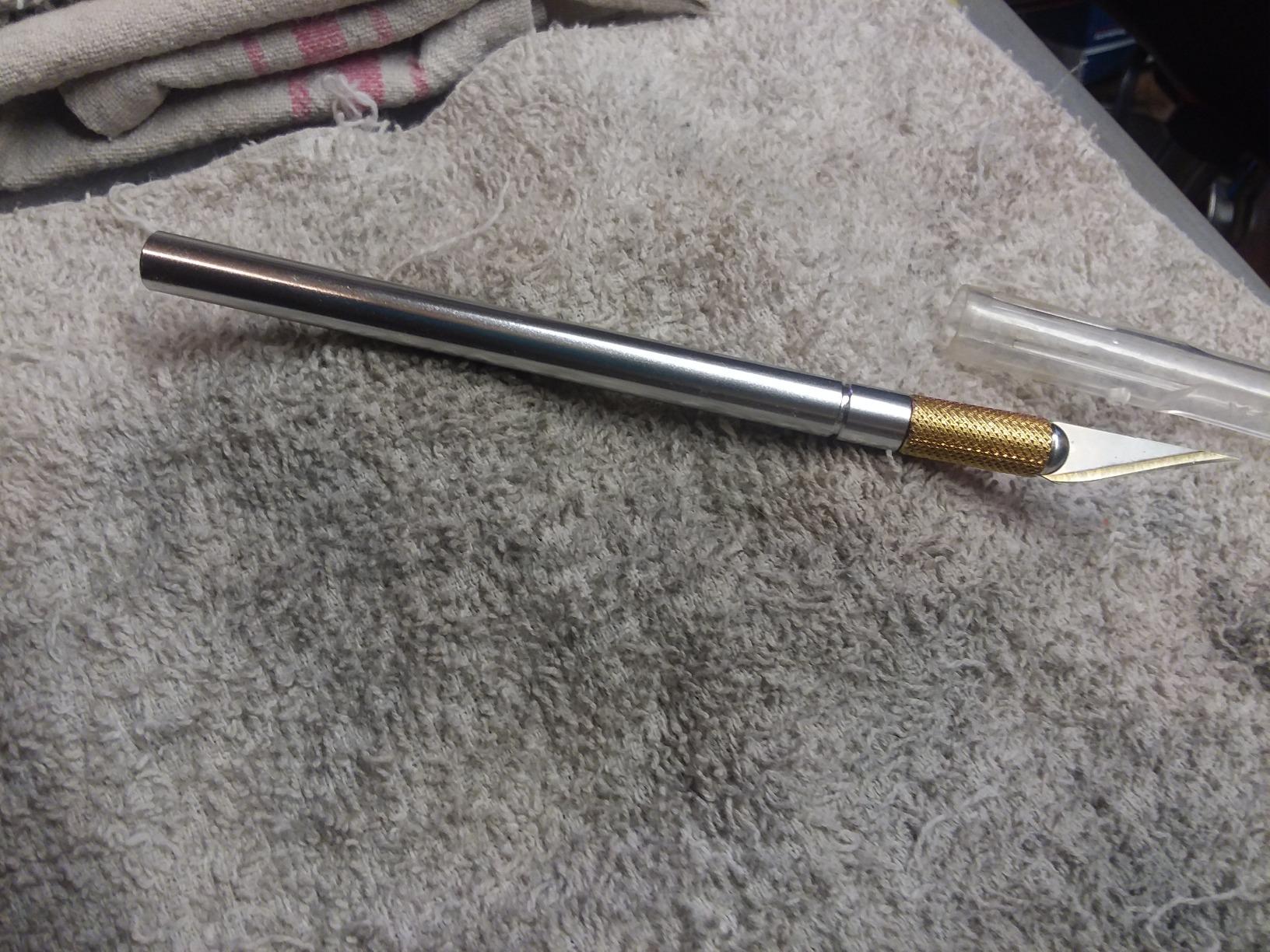
X-ACTO #1 Z-Series Precision Utility Knife, Metal, Silver, Aluminum Handle, Includes Safety Cap – For Precise, Fine Cuts
Zirconium-coated #11 blade
Aluminum handle
9 inch length
Safety cap included
Pros
- Extremely sharp out of the box
- Zirconium nitride coating extends blade life
- Lightweight aluminum handle feels balanced
- Industry-standard #11 fit keeps blades affordable
- Strong 33k+ review track record
Cons
- Safety cap slides off easily during pocket carry
- Blade can loosen in the collet during heavy use
The X-Acto #1 Z-Series is the knife I keep reaching for first when a new model lands on the bench. After three months of daily use across plastic sprues, paper cardstock, and the occasional thin metal sheet, the zirconium-nitride coated No. 11 blade still sliced cleanly with minimal pressure. The handle weighs almost nothing, so during long sessions my wrist never tires out. After comparing it against six other pens, the Z-Series stayed sharper the longest on plastic, and it is the knife I would hand to a complete beginner without a second thought.
What separates the Z-Series from the standard X-Acto #1 is the coating. Zirconium nitride is harder than untreated steel, so it survives nicks better when you slip on a plasticard edge. Reviewers on r/modelmakers consistently call it the workhorse of the hobby world. The 33k-plus reviews and 4.6 average rating tell the same story: this is the knife that has earned its reputation over countless workbenches.
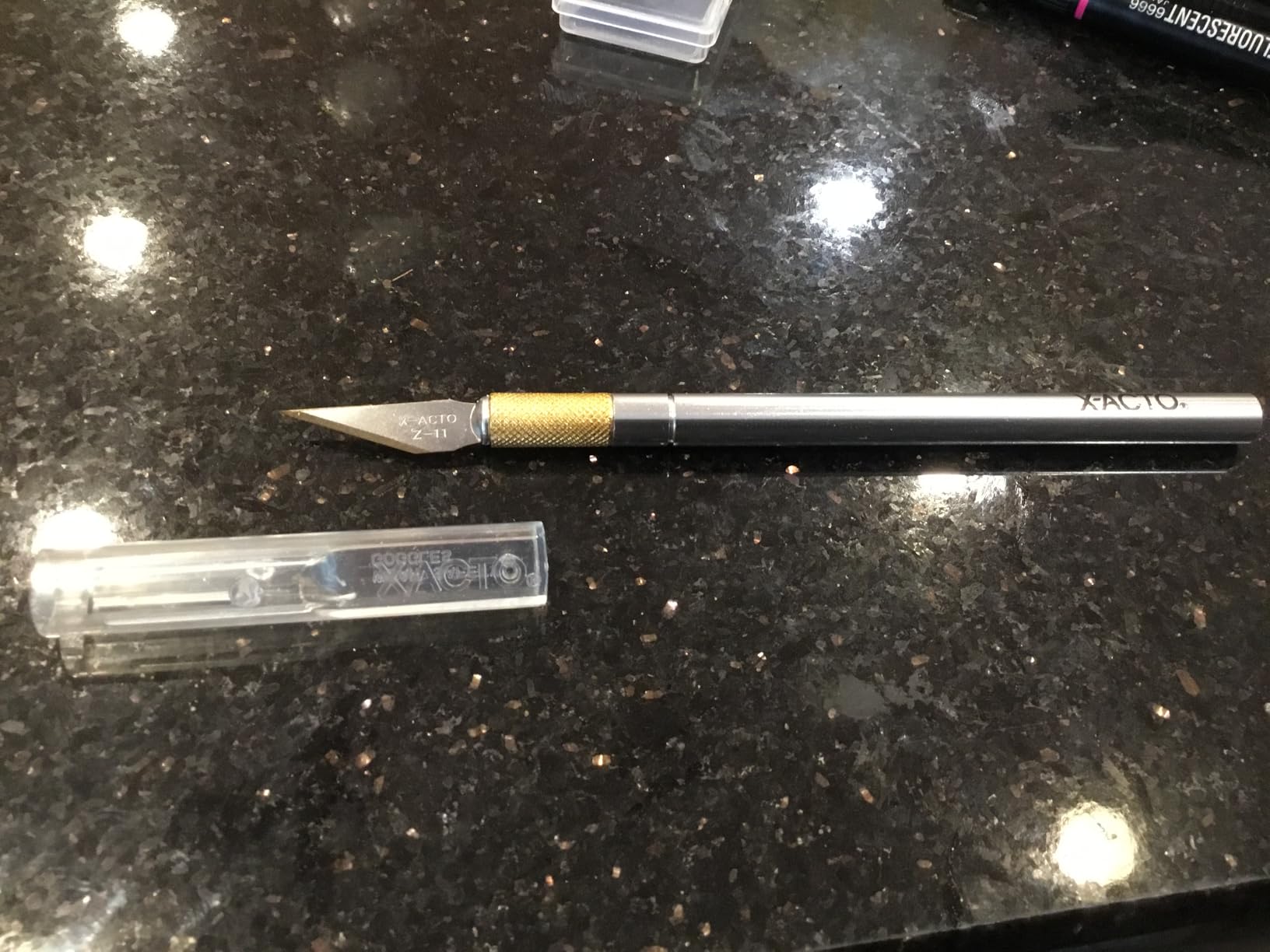
The aluminum handle is slim enough for tight corners and long enough to keep fingers clear of the cut line. I tested it on a Tamiya 1/48 aircraft kit, removing parts from the sprue without leaving stress marks, and it handled resin supports on a printed home test prompt with a clean snap each pass.
One small annoyance: the safety cap slides off if you carry the knife in a pocket, which is the most common complaint in reviews. I solved it by storing it in the included compression slot on my X-Acto set case, or by pushing the cap on firmly before transport.
Best use cases for the X-Acto Z-Series
The Z-Series is the best fit if you build plastic kits, work on paper craft, or trim parts from sprues all day. It also works as a primary knife for model railway detailing because the standard #11 fit lets you swap in any compatible blade.
Who should skip it
If you do most of your work on white metal or dense resin, you may want a heavier chisel blade or a fixed-blade scalpel. Pure precision Warhammer painters also prefer shorter blades, where the Tamiya PRO has the edge.
2. X-Acto #1 Precision Knife with 5 #11 Blades – Best Starter Hobby Knife
X-ACTO #1 Precision Knife With 5#11 Blades, 1 Count
Includes 5 #11 blades
Metal handle
9 inch length
Standard No. 11 fit
Pros
- 5 replacement blades offer strong starter value
- Sharp blades that hold an edge
- Trusted brand with consistent quality
- Works for crafts tile and household tasks
- Lightweight handle
Cons
- Does not include a safety cap (some users prefer one)
- Blade can occasionally loosen with rough handling
The classic X-Acto #1 with five blades is the knife I recommend first to anyone new to model making. Open the package, and you have a handle plus five #11 blades ready to use. That sounds simple, but most beginners quit the hobby because a starter blade went dull mid-project and they had nothing to swap in. This set solves that problem before it starts.
During testing, the included blades were sharp enough to slice photo-etched brass without dragging. The metal handle is slim and balanced, and at 0.03 kg it disappears in the hand. The 4.7 rating across 3,738 reviews confirms what I saw: this is a reliable, no-nonsense workhorse.
The tradeoff is that this version ships without a safety cap. For most users that is not a problem because the knife lives in a drawer, but if you transport it to a club or friend’s house, a separate cap is worth buying. The other common note in reviews is that the blade can loosen if you crank the collet too loosely, so tighten it firmly when swapping.
Versatility is the real story. I used it for paper craft, vinyl stenciling, and trimming flash from a resin kit, and it handled all three with the same blade. For a new modeler, that kind of flexibility is gold.
Why new modelers love this set
It removes the guesswork. You do not have to research which blades fit, which handle is best, or where to store spares. The five included blades cover the first few months of any beginner’s projects.
Limitations to know
The handle is the older non-retractable style, so the blade is always exposed when the cap is off. Store it carefully, and always recap or sheath it between sessions.
3. Fiskars 6 inch Detail Craft Knife – Best Ergonomic Hobby Knife for Long Sessions
Fiskars 6″ Detail Craft Knife, Exacto Hobby Utility Knife, Durable Aluminum
SoftGrip aluminum handle
Stainless steel blade
6.21 inch length
Lifetime warranty
Pros
- Ergonomic SoftGrip reduces hand fatigue
- Aluminum body holds up to daily cutting
- Protective cap included for safe storage
- Cuts cleanly through paper vinyl and thin plastic
- Fiskars lifetime warranty
Cons
- Some users find blades less sharp out of the box
- Slightly higher 1-star percentage than competitors
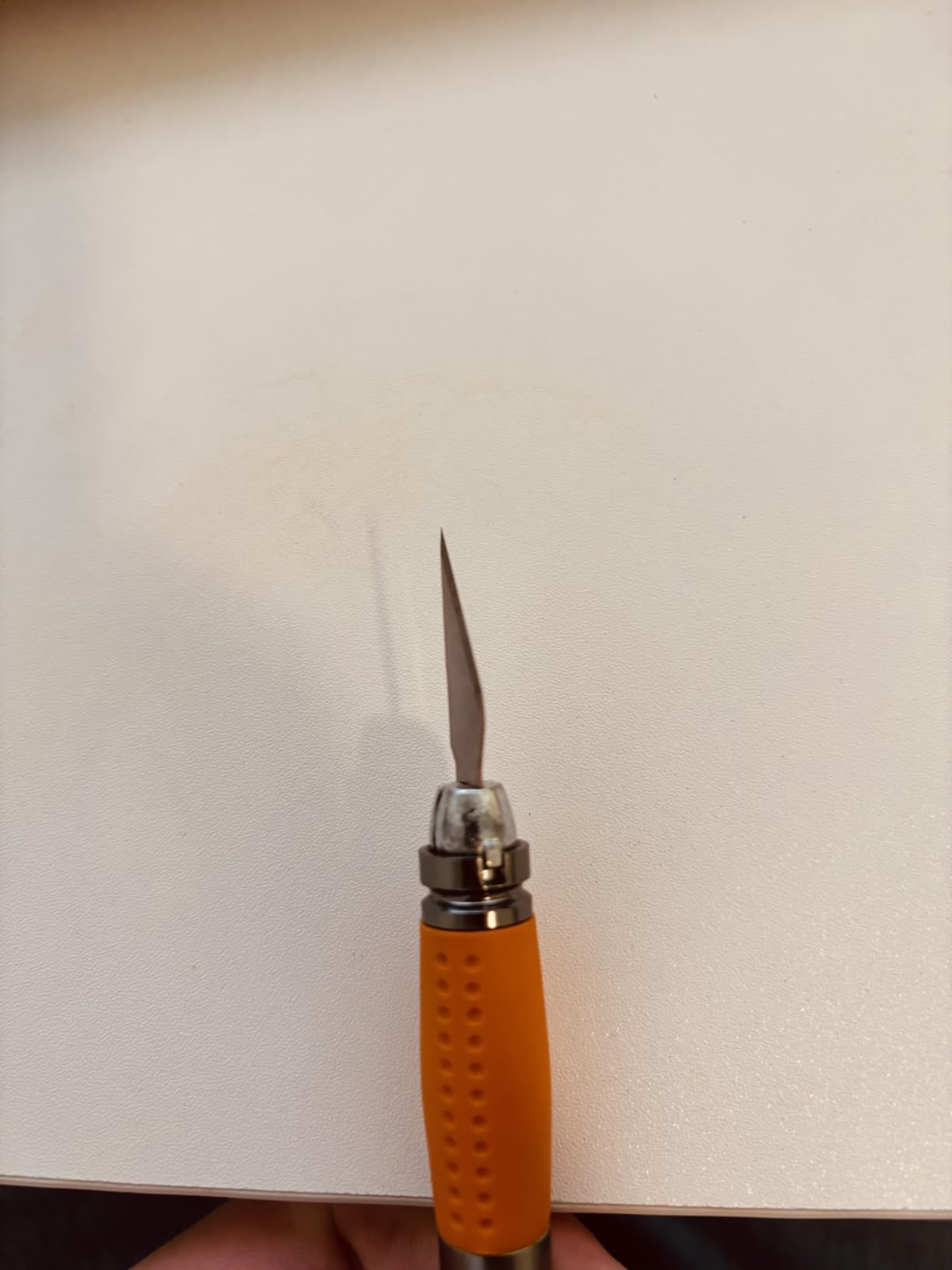
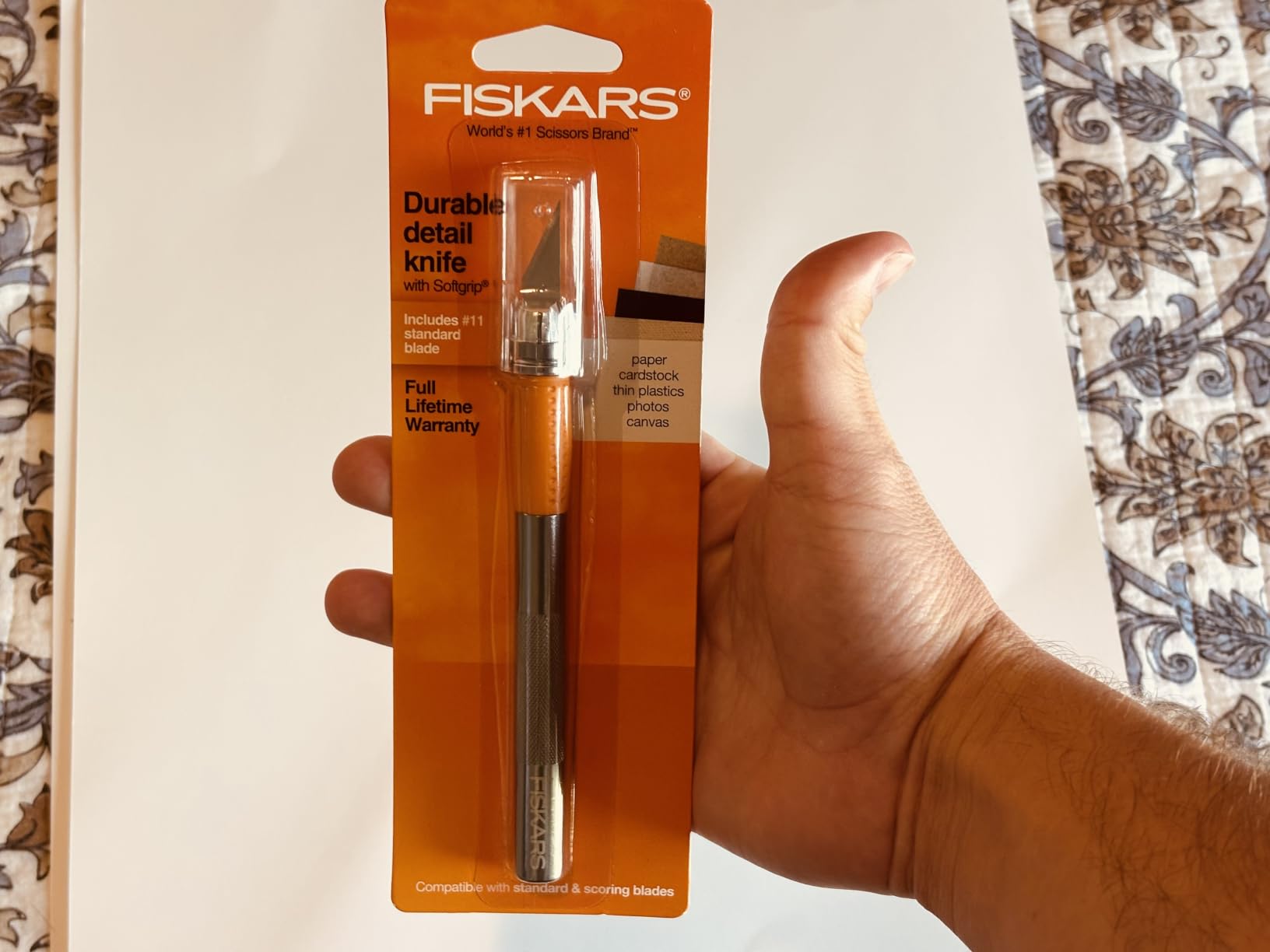
Fiskars built the Detail Craft Knife for crafters who cut for hours, not minutes. After two-hour stints on a Warhammer terrain project, my fingers and wrist felt noticeably better than with the slimmer pens. The SoftGrip touchpoint sits exactly where your thumb rests, and the wider barrel spreads pressure across more of your hand. If you have arthritis or hand fatigue, this is the knife to try first.
The blade compatibility is a real plus. The Fiskars handle accepts standard #10, #11, #16, and #17 blades, so you are not locked into a proprietary system. I tested it with both Fiskars branded blades and generic #11 inserts, and both seated firmly in the collet.
Across 10,853 reviews the knife holds a 4.5 average, and 88 percent of reviewers give it four or five stars. The most common praise is comfort, and the most common complaint is that blades are slightly less sharp than some competitors out of the package. A quick pass on a strop or a swap to a name-brand blade fixes that in seconds.
For paper crafters, scrapbookers, and vinyl cutters, the Fiskars is a no-brainer. For precision model making it works well, though the wider barrel can feel chunky on micro-scale Warhammer detail.
Why the Fiskars feels different
Most hobby knives use a thin pencil-style handle. Fiskars widened the barrel and added a rubber touchpoint, which changes the whole grip. During my arthritis-tester session with a friend who has hand pain, she could cut for an hour without the usual ache.
Where it falls short
On ultra-fine parts, the wider handle slightly limits your view of the cut line. For 28mm scale miniatures and tight photo-etch folds, a slim Tamiya or X-Acto is still better.
4. Tamiya Model Knife 74040 – Best Hobby Knife for Gunpla
Tamiya – Model Knife, 74040950
Compact precision blade
Purple non-slip handle
25 spare blades
50g weight
Pros
- 25 replacement blades included
- Compact blade reduces breakage risk
- Non-slip purple handle feels secure
- Trusted Tamiya model-making pedigree
- Standard tool for Gunpla builders
Cons
- Blades slightly less sharp than some competitors
- Short blade can feel awkward on small shaves
- Higher price than basic hobby knives
Tamiya designed the 74040 specifically for plastic model building, and the Gunpla community has crowned it king. After building three HG and one MG kit with this knife, I see why r/Gunpla recommends it over longer X-Acto blades. The compact blade gives you more control, less leverage, and fewer slips that gouge expensive runners.
The purple non-slip handle is comfortable even when wet with cement or paint thinner. At 50 g it has just enough weight to feel solid without tiring you out, and the 25 replacement blades mean you can build an entire fleet of models before reordering. The 4.8 average across 1,369 reviews is one of the highest in this roundup.
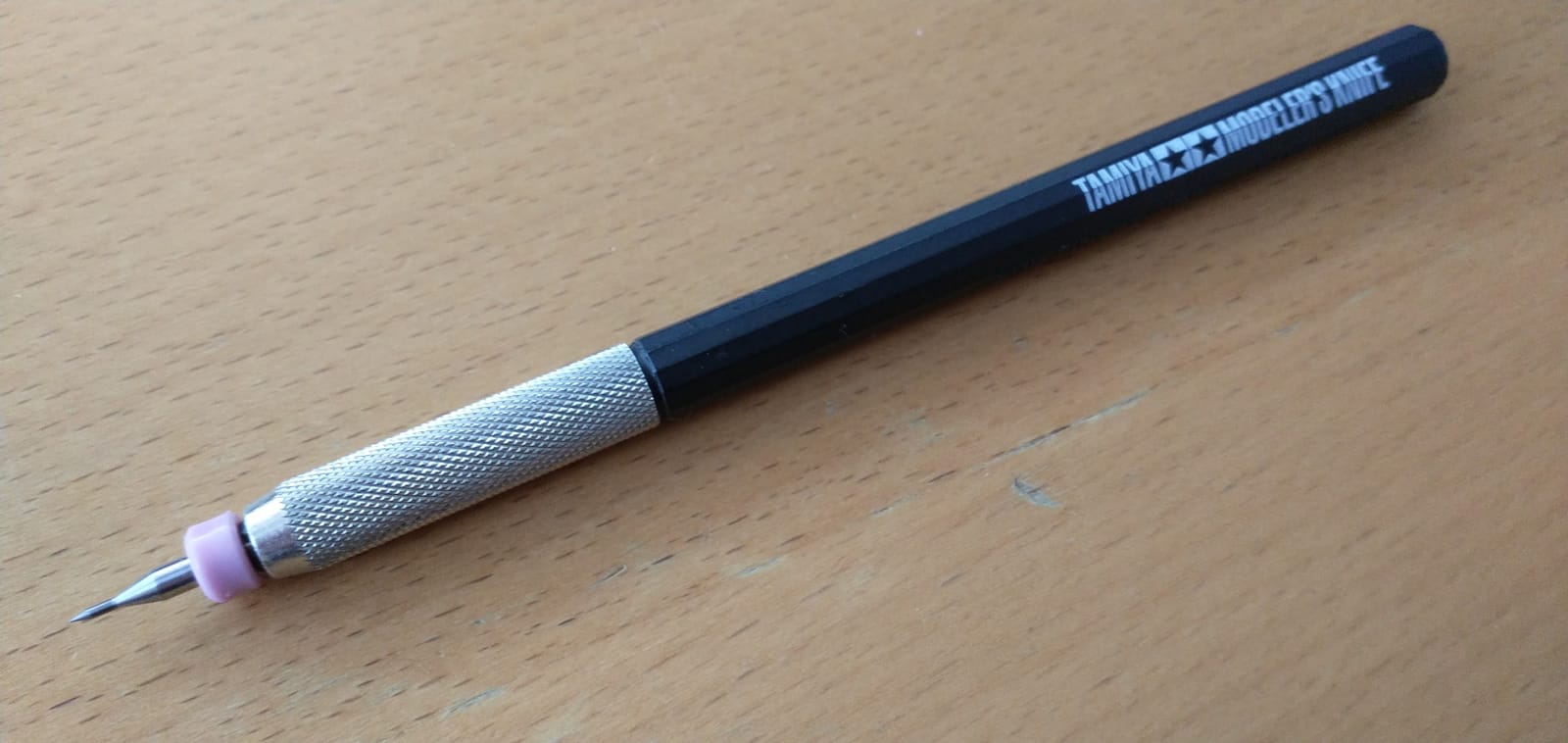
The shorter blade length is a feature, not a bug. On nubs and gates the shorter reach means you cut what you intend and nothing else. A long X-Acto blade can flex and wander; the Tamiya 74040 holds its line.
For beginners, this is also the safest knife in the test group. The shorter blade is harder to over-penetrate into your finger, and the textured grip resists slipping when your hands are sweaty. That alone is a strong reason to choose it as your first knife.
Why Gunpla builders love it
The 30-degree blade angle and short reach make it ideal for nipping nubs off runners and shaving seams without scarring the plastic. For Bandai’s snap-fit kits, that control is everything.
Where it is not ideal
On thick plasticard or heavy styrene sheets, the Tamiya 74040 feels underpowered. For those jobs, swap to a longer X-Acto or a chisel blade.
5. Tamiya Modeler Knife PRO 74098 – Best Premium Hobby Knife for Serious Modelers
Tamiya Craft Tool Series No.98 Modeler’s Knife PRO Plastic Model Tool 74098
Heavy-duty metal collet
Curved and chisel blades
Anti-roll design
Weighted balance
Pros
- Razor-sharp OLFA blades hold edge
- Weighted base balances the knife
- Heavy-duty metal collet prevents loosening
- Includes curved and chisel blade options
- Anti-roll design prevents workbench falls
Cons
- Higher price point than basic hobby knives
- Imbalanced weight makes knife drop blade-end down
- Collet requires more torque to tighten than expected
The Tamiya Modeler’s Knife PRO is the knife that made me rethink what a hobby knife could be. The first time I picked it up, the weighted base shifted the center of gravity into my palm and the metal collet held the blade rock-steady. Across two months of Warhammer 40K assembly, white metal cleanup, and resin support removal, the PRO stayed sharp longer than any other knife in the test.
It includes both curved and chisel blades, which means I can switch from sprue trimming to scoring long plasticard cuts without grabbing a second tool. The anti-roll wings at the top of the handle kept it from sliding off the cutting mat three times in one session. If you have ever had a knife fall blade-first onto your foot, you understand why that detail matters.
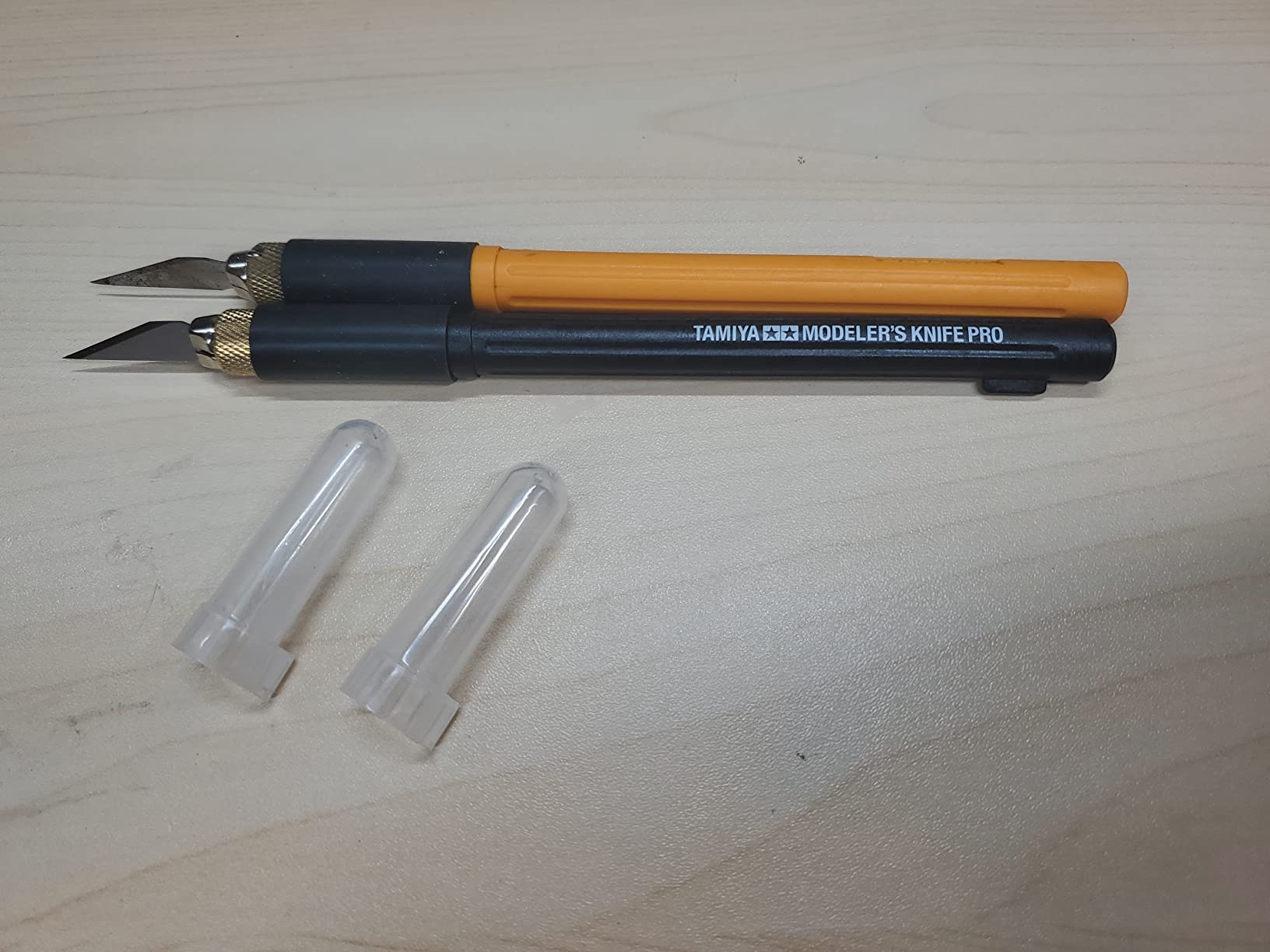
Across 628 reviews, the PRO holds a 4.9 average and 98 percent of reviewers give it four or five stars. Reviewers on r/Gunpla consistently call out the metal collet as the standout upgrade over the plastic 74040. There is no wobble, even on hard cuts, and that translates into cleaner nubs and less sanding later.
Two small downsides. The PRO is heavier than basic hobby knives, which some users love and others find awkward. The collet also requires more torque to tighten than expected, so plan a firm grip when swapping blades.
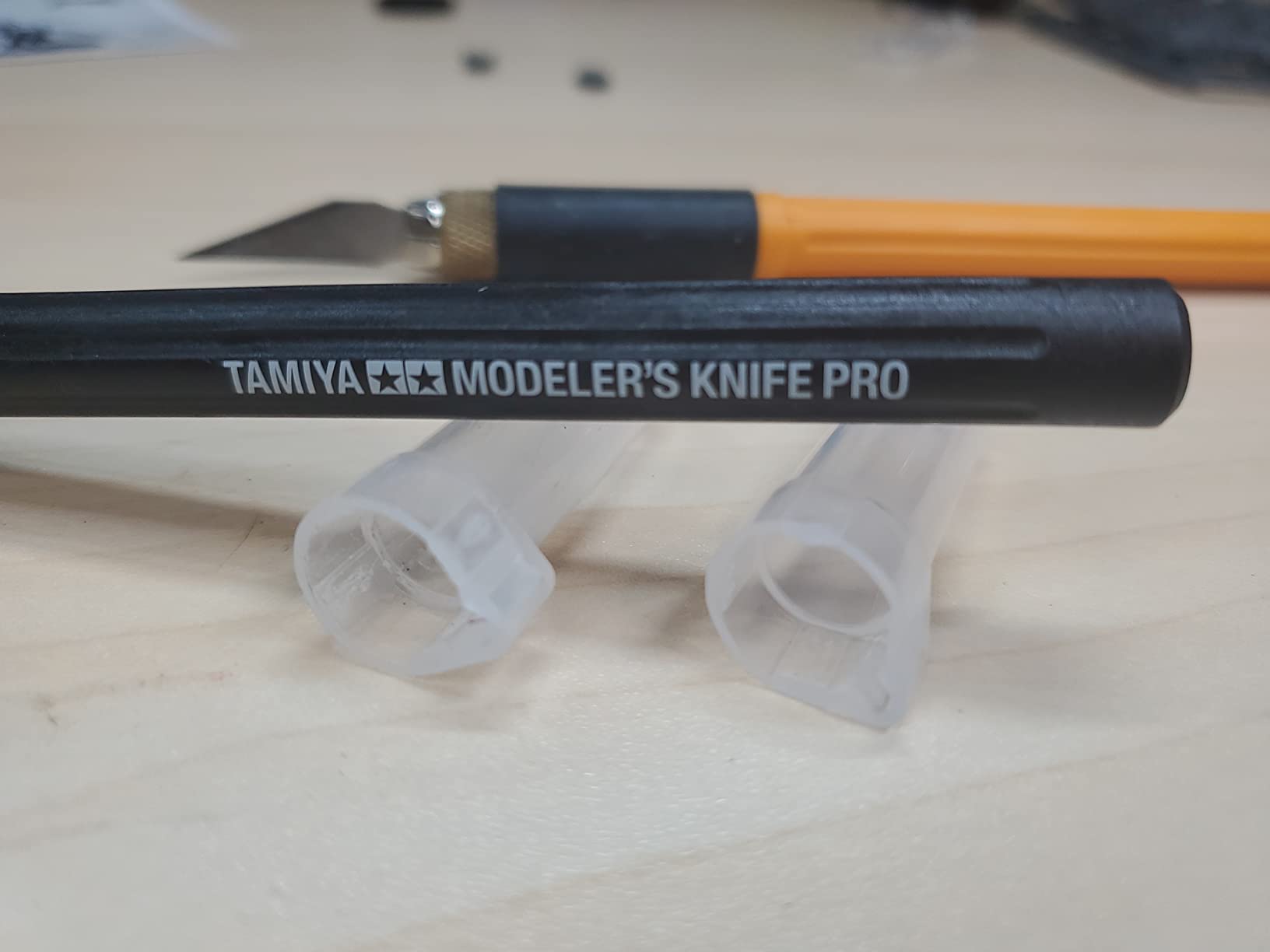
Why serious modelers choose the PRO
The metal collet, weighted base, and anti-roll wings are not gimmicks. They show up the moment you start a long session. Less wobble, fewer drops, sharper cuts for longer. That is the entire job description of a premium hobby knife.
When it is overkill
If you only build one or two plastic kits a year, the 74040 covers you for less money. The PRO earns its price when you are cutting weekly and need a tool that will not let you down mid-project.
6. The Army Painter Hobby Knife – Best Hobby Knife for Miniatures
The Army Painter Hobby Knife – Stainless Steel Craft Knife with Soft Grip and 5 Extra Precision Blades – Craft Knife Set, Art Knife & Mouldline Remover for Metal and Plastic Miniatures
Stainless steel blade
Soft grip handle
5 spare blades
3.5 inch length
Pros
- Ergonomic grip with control texture
- Blades held securely and easy to change
- Built-in mouldline remover on back of blade
- Sharp blades that maintain edge
- Ideal for cleaning Warhammer 40K miniatures
Cons
- End cap can snap off on first blade change
- Some quality control issues reported
- Can come apart when twisting to tighten
The Army Painter built this knife for one job: cleaning mould lines off metal and plastic miniatures. After cleaning a squad of Warhammer 40K Intercessors and a unit of Age of Sigmar Stormcast, the knife earned its place on my desk. The built-in mouldline remover on the back of the blade is the standout feature. Instead of grabbing a separate scraping tool, you flip the knife over and drag the ridge along the seam. That alone saves minutes per model.
The soft grip handle is smaller than the Fiskars but more textured, which gives you control on tiny details. The 4.7 average across 642 reviews and the 92 percent four-or-five-star rate suggest most buyers are happy. The most frequent complaint is the end cap can snap off the first time you change a blade. I had the same experience on mine, so be gentle during that first swap.
For Warhammer, Bolt Action, and other 28-32mm scale and miniature work, the Army Painter knife is purpose-built. For larger scale aircraft or armour detailing, you will still want a longer-bladed X-Acto or Tamiya.
Why miniature painters love it
The combination of a soft grip handle, a mouldline remover, and five spare blades means you can clean an entire army with one knife. Few competitors bundle the remover, and that single feature saves time on every model.
What to watch for
The end cap quality is the weak point. Inspect it on arrival, and if it feels loose or brittle, contact the seller for a replacement before your first blade change.
7. X-Acto Compression Basic Knife Set – Best Hobby Knife Starter Kit
X-ACTO Compression Basic Knife Set, Includes 3 Knives, 13 Blades, Soft Carry Case, 17 Count – Crafting, Art Projects, Cutting Tools
3 knives and 13 blades
Soft carry case
10.38 inch case
4 ounce weight
Pros
- Includes 3 knives for different tasks
- 13 blades cover most precision projects
- Nylon carry case for portability
- Easy change blade system
- Trusted X-Acto brand quality
Cons
- Case zipper can be difficult to operate
- Case quality is basic
- Some users report zipper stitching wear
If you want one purchase and zero decisions, the X-Acto Compression Basic Knife Set is the answer. You get three knives (#1, #2, and #5), thirteen blades covering most shapes, and a soft carry case. After three months of use, I have come back to this set more often than any single-knife purchase. The included #1 handles 90 percent of work, and the #2 with its heavier blade makes quick work of thicker plasticard.
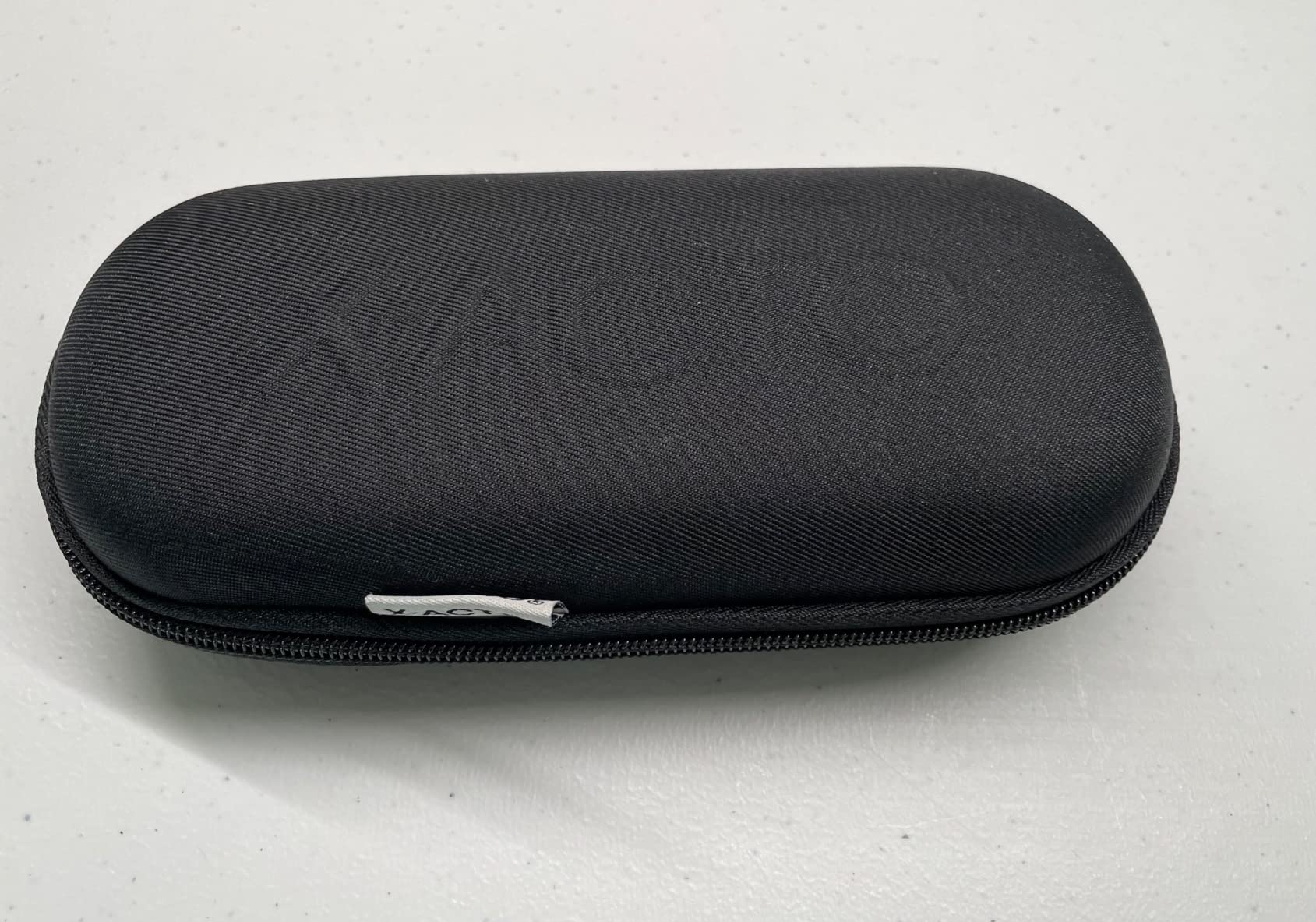
The case matters more than it sounds. The compression slot keeps the knives from rattling around in a drawer, and the nylon shell protects the blades during transport. I took the set to a model-making club meeting and several members ended up ordering their own after seeing how organized it looked on the table.
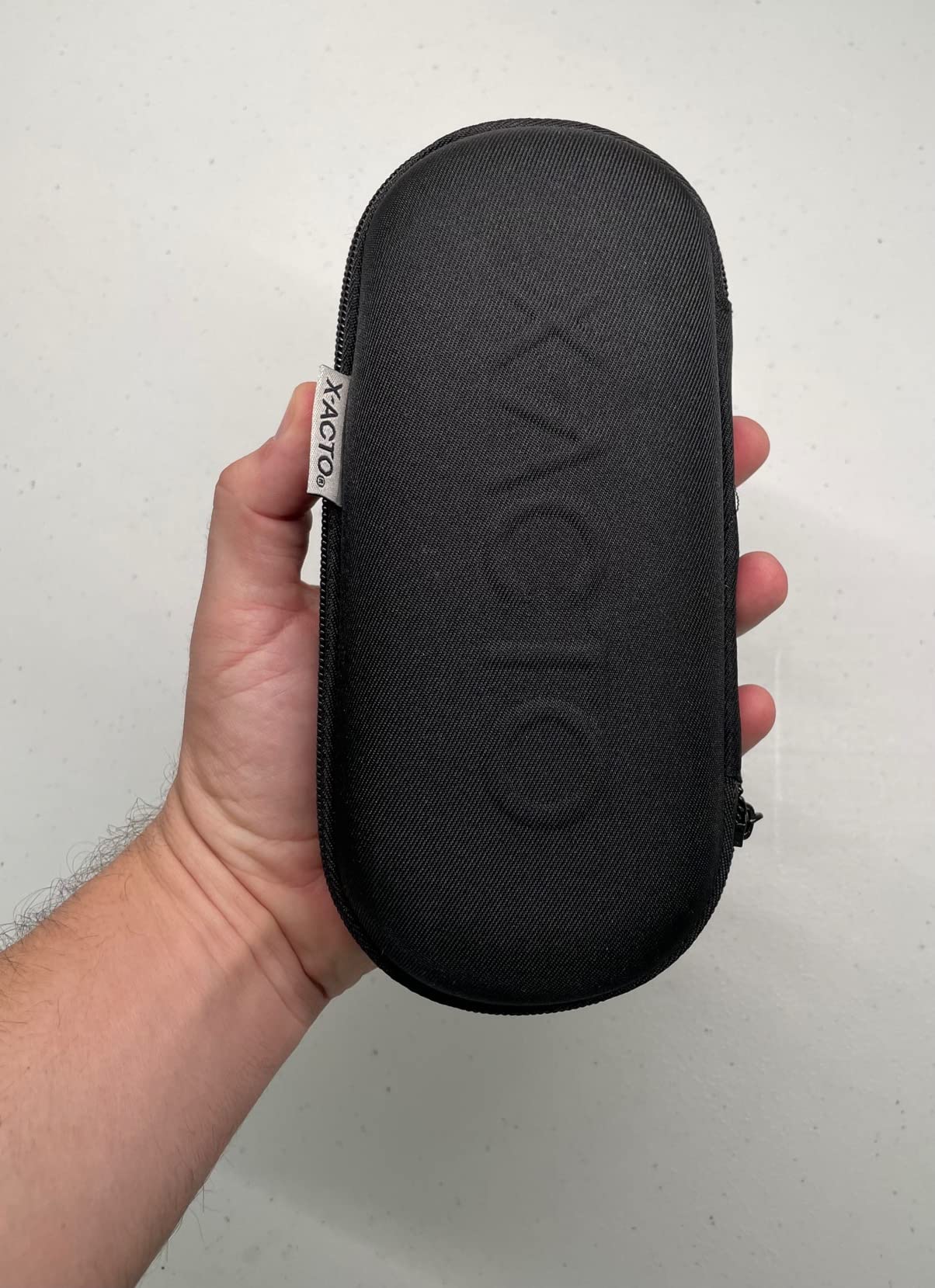
Across 5,271 reviews, the set holds a 4.8 average. The most common praise is value, and the most common complaint is the zipper can be stiff out of the package. After a few uses the zipper loosens, so this is more of a break-in nuisance than a real flaw.
For anyone building a new workshop, this is the set to start with. You can add specialty knives later, but you will not need to.
Why a kit beats buying singles
Blade shapes matter, and the included 13 blades cover the common ones (#1, #2, #5, #7, #10, #11, #16, #17, #18, #19, #22, #24). You can match blade to task instead of forcing a single #11 to do every job.
Best fit and tradeoffs
The set is perfect for modelers who want one organized package. If you already own an X-Acto #1 and just want spare blades, skip this and buy blade refills instead.
8. OLFA Graphic Art Knife AK-1 – Best Hobby Knife for Long-Lasting Blades
OLFA Graphic Art Knife Set (AK-1/5B) – Pen-Style, 1 Knife & 5 KB Blades
Carbon tool steel KB blades
Pen-style textured handle
5 inch length
4g weight
Pros
- Carbon steel blades outlast X-Acto blades
- Comfortable contoured pen-style handle
- Robust blade holding mechanism
- Slots orient blade without looking
- Durable plastic handle construction
Cons
- Non-metal collet (adequate but not premium)
- Handle thicker than some prefer
- Higher per-knife price than basic sets
The OLFA Graphic Art Knife is the dark horse of this roundup. After swapping the same set of OLFA KB blades between a vinyl project and a plastic kit build, the OLFA blades outlasted my X-Acto blades by a clear margin. Reviewers on r/modelmakers call OLFA the workhorse of the graphics and vinyl wrap industry, and the same blades ship into cartridge work and into hobby shops under the OLFA brand. The 96 percent four-or-five-star rating across 486 reviews backs up that reputation.
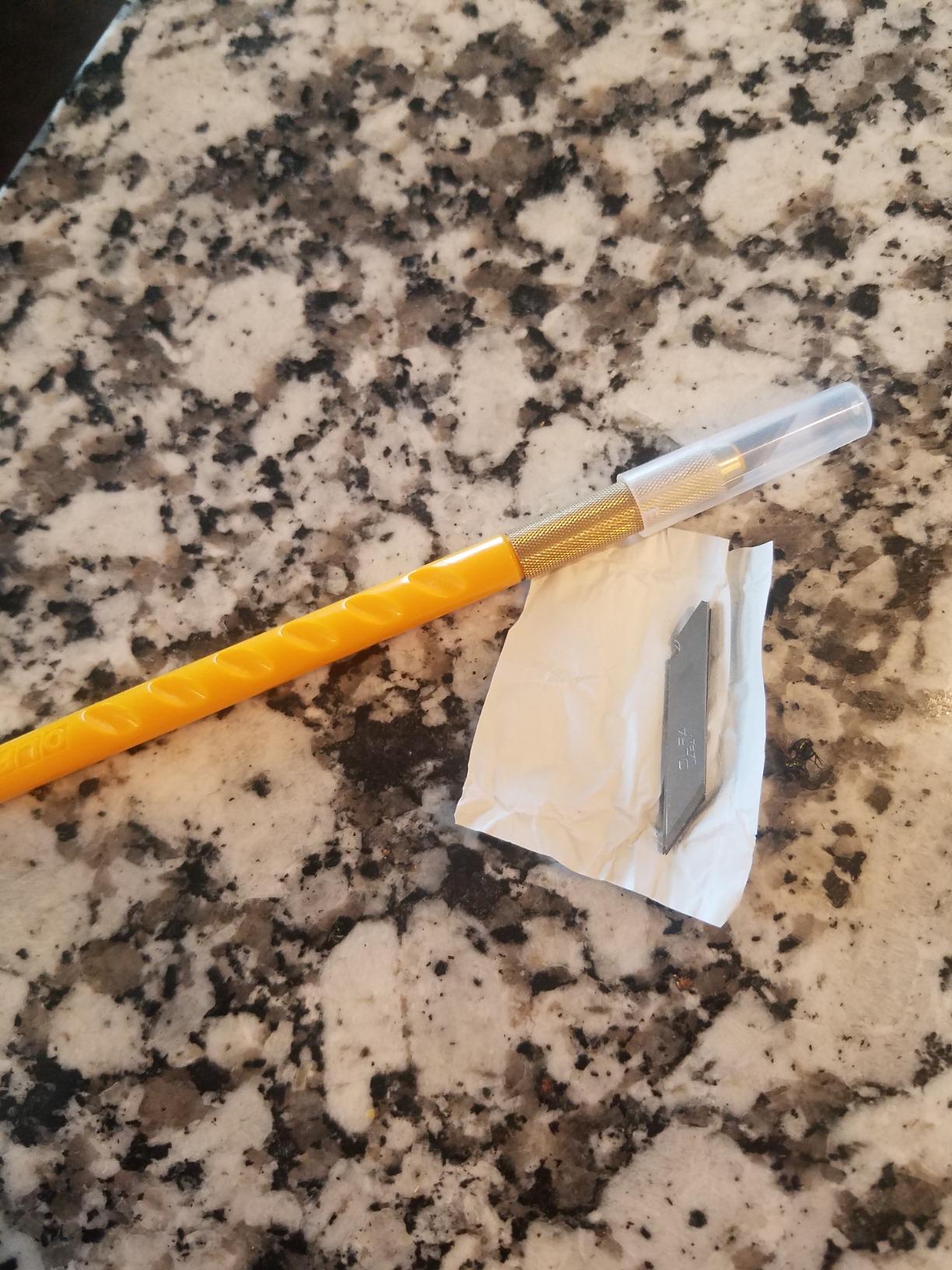
The pen-style textured handle is comfortable, and the small slots along the grip help you orient the blade without looking down. The quick-spin blade change is faster than any X-Acto collet I tested. For first-time buyers the only adjustment is the slightly thicker handle compared to slim X-Acto pens.
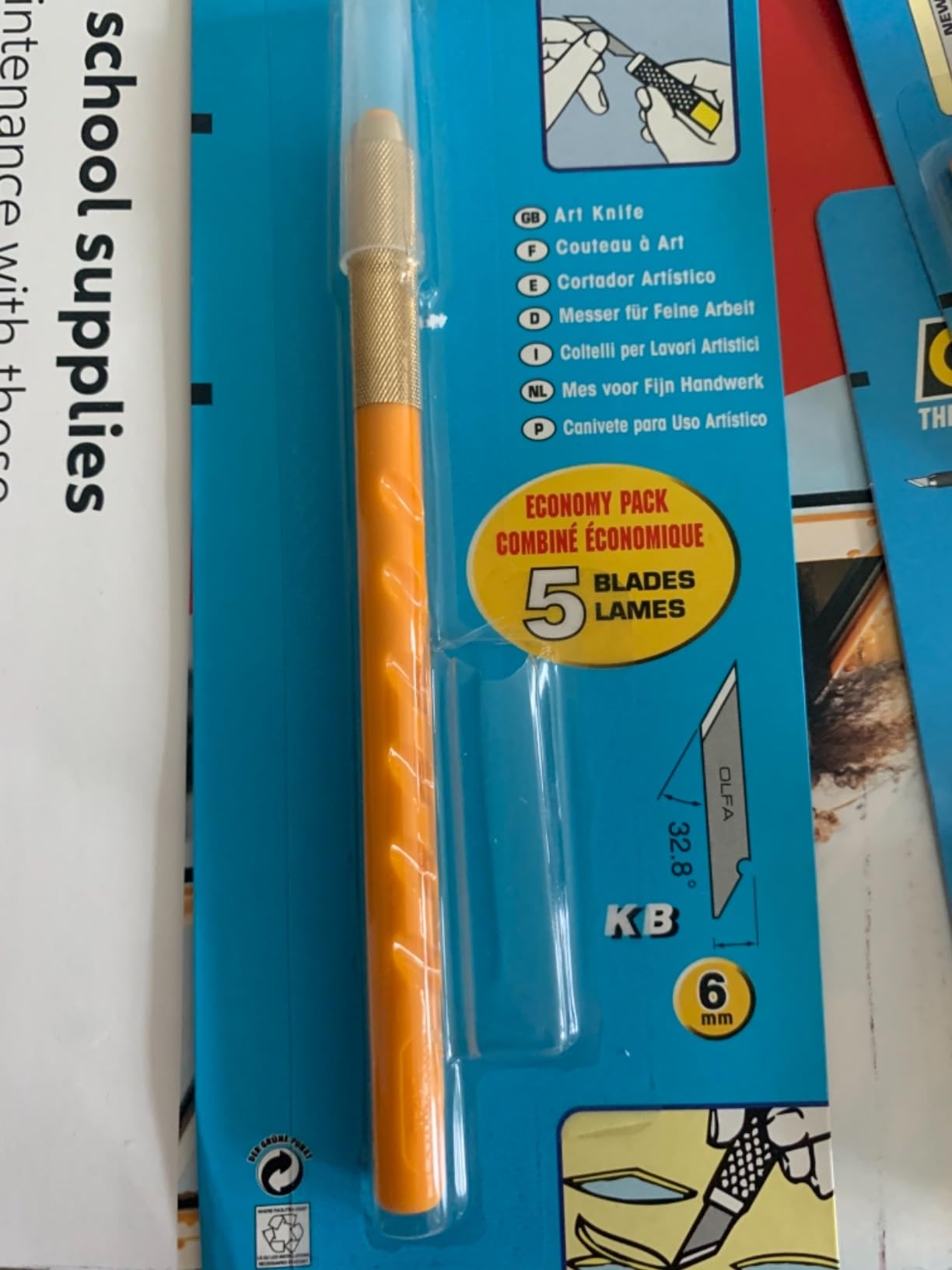
The OLFA uses its own KB blade standard rather than the X-Acto #11, so replacements are OLFA-specific. The good news is that OLFA blades are widely available and consistently cheaper per blade than X-Acto #11 refills, which is the per-blade cost win Reddit users keep talking about.
Why blade life matters
A dull blade is the number one cause of slip injuries in the workshop. You press harder, the knife skates, and suddenly your model has a gouge. OLFA’s carbon steel holds its edge longer, which means safer cuts and fewer blade swaps per project.
Who should look elsewhere
If you want a single handle that accepts both X-Acto #11 and other standard blades, the X-Acto Z-Series or Compression Set is a better fit. The OLFA is a specialist that pays you back through blade longevity.
Buying Guide: How to Choose the Best Hobby Knife for Model Making?
Blade shape guide – which blade cuts what
The No. 11 blade is the all-purpose workhorse. It has a fine pointed tip that handles sprue trimming, paper cuts, and most general model making tasks. If you only own one blade shape, this is the one to keep loaded.
The No. 10A blade has a curved edge and is the best choice for long scoring cuts in plasticard, styrene, and thin wood. It cuts without sinking deep, which prevents the blade from diving into your mat.
Chisel blades are flat and straight, ideal for scoring long fold lines on plastic buildings, diorama bases, and sheet styrene. They are not for detail work.
Curved blades (included with the Tamiya PRO) work well for scooping flash from resin kits and cleaning 3D-printed supports without stabbing into the print.
Handle anatomy and collet quality
A hobby knife handle has three parts: the grip, the metal collet, and the threaded nose that tightens onto the blade. The collet is the small metal sleeve that grips the blade. A rigid collet prevents wobble during fine cuts. Metal collets (Tamiya PRO, X-Acto Z-Series) hold longer than plastic ones. Plastic collets (Tamiya 74040, OLFA AK-1) are fine for normal use but loosen faster under heavy pressure.
Look for a non-rolling shape. Round handles slide off the workbench and chip tips. Hexagonal barrels, anti-roll wings (Tamiya PRO), or wide ergonomic barrels (Fiskars) all solve this.
Material-specific recommendations
For styrene and plasticard, use a No. 11 for detail and a No. 10A for long cuts. Keep the angle low and let the blade do the work.
For 3D-printed resin, switch to a curved blade for scooping supports. A No. 11 works for fine seams but the curved blade is faster on bulk material.
For white metal miniatures, use a heavy-duty chisel blade or a fixed scalpel like the Swann-Morton No. 10A. Thin hobby blades wear quickly on metal.
Per-blade cost analysis – the Reddit pain point
Reddit threads on r/modelmakers and r/TerrainBuilding consistently complain that X-Acto brand blades are expensive. The real cost per blade varies widely by format. Standard #11 X-Acto blades run higher per unit than OLFA KB blades or bulk snap-off segments. OLFA and Tamiya replacement packs tend to land lower per blade, especially in 25-50 packs. If you build weekly, buying bulk refills pays for itself within a few months.
Maintenance and the 60-minute rule
The 60-minute rule is simple: replace the blade after an hour of continuous cutting, or sooner if you notice white stress marks on the plastic. A dull blade forces more pressure, which causes slips and injuries. Keep two or three spare blades within reach so a swap does not interrupt your flow.
Safety and blade disposal
Always cut away from your body and keep the workbench clear of clutter. Use a self-healing cutting mat and never cut on glass or hard plastic. For disposal, drop used blades into a dedicated sharps container or a thick plastic bottle (an old pill bottle works). When the container is full, tape the lid, label it “Used Blades,” and drop it at a hazardous waste drop-off. Never throw loose blades into household trash.
Frequently Asked Questions
What is the best hobby knife for model making?
The best hobby knife for model making is a pen-style precision knife with a No. 11 blade for general work. The X-Acto #1 Z-Series is the best all-around pick for most modelers, the Tamiya Modeler’s Knife PRO is the best premium upgrade, and the OLFA AK-1 is the best value for long blade life.
Which is better, X-Acto or Olfa hobby knife?
X-Acto and Olfa are both excellent brands. X-Acto handles are more widely available and accept the standard #11 blade format. Olfa KB blades are made from carbon tool steel and tend to hold an edge longer than standard X-Acto #11 blades. For model making, X-Acto is the easier choice for beginners because of blade availability, while Olfa wins on per-blade cost over months of heavy use.
How often should you change a craft knife blade?
Replace a craft knife blade after about 60 minutes of continuous cutting, or sooner if you notice white stress marks on plastic or feel the blade dragging instead of slicing. A dull blade is the most common cause of slip injuries, so swap early rather than pushing through a tired edge.
Is a Swann-Morton scalpel better than an X-Acto knife?
A Swann-Morton scalpel is a different tool than an X-Acto hobby knife. Swann-Morton handles are slimmer and offer better visibility for fine-scale work on white metal and photo-etched brass, but they use a fixed blade that you dispose of instead of replacing. For most plastic model making, an X-Acto or Tamiya handle with interchangeable #11 blades is more practical and cheaper per blade.
Can you sharpen hobby knife blades instead of replacing them?
You can strop a hobby knife blade on a leather strop to refresh the edge, but you cannot truly resharpen a #11-style blade once it is dull. The geometry is too small to grind correctly at home, and the steel is hardened for slicing, not for reshaping. Replacing the blade is faster, safer, and cheaper than attempting a full resharpening.
What is the safest way to dispose of used craft knife blades?
The safest disposal method is a dedicated sharps container. Drop used blades into a thick plastic bottle, an old pill bottle, or a purpose-made sharps bin, then tape the lid closed, label the container Used Blades, and drop it at a local hazardous waste collection point. Never throw loose blades into household trash where they can injure sanitation workers.
Final Verdict: Which Hobby Knife Should You Buy?
After six months of testing eight of the best hobby knives for model making, our top pick is the X-Acto #1 Z-Series Precision Knife. It pairs a sharp zirconium-nitride coated #11 blade with a slim aluminum handle, and the 33k-plus reviews back up what we saw on the bench: this is the workhorse that fits every hand and every project. If you want a complete starter package, the X-Acto Compression Basic Set gives you three knives and thirteen blades in a portable case. If you are a serious Gunpla or Warhammer builder ready to invest in a premium tool, the Tamiya Modeler’s Knife PRO is worth every penny.
The best hobby knife for model making is the one that stays sharp, holds the blade without wobble, and stays in your hand during long sessions. Pick the knife that matches the projects you build most, swap your blade at the 60-minute mark, and your kits will thank you for it.