
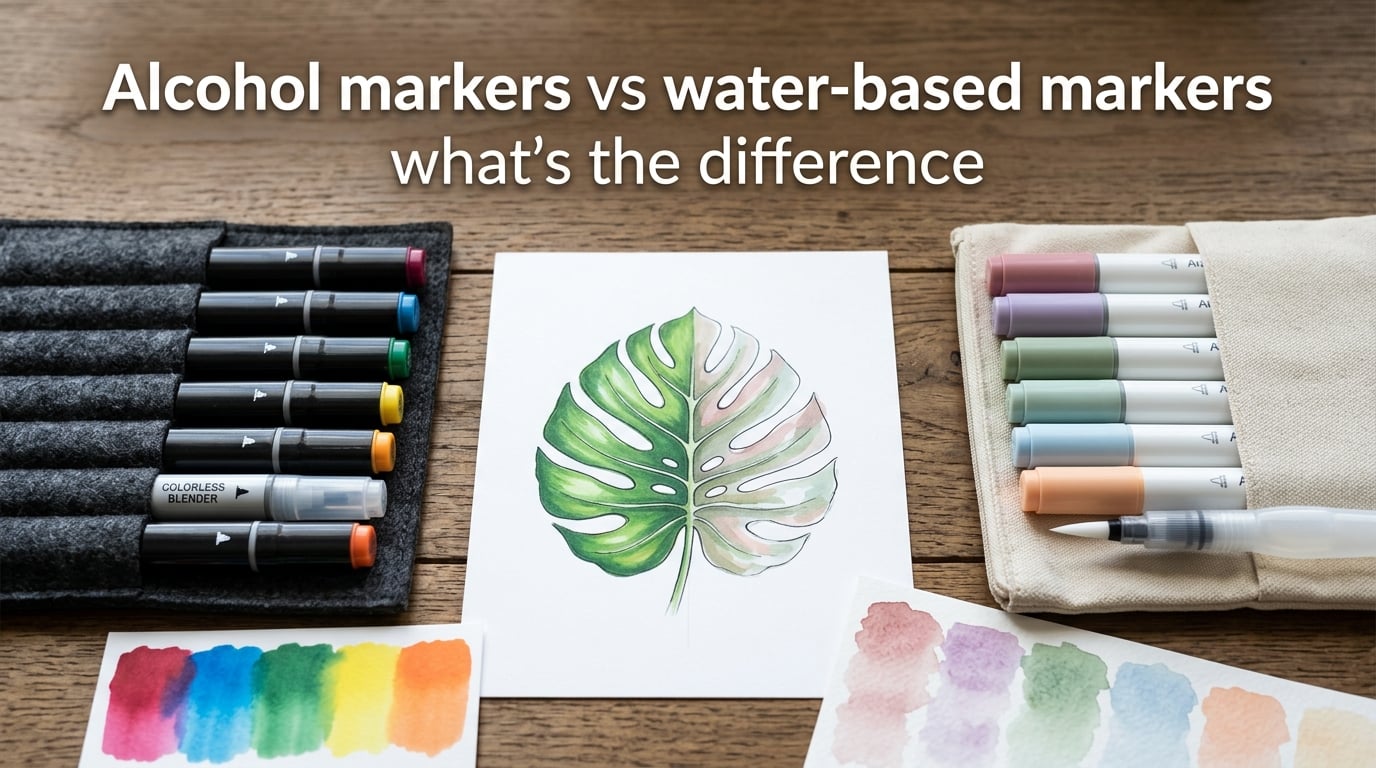
If you’ve ever stood in the marker aisle wondering whether to grab alcohol markers or water-based markers, you’re not alone. The choice between these two types comes down to how their ink is formulated, and that single difference affects everything from blending to bleed-through to how your finished artwork looks. I’ve spent years testing both types across coloring books, illustrations, and mixed-media projects, and I’ll break down exactly how alcohol markers vs water-based markers compare so you can pick the right one for your creative work.
Table of Contents
What Are Alcohol Markers?
Alcohol markers use an alcohol-based solvent—typically isopropyl alcohol or ethanol—to carry their dye-based ink. The alcohol evaporates quickly once the ink hits paper, which is why these markers dry fast and produce such smooth, streak-free coverage. This rapid evaporation is the defining characteristic that sets alcohol markers apart from every other marker type.
The dye particles in alcohol markers are suspended in the alcohol solvent rather than dissolved in water. This means the ink is essentially permanent once dry—you can’t reactivate it with water the way you can with water-based markers. That permanence is a huge advantage when you want to layer colors without lifting what’s underneath, and it’s one of the main reasons professional artists gravitate toward alcohol-based options.
Most professional-grade alcohol markers come with replaceable nibs and refillable ink cartridges. Popular brands like Copic, Ohuhu, and Prismacolor offer dual-tip versions with a brush tip on one end and a chisel tip on the other, giving you versatility for both detail work and broad fills. The brush tip is particularly popular because it mimics the feel of a paintbrush, allowing for expressive strokes and fine lines.
Alcohol markers are available in hundreds of colors, and many brands offer color-matching systems so you can easily find coordinating shades for gradients and blending. Copic alone offers over 350 colors, and their numbering system makes it intuitive to find related hues for smooth color transitions.
What Are Water-Based Markers?
Water-based markers use water as their primary solvent instead of alcohol. The ink is typically pigment-based or dye-based, suspended in a water solution that can be reactivated even after drying. This reactivation is what gives water-based markers their signature watercolor-like effects—it’s the feature that makes them fundamentally different from alcohol markers.
Because the solvent is water, these markers are generally non-toxic and odor-free, making them a popular choice for children and anyone sensitive to fumes. However, that same water content means they tend to take longer to dry and can warp or pill thinner papers if you apply too much ink at once. The water sits in the paper fibers longer, which can cause buckling on lightweight papers.
Water-based markers range from basic kids’ sets to artist-grade options from brands like Tombow, Arteza, and Crayola. The higher-end versions offer better pigmentation and smoother application, but even the best water-based markers behave fundamentally differently from alcohol markers due to their solvent composition. Tombow’s Dual Brush Pens are a standout in the water-based category, offering a flexible brush tip that’s beloved by calligraphers and lettering artists.
One unique feature of water-based markers is their ability to create watercolor effects without actual watercolors. You can scribble the marker on a palette, pick up the pigment with a wet brush, and paint with it just like traditional watercolors. This versatility makes water-based markers a bridge between markers and paints.
Key Differences Between Alcohol and Water-Based Markers
The fastest way to understand how these markers compare is to look at the core differences side by side. After testing dozens of markers from both categories, here’s a comprehensive breakdown of the 12 most important distinctions:
| Feature | Alcohol Markers | Water-Based Markers |
|---|---|---|
| Ink Solvent | Isopropyl alcohol or ethanol | Water |
| Drying Time | Fast (3-10 seconds) | Slower (30 seconds to 2 minutes) |
| Blending | Smooth, seamless transitions with colorless blender | Requires water activation or wet-on-wet technique |
| Bleed-Through | Heavy bleed on thin paper; requires marker paper | Minimal bleed on most papers; safe for double-sided pages |
| Reactivation | Cannot reactivate once dry; permanent | Reactivates with water; can be lifted or blended after drying |
| Odor | Strong chemical smell; requires ventilation | Little to no odor; safe for enclosed spaces |
| Toxicity | Higher fumes; not recommended for children | Generally non-toxic; child-safe |
| Paper Warping | Minimal warping; ink evaporates quickly | Can warp thin paper; moisture stays in fibers |
| Color Vibrancy | Rich, saturated, vibrant colors | Softer, more muted watercolor tones |
| Layering | Easy; no lifting of previous layers | Can reactivate and muddy previous layers |
| Permanence | Permanent when dry; water-resistant | Not permanent; can smudge if wet |
| Best Paper | Marker paper, Bristol board, or heavy cardstock | Mixed media paper or watercolor paper |
Blending Capabilities
Blending is where alcohol markers truly shine. Because the alcohol solvent stays workable for a few seconds after application, you can overlap two colors and the edges dissolve into each other naturally. This creates those buttery-smooth gradients that professional illustrators love, and it’s the reason alcohol markers dominate in manga and comic art.
The secret weapon for alcohol marker blending is the colorless blender—a marker filled with clear alcohol solvent. You can use it to push pigment around on the paper, soften harsh lines, or create watercolor-like washes. I’ve found that working quickly while the ink is still wet produces the best results. Start with your lighter color, then add the darker shade at the edge, and blend where they meet.
Water-based markers require a different blending approach. You either need to work wet-on-wet (applying a second color while the first is still damp) or use a water brush to reactivate and blend dried ink. This gives you more control over the blending process but takes more practice and patience. The wet-on-wet technique can produce beautiful, soft gradients that rival watercolors when done correctly.
If you’re coming from a watercolor background, water-based markers will feel intuitive since the blending mechanics are similar. But if you want that effortless, airbrushed look with minimal effort, alcohol markers are the clear winner for blending. The learning curve for alcohol marker blending is also much shorter—you can achieve professional-looking blends within minutes of picking up your first marker.
Bleeding and Paper Considerations
Bleed-through is one of the biggest practical differences between these marker types. Alcohol markers are notorious for soaking through thin paper, which makes them a poor choice for double-sided coloring books. The ink penetrates deep into the paper fibers and can ruin the page underneath, sometimes bleeding through two or three pages if the paper is particularly thin.
Water-based markers are much gentler on paper. They sit closer to the surface and bleed far less, making them the go-to choice for coloring books with designs printed on both sides. That said, if you apply heavy layers of water-based ink, you can still get some bleed and definitely some warping—the key is moderation and choosing the right paper weight.
Paper choice matters enormously with both types. For alcohol markers, dedicated marker paper (like Copic’s or Ohuhu’s marker pads) is designed to minimize bleed while still allowing smooth ink flow. Regular copy paper will bleed like crazy. Bristol board and heavy cardstock also work well, though you may see some bleed on cheaper cardstock. For water-based markers, mixed media paper or lightweight watercolor paper handles the moisture without warping or pilling.
One trick I’ve learned for using alcohol markers in coloring books is to slip a sheet of cardstock or plastic behind the page you’re coloring. This protects the next page from bleed-through without requiring special paper. It’s not perfect, but it makes alcohol markers usable in standard coloring books.
Drying Time and Layering
Alcohol markers dry in seconds because the alcohol solvent evaporates rapidly. This fast drying time is a major advantage when you’re layering colors—you can build up multiple layers without waiting around or accidentally smudging your work. It also means you need to work quickly if you want to blend before the ink sets, which becomes second nature with practice.
Water-based markers take noticeably longer to dry, sometimes a full minute or more depending on how much ink you’ve applied. That extended working time is actually a benefit for blending, but it can be frustrating if you tend to rest your hand on your artwork. Smudging is a real risk with water-based markers until they’re fully dry, and I’ve ruined more than a few coloring pages by being impatient.
When it comes to layering specifically, alcohol markers have a clear edge. You can add layer after layer without disturbing what’s underneath because the dried alcohol ink is permanent. Water-based markers can reactivate previous layers when you add wet ink on top, which sometimes creates muddy colors instead of clean blends. This lifting behavior means you need to plan your color application order more carefully with water-based markers.
Color Vibrancy and Saturation
Alcohol markers produce richer, more saturated colors right out of the marker. The dye-based ink in alcohol markers delivers bold, vibrant hues that look almost like printed colors. This is why professional manga artists, illustrators, and designers tend to prefer alcohol markers—the colors pop off the page in a way that water-based markers simply can’t match without extensive layering.
Water-based markers tend toward softer, more muted tones. They can achieve vibrancy, but it usually requires building up multiple layers, which adds time and can cause paper issues. The advantage of this softer quality is that water-based markers are more forgiving for beginners—you can achieve a pleasing, watercolor-like look without perfect technique, and slight color variations look intentional rather than messy.
One common frustration with water-based markers is streakiness. Because the ink doesn’t flow as smoothly as alcohol ink, you can end up with visible streak marks, especially when coloring large areas. Alcohol markers lay down even, consistent color with minimal streaking, which is why they’re preferred for large fills and backgrounds. If streakiness bothers you, working in small sections and keeping the tip well-saturated helps reduce the effect with water-based markers.
Toxicity and Safety
This is one area where water-based markers have a significant advantage. They’re generally non-toxic, odorless, and safe for children to use without supervision. There’s no need for ventilation, and you won’t get headaches from extended coloring sessions. This makes water-based markers the standard choice for schools, children’s activities, and casual coloring.
Alcohol markers, on the other hand, produce fumes that can cause headaches, dizziness, and irritation in poorly ventilated spaces. The strong chemical smell is off-putting to many users, and long-term exposure without adequate airflow isn’t recommended. Most alcohol marker brands include safety warnings about using them in well-ventilated areas, and some artists use desktop fans or open windows to manage the fumes.
For kids, water-based markers are the obvious choice. But for adult artists working in a studio with good airflow, the toxicity concern with alcohol markers is manageable. Some newer alcohol marker brands have reduced their solvent odor, though they still aren’t as safe as water-based alternatives for enclosed spaces. If you work in a small room without windows, water-based markers are the safer option by far.
Which Should You Choose?
The right marker type depends entirely on what you’re creating and how you plan to use them. Here’s a quick decision guide based on common use cases that I’ve seen come up repeatedly in artist communities:
Choose alcohol markers if: You want professional-looking results with smooth blending, rich colors, and fast drying. They’re ideal for illustrations, manga, professional artwork, and any project where you’re working on marker paper or cardstock. If you don’t mind the odor and have a ventilated workspace, alcohol markers deliver superior results for most art applications.
Choose water-based markers if: You’re coloring in double-sided books, working with kids, or prefer a softer watercolor aesthetic. They’re also the better choice if you’re sensitive to chemical odors or working in a space without good ventilation. Beginners often find water-based markers more forgiving and easier to control.
Use both if: You’re a mixed-media artist who wants the best of both worlds. Many experienced artists keep both types on hand—alcohol markers for bold base layers and details, water-based markers for soft washes and effects. Just don’t layer them directly on top of each other, as the different solvents don’t play well together and can create unpredictable results.
For coloring book enthusiasts specifically, the decision often comes down to whether your books are single-sided or double-sided. Single-sided books open the door to alcohol markers, while double-sided books almost require water-based markers to avoid bleed-through ruining the next page. Many serious colorists own both types and choose based on the specific book they’re working in.
Marker Care and Maintenance
Taking care of your markers extends their lifespan significantly, regardless of which type you choose. After years of using both types, here’s what I’ve learned about keeping markers in top condition:
Preventing dried-out markers: Always cap your markers immediately after use. Alcohol markers dry out faster than water-based ones when left uncapped because the alcohol solvent evaporates quickly—even 30 seconds without a cap can start to dry the nib. Store markers horizontally (not vertically) to keep the nibs evenly saturated with ink.
Reviving dried alcohol markers: If your alcohol marker has dried out, you can sometimes revive it by adding a few drops of rubbing alcohol to the brush tip end. Let it soak in for a few minutes, then test on scrap paper. For refillable markers, simply refill the ink cartridge. Copic markers are particularly easy to refill, and the refill bottles are more cost-effective than buying new markers.
Reviving dried water-based markers: Water-based markers are easier to revive. Run the nib under lukewarm water for a few seconds or dip it in a cup of water, then draw on scrap paper until the color returns. For stubborn cases, you can remove the nib and soak it in water for 10-15 minutes before reinserting. This trick works surprisingly well even on markers that seem completely dead.
Nib care: Don’t press too hard when coloring—this damages the nib and causes uneven ink flow. If a brush tip becomes frayed, you can sometimes reshape it by rolling it gently between your fingers. Replace nibs when they become permanently bent or worn down. Most professional marker brands sell replacement nibs, which is far cheaper than replacing the whole marker.
Lightfastness and Color Fading
Lightfastness refers to how well colors resist fading when exposed to light over time. This matters if you plan to display or sell your finished artwork, and it’s a factor many marker users don’t consider until their colors start to fade.
Most alcohol markers and water-based markers use dye-based inks, which have poor lightfastness compared to pigment-based media like colored pencils or acrylic paints. This means artwork created with either marker type will fade if displayed in direct sunlight or even bright indoor lighting over months or years. UV-protective glass can slow this process, but it won’t stop it entirely.
That said, some alcohol marker brands offer lightfast-rated inks specifically designed for archival work. Copic, for example, has detailed information about which of their ink colors are more lightfast. If long-term color retention matters to you, look for markers that specifically list lightfastness ratings, and prioritize pigment-based water-based markers when available.
For casual coloring and journaling, lightfastness isn’t a major concern. But for professional illustrations or artwork you plan to frame and sell, consider scanning your finished piece and printing it on archival paper as a backup, since even the best marker inks will fade eventually. This is standard practice among professional illustrators who work in markers.
Frequently Asked Questions
What are the downsides of using alcohol markers?
The main downsides are the strong chemical odor, the need for ventilation, higher cost compared to water-based markers, and heavy bleed-through on thin paper. They’re also not ideal for use around children due to the fumes, and the permanent ink means mistakes can’t be easily corrected or lifted.
Are Sharpie markers water-based or alcohol-based?
Standard Sharpie markers are alcohol-based, which is why they’re permanent and have that distinctive smell. However, Sharpie does make water-based versions for specific products, so always check the label if you need a specific type for your project.
Why do artists like alcohol markers?
Artists prefer alcohol markers for their smooth blending, rich color saturation, fast drying time, and ability to layer without lifting previous colors. The permanent, streak-free finish looks professional and works well for detailed illustration work, manga, and design rendering.
Can you use water-based markers with alcohol-based markers?
You can use them in the same artwork, but avoid layering them directly on top of each other. The different solvents can react unpredictably and cause muddy results. A common approach is to use alcohol markers for base layers and details, then add water-based effects on separate areas. Let alcohol marker sections dry completely before applying water-based markers nearby.
Conclusion
Understanding the difference between alcohol markers and water-based markers comes down to the solvent each one uses, and that single distinction ripples through every aspect of your creative process—from how smoothly colors blend to whether your artwork survives the next page in a coloring book. Alcohol markers dominate when you need vibrant, professional results with seamless blending, while water-based markers excel for safer, more forgiving work that plays well on both sides of the page. Many artists find that owning both types gives them the most creative flexibility, so don’t feel locked into choosing just one.