
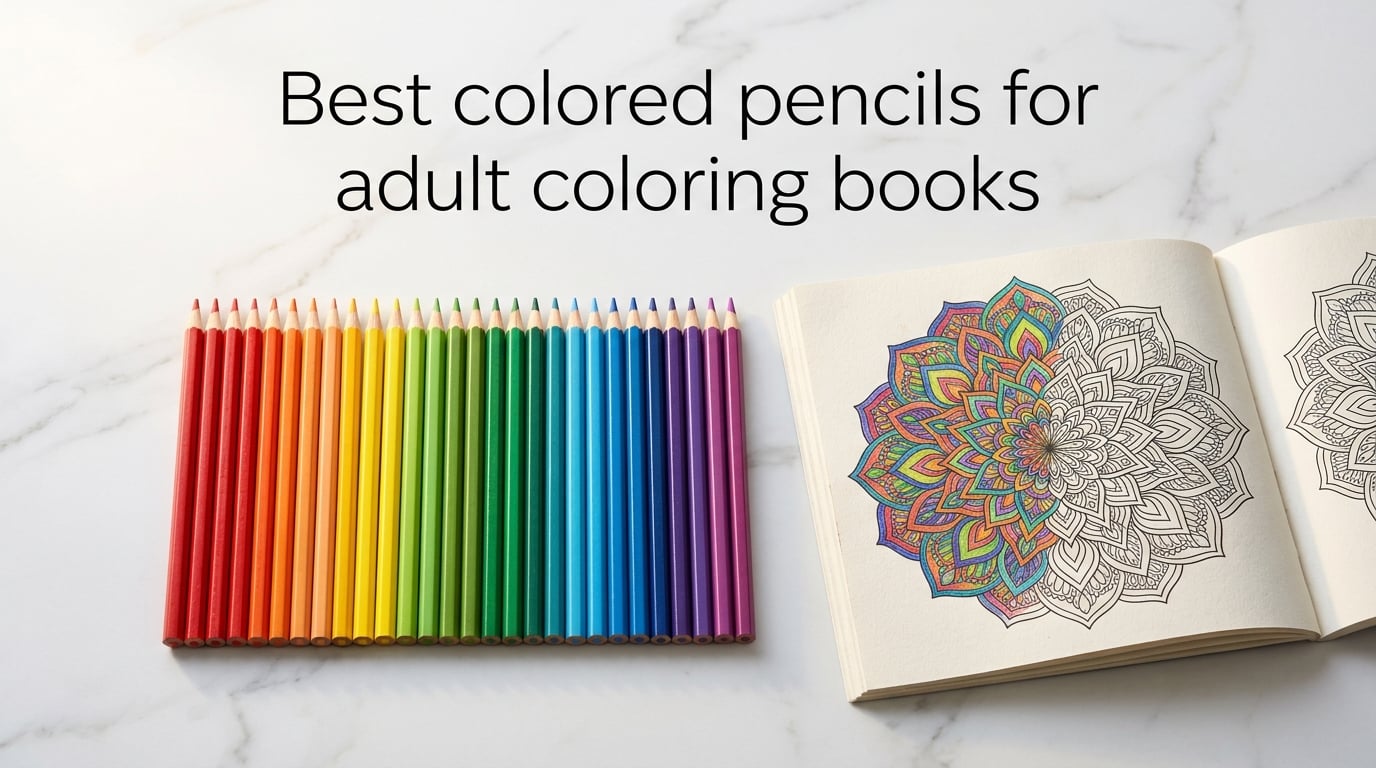
Prismacolor Premier colored pencils are the best overall choice for adult coloring books thanks to their soft wax-based cores that blend effortlessly and produce rich, vibrant colors. Faber-Castell Polychromos take the runner-up spot for colorists who prioritize sharp points and fine detail work. Whether you are a beginner looking for an affordable starter set or an experienced colorist upgrading your supplies, the best colored pencils for adult coloring books depend on your budget, coloring style, and the type of pages you prefer.
Choosing the right pencils transforms coloring from a frustrating exercise into a genuinely relaxing hobby. The wrong set leaves you fighting streaky blends, broken tips, and dull pigments. The right set glides across the page, layers cleanly, and makes even simple designs look polished. We spent weeks testing popular pencil brands on actual coloring book pages to find out which ones deliver the best results for adult colorists at every skill level.
Table of Contents
Wax-Based vs Oil-Based Colored Pencils: What’s the Difference?
The core material inside a colored pencil determines how it performs on paper. Understanding the two main types helps you pick the right tool for your coloring style.
Wax-Based Pencils
Wax-based pencils use a wax binder to hold the pigment together. This creates a soft, buttery core that lays down rich color with minimal pressure. Prismacolor Premier is the most popular wax-based option for adult coloring books.
The soft core blends beautifully and produces vibrant results on the first layer. You can build up color gradually or go bold right away. The trade-off is that wax-based pencils are more prone to breakage and can develop wax bloom over time.
Oil-Based Pencils
Oil-based pencils use an oil binder instead of wax. The core is firmer, holds a sharper point longer, and resists breakage better. Faber-Castell Polychromos is the gold standard for oil-based colored pencils.
These pencils excel at fine detail work and precise lines. They layer well without the waxy buildup that can make blending look muddy. However, they require slightly more pressure to achieve the same color intensity as their wax-based counterparts.
Which Type Is Better for Coloring Books?
For most adult colorists, wax-based pencils are the better starting point. They are more forgiving, require less hand strength, and produce satisfying results with less effort. Oil-based pencils shine when you are working on highly detailed designs with small spaces, fine lines, or intricate patterns that demand precision.
Many experienced colorists keep both types on hand. They reach for wax-based pencils for backgrounds, large fill areas, and smooth blending, then switch to oil-based for outlines, detail work, and final touches.
What to Look for When Choosing Colored Pencils
Not all colored pencils perform the same way. Here are the key factors that separate good pencils from great ones for adult coloring.
Blending Capability
Smooth blending is the single most important feature for coloring books. Good blending lets you transition between colors without visible streaks or harsh lines. Wax-based pencils generally blend more easily than oil-based ones, though high-quality oil pencils like Polychromos blend well with a bit of solvent or burnishing technique.
Pigment Quality
Higher pigment concentration means more vibrant colors and better coverage in fewer layers. Budget pencils often use more filler and less pigment, which results in pale, chalky color. Artist-grade pencils load more pigment into each core, delivering richer results from the first stroke.
Core Softness and Diameter
A softer core lays down color more easily but is more fragile. A harder core resists breakage and holds a sharp point but requires more pressure. For coloring books, a medium to soft core strikes the best balance. A wider core diameter also helps because it covers more area and is less likely to snap under normal hand pressure.
Break Resistance
Nothing interrupts a relaxing coloring session like a pencil tip snapping off mid-stroke. Core bonding quality matters more than barrel material. Well-bonded cores from brands like Faber-Castell and Derwent survive drops and aggressive sharpening far better than cheaper alternatives with poorly glued cores.
Open Stock Availability
Open stock means you can buy individual replacement pencils when specific colors run out. This is a huge advantage because you always use certain colors more than others. Brands like Prismacolor, Faber-Castell, and Derwent all offer open stock, while many budget brands do not.
Color Range
More colors give you more options for matching the tones in your coloring pages. A 24-color set works fine for simple designs, but complex mandalas and detailed illustrations benefit from 48 or more colors. Consider whether the brand offers the specific shades you reach for most often.
Best Overall: Prismacolor Premier
Prismacolor Premier colored pencils are the most recommended brand across coloring communities, art forums, and professional reviews for good reason. Their soft wax-based cores deliver the smoothest, most vibrant color laydown of any pencil in their price range.
The 3.8mm soft core blends like a dream, allowing you to create seamless gradients and rich, saturated fills without heavy pressure. Reddit users in r/ColoredPencils and r/AdultColoring consistently rank Prismacolor as the top choice for coloring books, noting that the buttery texture makes long coloring sessions feel effortless.
Strengths
The color selection is excellent, with sets ranging from 24 to 150 colors and strong open stock availability. The pigmentation is rich, and most colors look exactly as expected when applied. For mandala pages and designs with large fill areas, Prismacolor pencils produce results that look professionally finished with minimal technique required.
Limitations
The soft core is more fragile than oil-based alternatives and can break during aggressive sharpening. Some users report that quality has varied in recent production runs, though the pencils remain the community favorite. Wax bloom can appear on heavily layered work if you do not apply a fixative spray after finishing.
Best for Detail Work: Faber-Castell Polychromos
Faber-Castell Polychromos are the top pick for colorists who work on highly detailed coloring books with small spaces, fine lines, and intricate patterns. The oil-based cores hold a sharp point far longer than any wax-based pencil, which means less time sharpening and more time coloring.
The 3.8mm oil-based core is bonded with high-quality pigments that resist fading and produce consistent color from the first stroke. Polychromos are also noticeably more break-resistant than Prismacolor, surviving drops and heavy-handed sharpening without chipping.
Strengths
The point retention is exceptional, making these ideal for detailed illustrations, zentangles, and coloring books with tiny sections. Colors layer cleanly without the waxy buildup that can muddy blends. Faber-Castell offers excellent open stock availability and a color range of 120 shades, so replacing favorites is easy.
Limitations
Polychromos require more hand pressure to achieve the same color intensity as Prismacolor, which can cause fatigue during long sessions. They are also at a higher price point, which matters when you are building a full collection. Blending is not as intuitive with oil-based pencils and may require blending pencils or solvent for smooth transitions.
Best Budget Options for Adult Coloring
You do not need to spend a fortune to get satisfying results from your coloring books. These budget-friendly brands deliver surprisingly good performance for their price.
Castle Arts Premium
Castle Arts colored pencils are the most frequently recommended budget alternative to Prismacolor on Reddit and coloring forums. The soft wax-based cores blend well and produce vibrant color, though not quite as rich as premium brands. The 72-color set covers a wide range and comes in a sturdy tin case. For colorists who want a pleasant experience without a large investment, Castle Arts is a strong choice.
Crayola Signature Blend and Shade
Crayola’s premium line steps up significantly from their standard classroom pencils. The Blend and Shade pencils feature softer cores that blend better than regular Crayola and produce more saturated color. They are widely available, affordable, and a solid stepping stone before investing in artist-grade pencils. Community members recommend Crayola as a starter set to learn your preferences before committing to premium brands.
Arteza Premium
Arteza colored pencils offer good pigment quality at an accessible price point. The soft cores blend reasonably well, and the color range in larger sets is generous. They are a popular choice for beginners who want more color options without the premium price tag. The break resistance is decent, though not on par with Faber-Castell or Derwent.
Best Premium Picks for Serious Colorists
If you have been coloring for a while and want the absolute best color quality and lightfastness, these premium pencils deliver artist-grade performance.
Derwent Lightfast
Derwent Lightfast pencils use oil-based cores with a 100% lightfast rating, meaning your finished artwork will not fade over time. The color is rich and smooth, and the cores are well-bonded for excellent break resistance. These are ideal if you want to display or gift your finished coloring pages without worrying about color degradation.
Caran d’Ache Luminance
Caran d’Ache Luminance pencils represent the pinnacle of colored pencil quality. The wax-based cores produce incredibly smooth, velvety color with outstanding lightfastness. The price reflects the premium positioning, but for colorists who view their work as art worth preserving, Luminance pencils are unmatched in pigment richness and blendability.
Quick Comparison: All Top Picks at a Glance
Here is a side-by-side summary of the best colored pencils for adult coloring books to help you compare at a glance.
Prismacolor Premier — Wax-based, 3.8mm soft core, 150 colors available, excellent blending, open stock yes, best for overall coloring and beginners.
Faber-Castell Polychromos — Oil-based, 3.8mm firm core, 120 colors available, great layering, open stock yes, best for detail work and precision.
Castle Arts Premium — Wax-based, 3.3mm soft core, 72 colors available, good blending, open stock no, best for budget-conscious colorists.
Crayola Signature Blend and Shade — Wax-based, 3.4mm medium core, 30 colors available, decent blending, open stock no, best for beginners and casual colorists.
Arteza Premium — Wax-based, 3.3mm soft core, 72 colors available, good blending, open stock limited, best for affordable color variety.
Derwent Lightfast — Oil-based, 3.8mm firm core, 100 colors available, smooth layering, open stock yes, best for archival and display work.
Caran d’Ache Luminance — Wax-based, 3.8mm soft core, 100 colors available, exceptional blending, open stock yes, best for premium results and preservation.
How to Choose the Right Pencils for You
The best colored pencils for your coloring books depend on your experience level, budget, and what you enjoy most about coloring. Use this framework to narrow down your choice.
If You Are a Beginner
Start with Prismacolor Premier in a 24 or 48-color set. The soft cores are forgiving and produce satisfying results without advanced technique. If budget is a concern, Castle Arts or Crayola Signature Blend and Shade let you explore coloring without a large upfront investment.
If You Focus on Detailed Designs
Choose Faber-Castell Polychromos. The sharp point retention and fine cores handle tiny spaces and intricate patterns far better than soft wax-based pencils. You will spend less time sharpening and more time filling in details with precision.
If You Want to Preserve Your Work
Invest in lightfast pencils like Derwent Lightfast or Caran d’Ache Luminance. Standard colored pencils can fade within months of sun exposure, which matters if you plan to frame or display your finished pages.
If You Have Hand Fatigue or Arthritis
Soft wax-based pencils require less pressure, making them easier on your hands during long sessions. Look for triangular or ergonomic barrel shapes if grip comfort is a concern. Prismacolor Scholar pencils have a triangular barrel that some colorists with arthritis find more comfortable than round barrels.
If You Color for Relaxation
Prioritize blending ease and color vibrancy over precision. Prismacolor Premier delivers the most satisfying coloring experience for casual, stress-relieving sessions. The smooth color laydown and effortless blending let you zone out and enjoy the process without fighting your materials.
Common Problems and How to Fix Them
Even the best colored pencils can present challenges. Here is how to troubleshoot the most common issues adult colorists face.
Wax Bloom
Wax bloom appears as a white, hazy film on heavily layered wax-based pencil work. It happens when wax binder migrates to the surface as it cools. To prevent it, apply color in thin layers rather than heavy pressure. If wax bloom appears, gently wipe the surface with a soft cloth and apply a workable fixative spray to seal the pigment.
Pencil Breakage
Core breakage is the most common frustration with colored pencils. Soft wax-based pencils are especially vulnerable. Use a quality sharpener designed for colored pencils rather than a basic blade sharpener. Sharpen gently with slow rotations instead of forcing the pencil. Avoid dropping your pencils, as impact can fracture the core inside the barrel even if no external damage is visible.
Streaky Blending
Streaky blending usually results from either insufficient pigment buildup or using too much pressure on the first layer. Build color gradually with light, circular strokes and multiple passes. A colorless blending pencil or blending stump smooths transitions between colors. Alternatively, use a tiny amount of odorless mineral spirits on a brush to dissolve and blend oil-based pencil layers.
Color Not Vibrant Enough
If your colors look pale or chalky, you are likely not layering enough pigment. Budget pencils require more layers to match the vibrancy of premium brands. Try burnishing, which means pressing firmly with a light color or colorless blender over your layered work. This pushes pigment into the paper texture and intensifies the color payoff.
Paper Showing Through
Thin coloring book paper can buckle or show through when you apply heavy pigment. Place a sheet of cardstock behind the page you are coloring to prevent bleed-through to the next design. If the paper is very thin, switch to lighter pressure and build color slowly to avoid saturating the fibers.
Technique Tips for Better Coloring Results
A few simple techniques can dramatically improve how your finished coloring pages look, regardless of which pencils you use.
Pressure Control
Light pressure produces the smoothest, most even color. Let the pencil do the work. Heavy pressure crushes the paper texture, causes breakage, and makes blending harder. Practice applying color with barely more than the weight of the pencil resting on the paper, then build intensity through layers rather than force.
Layering Order
Apply light colors first and build toward darker shades. This gives you more control over the final tone. If you start with a dark color, it is very difficult to lighten the area. Work from light to dark, and reserve your darkest values for the final pass to add depth and contrast.
Burnishing
Burnishing means pressing hard with a light-colored pencil or colorless blender over layered work. This fills in the paper texture and creates a smooth, almost paint-like finish. It is the best technique for achieving rich, saturated backgrounds on coloring book pages. The trade-off is that burnished areas become difficult to add more layers to, so save it for your final pass.
Circular vs Linear Strokes
Small circular strokes produce the most even coverage with minimal visible texture. Long linear strokes work well for directional shading or when you want to follow the contours of a design. Experiment with both approaches on scrap paper before committing to your coloring page.
Choosing the Right Sharpener
A good sharpener makes a significant difference in pencil performance. Look for sharpeners with helical blades designed for colored pencils, such as the Kum Long Point or Dahle 133. These create a longer, more gradual taper that exposes more core without over-sharpening the wood. Electric sharpeners can work but choose one with adjustable settings and avoid aggressive models that eat through soft cores too quickly.
Frequently Asked Questions
What are the best pencils for coloring books?
Prismacolor Premier pencils are the best overall choice for coloring books due to their soft wax-based cores that blend smoothly and produce vibrant colors. Faber-Castell Polychromos are the top alternative for colorists who prefer oil-based pencils with sharper points for detailed work.
Is it better to use markers or colored pencils for adult coloring books?
Colored pencils are generally better for adult coloring books because they offer more control, allow layering and blending, and do not bleed through thin coloring book paper. Markers can bleed through pages and require more expensive paper to work properly. Pencils also provide a more relaxing, meditative coloring experience.
What brand of colored pencils is best for adult coloring books?
Prismacolor Premier is the most recommended brand for adult coloring books across coloring communities and art forums. The soft wax-based cores deliver smooth blending and rich pigment. Faber-Castell Polychromos is the top choice for detail-oriented colorists who prefer oil-based pencils with superior point retention.
Are expensive colored pencils worth it for casual coloring?
Premium pencils like Prismacolor Premier offer noticeably smoother blending, richer color, and less frustration than budget options. However, affordable brands like Castle Arts and Crayola Signature Blend and Shade deliver surprisingly good results for casual colorists. Start with a mid-range set and upgrade if you find yourself coloring regularly.
What is the difference between wax-based and oil-based colored pencils?
Wax-based pencils use a wax binder that creates a soft, buttery core ideal for blending and rich color laydown. Oil-based pencils use an oil binder that produces a firmer core with better point retention and break resistance. Wax pencils blend more easily; oil pencils are better for fine detail work.
Is Prismacolor or Faber-Castell better?
Prismacolor Premier is better for blending, color vibrancy, and ease of use, making it ideal for beginners and relaxation-focused coloring. Faber-Castell Polychromos is better for detail work, point retention, and break resistance. Most experienced colorists recommend having both for different purposes rather than choosing one exclusively.
Final Thoughts
Finding the best colored pencils for adult coloring books comes down to matching your tools to your coloring style. Prismacolor Premier remains the top recommendation for most colorists because the soft, blendable cores make every coloring session more enjoyable. If you work on highly detailed designs, Faber-Castell Polychromos gives you the precision and point retention you need.
Budget-conscious colorists should not feel left out. Castle Arts and Crayola Signature deliver satisfying results without a premium price tag. Start with whichever set fits your budget, learn what you like, and upgrade from there. The most important thing is to pick up your pencils and color.