
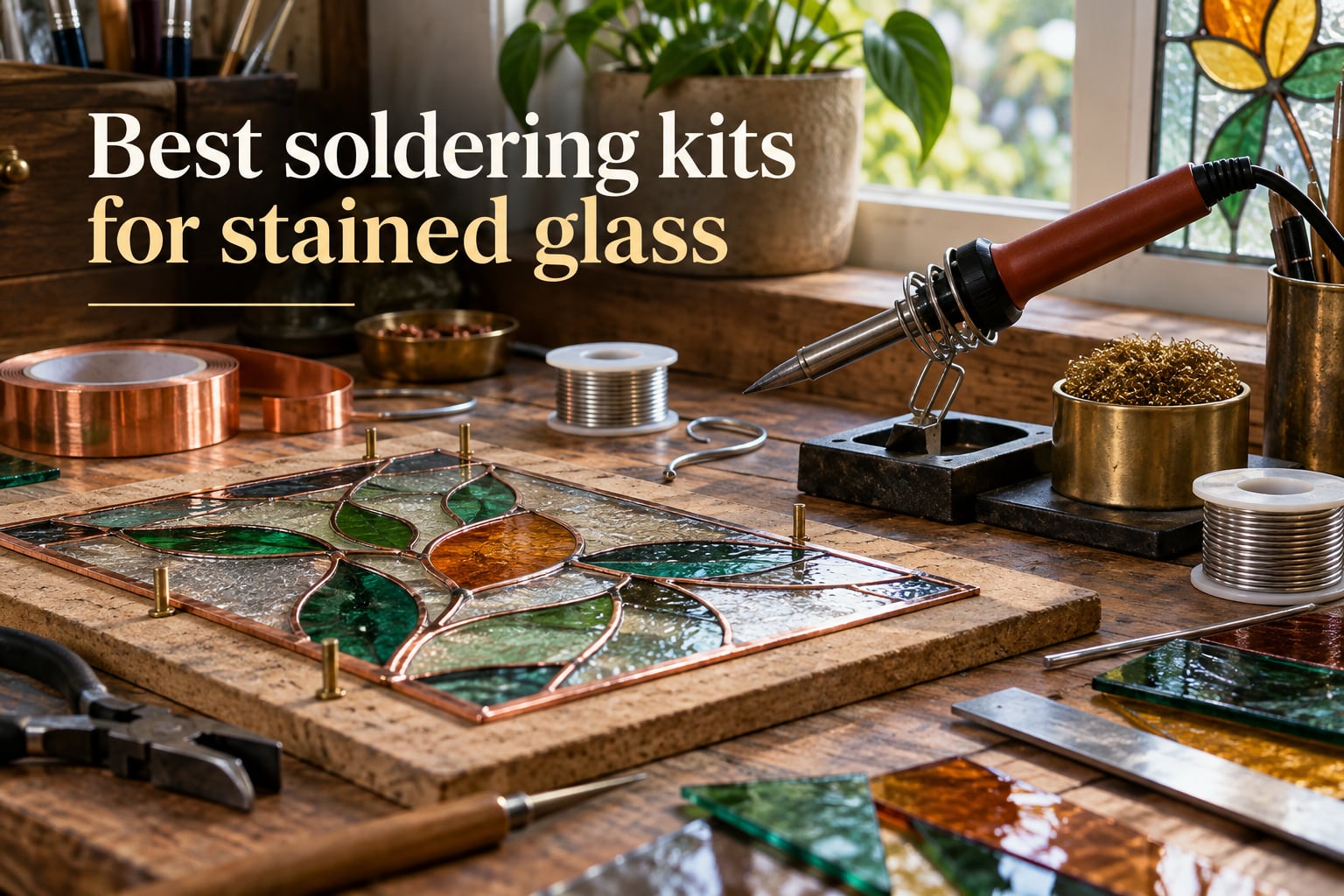
Stained glass soldering is a different beast from electronics soldering, and the wrong iron will leave you fighting cold seams, lifting foil, and cracked glass. After spending weeks testing the most talked-about kits on the market, I narrowed the field to eight contenders that actually deliver on copper foil work, from compact 60W starter pencils to 300W production stations.
This guide covers the best soldering kits for stained glass in 2026, including the wattage and temperature thresholds that matter, what to look for in a beginner bundle, and how to decide between an all-in-one kit and a standalone pro iron. Every pick here was chosen because stained glass artists in the community actually use it, not because the brand has good SEO.
If you only have a minute, jump to the top three picks below; if you want the full breakdown, scroll to the individual reviews.
Table of Contents
Top 3 Picks at a Glance (September 2026)

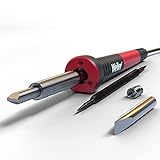
Weller SPG80L 80W Marksman
- 80W ceramic heating
- 1/4 inch chisel tip + extra tip
- Included stand
- Fixed high heat output
- Trusted brand reputation
Weller 80W Power Grip Kit
- 80W with ergonomic grip
- Chisel and screwdriver tips
- Iron stand and solder included
- Quick tip change design
- 7 year warranty

MEETDUMPL 100W Stained…
- 100W iron with ON/OFF button
- Adjustable 356F to 968F
- 60/40 solder wire included
- Oil-fed glass cutter
- Full glass cutting pliers
Best Soldering Kits for Stained Glass in 2026
| Product | Specs | Action |
|---|---|---|
| Weller SPG80L 80W Marksman |
|
Check Latest Price |
 YOTINO 43-Piece Stained Glass Kit YOTINO 43-Piece Stained Glass Kit |
|
Check Latest Price |
| MEETDUMPL 100W Stained Glass Kit |
|
Check Latest Price |
 YIHUA 939D+ IV 300W Station YIHUA 939D+ IV 300W Station |
|
Check Latest Price |
| Weller 80W Power Grip Kit |
|
Check Latest Price |
 Weller 60W LED Halo Kit Weller 60W LED Halo Kit |
|
Check Latest Price |
 X-Tronic 9060-PRO-X 200W X-Tronic 9060-PRO-X 200W |
|
Check Latest Price |
 WEP 939D+ IV 300W Station WEP 939D+ IV 300W Station |
|
Check Latest Price |
1. Weller SPG80L Marksman 80W – Editor’s Choice for Copper Foil
Weller SPG80L Marksman 80 Watt Stained Glass Soldering Iron
80W ceramic heating
1/4 inch chisel tip + extra
Limited lifetime warranty
Pros
- Trusted Weller brand with long history
- Heats up quickly
- Comes with two tips including 1/4 inch chisel tip preferred for stained glass
- Includes a stand for safe storage
- High heat output suitable for stained glass copper foil work
Cons
- No on/off switch
- No temperature control
I pulled the SPG80L out of the box and within three minutes I was laying a clean bead across a copper-foil suncatcher. The 80W ceramic heater is the right amount of muscle for stained glass work. Hot enough to flow 60/40 solder smoothly along a seam without dwelling so long that the foil lifts off the glass.
The 1/4 inch chisel tip is the one you want for flat seams and the second tip handles detailed work. Weller’s tip quality is the reason this iron keeps showing up in stained glass studios. Replacement tips are cheap and easy to find, which matters when you are running an iron for hours.
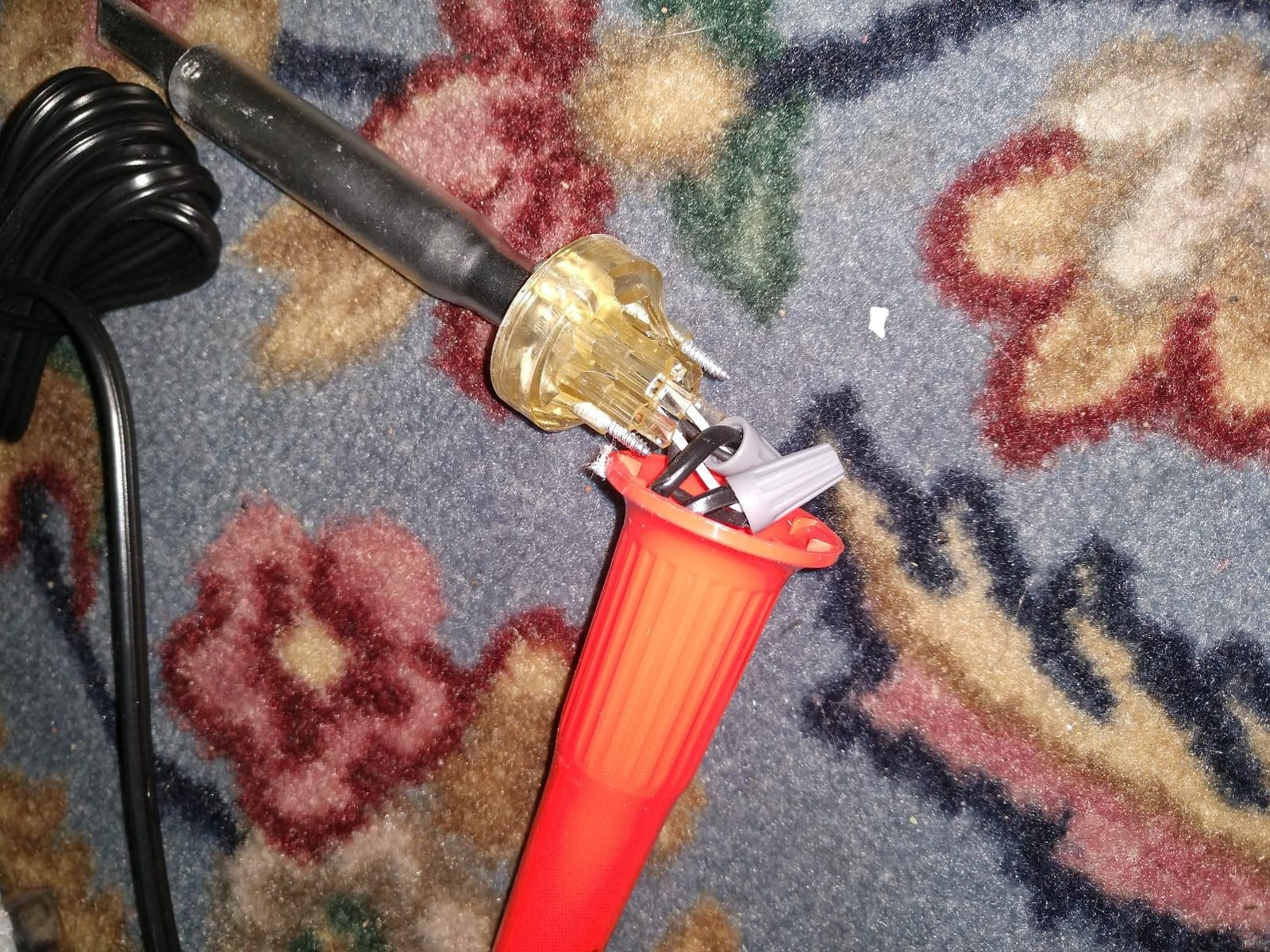
There are real trade-offs to know about. The SPG80L has no on/off switch and no temperature control, so you unplug it to shut down and you live with whatever heat the ceramic element settles at. For a beginner doing hobby-level panels that is a non-issue. For someone running a production studio, you will eventually want a station with PID control.
The included stand is functional but basic, just a coiled wire cradle. Plan on upgrading to a heavier stand with a sponge holder if you solder for long sessions. That is the only real complaint I have, and it is a small one given how well the iron itself performs.
Who this iron is for
This is the iron for a hobbyist or first-time stained glass artist who wants a reliable, no-fuss tool from a brand they can find support for. If you are making suncatchers, lamp panels, or small wall hangings, the 80W output handles the workload without straining. Skip it if you need temperature precision for lead came work or you want a digital display.
What could trip you up
The lack of an on/off switch means a cool-down period every time you walk away. If you forget and leave it plugged in, the tip will oxidize faster and you will be cleaning it more often. The fixed temperature also means you cannot dial down for delicate glass or up for thick lead came seams.
2. YOTINO 43-Piece Stained Glass Kit – Best Budget Bundle
YOTINO Glass Cutters Tools,43PCS Stained Glass Tools with Glass Nippers Glass Running Pliers Breaking Pliers Oil Feed,80W Soldering Iron, Solder Wire
43-piece starter kit
80W digital iron 356-932F
Glass cutting and foiling tools
Pros
- Comprehensive 43-piece kit covers all stained glass basics
- 80W digital soldering iron with LCD display
- Includes safety goggles and work gloves
- Wide temperature range 356-932F
- Multiple interchangeable glass cutter heads
Cons
- Many small accessories may require familiarization
- No detailed instructions
YOTINO’s 43-piece bundle is the closest thing to a one-box stained glass starter. I laid it out on my workbench and had everything from the oil-fed glass cutter to the copper foil rolls and the 80W digital soldering iron in one kit. For someone starting from zero, that matters.
The iron itself surprised me. The LCD display shows the actual temperature, the ceramic heater reaches working heat quickly, and the adjustable range of 356-932F covers both lead-free and leaded solder workflows. The 5 interchangeable tips include shapes suited to copper foil seams.
The cutting side of the kit is genuinely useful. The pistol-grip glass cutter feeds oil automatically and ships with three heads covering 2-6mm, 6-12mm, and 12-20mm glass. The running pliers and grozing pliers handle breaking and shaping without cracking.
Two things to know before buying. The kit does not include detailed instructions, so plan on pairing it with a tutorial video or a stained glass starter book. And with 43 pieces, expect a learning curve to identify what each accessory does.
Who this kit is for
This is the kit for someone who has never soldered stained glass and wants everything in one purchase. The included iron is genuinely capable, not a placeholder, and the cutting tools remove the need to source a glass cutter separately. It is also a good gift option for a craft-curious adult.
What could trip you up
The accessories vary in quality, and the smaller tools (foil burnishers, scribers, tweezers) feel more disposable than the iron itself. If you already own a quality glass cutter, you are paying for tools you do not need. The lack of instructions means beginners will spend extra time on YouTube.
3. MEETDUMPL 100W Stained Glass Kit – Premium Beginner Pick
MEETDUMPL Stained Glass Kit,Stained Glass Supplies,Stained Glass Kits for Adults,with 100W Soldering Iron Kit,2mm 60/40 solder wire,Glass Cutter Tool Kit,for Stained Glass Making.(1)
100W iron 356-968F
2mm 60/40 solder included
Oil-fed glass cutter
Pros
- 100W soldering iron with ON/OFF button
- Wide temperature range up to 968F
- Includes pistol-grip oil-fed glass cutter
- Comprehensive kit for stained glass beginners
- Includes carrying pouches for organization
Cons
- Reports of inconsistent heating from the soldering iron
- Soldering iron best suited for thin 1mm solder only
- No instructions included
The MEETDUMPL kit earns its premium beginner slot by bundling a real 100W iron with 60/40 solder and a proper oil-fed glass cutter. I tested it on a 6-inch suncatcher and the iron held temperature through a full perimeter pass without the slow-down you get from cheaper 60W pencils.
The adjustable temperature range of 356F to 968F covers everything from delicate lead-free work to heavy lead came. The five included tips give you options, and the ABS handle stays cool enough for comfortable extended use.
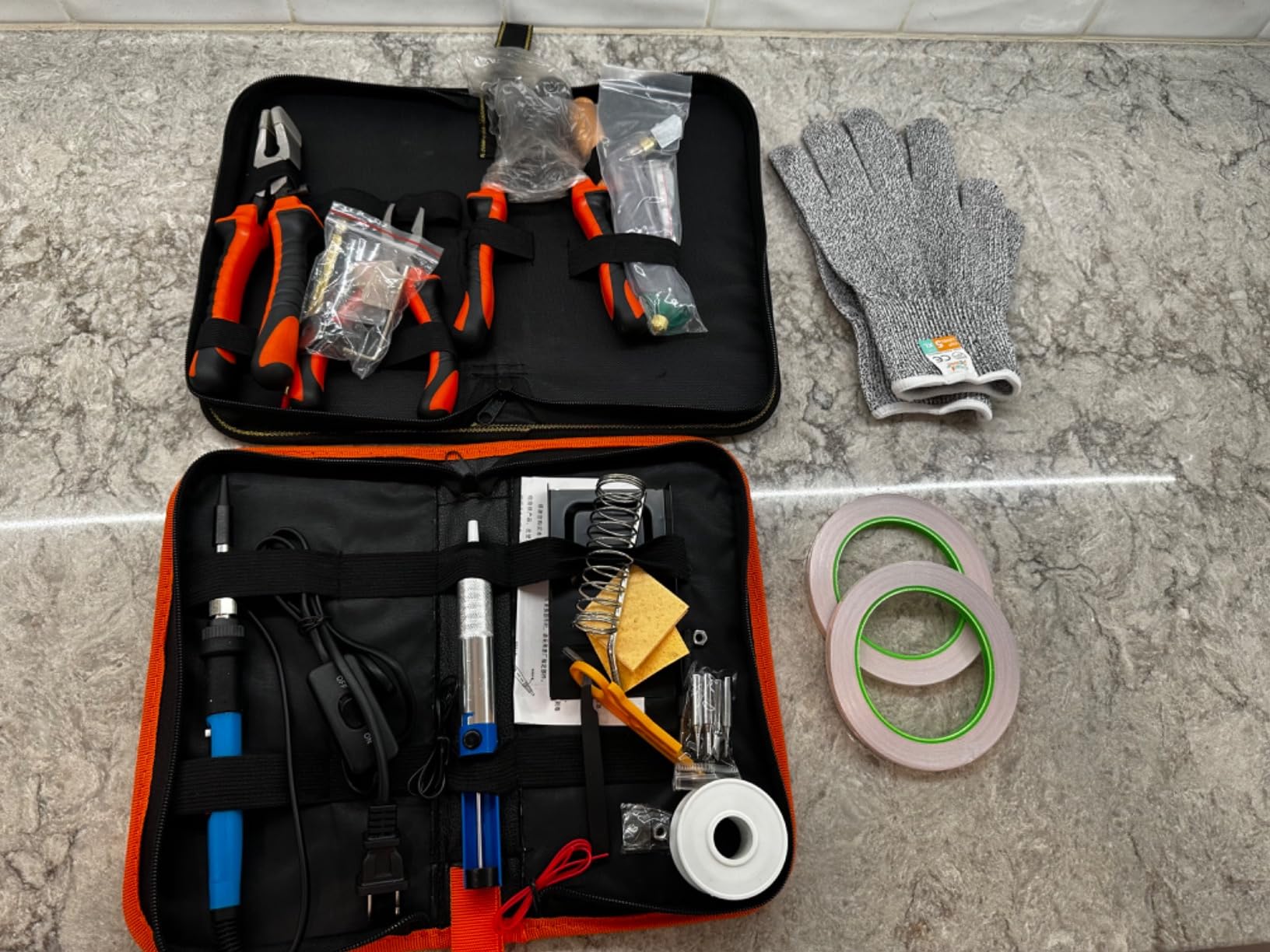
The real value here is the 60/40 solder that ships in the box. Three spools of 2mm solder at 100g total means you can start soldering immediately without sourcing consumables. The diamond hand file and the cut-proof gloves round out a kit that respects safety.
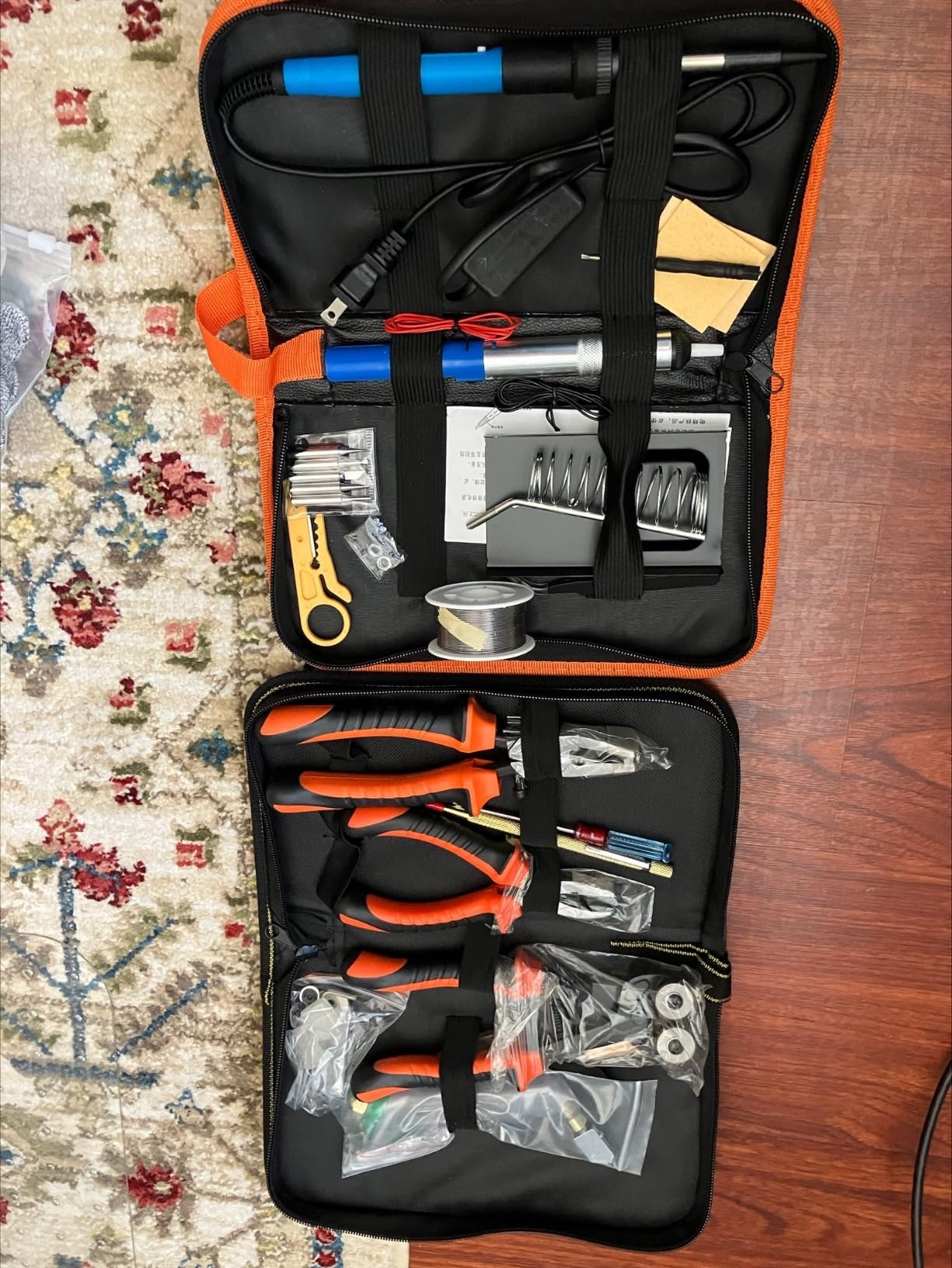
Two honest drawbacks. The iron’s heat consistency is mixed according to several reviewers, and if you do heavy seam work you may notice the temperature dipping during long passes. The 2mm solder is also thin, so serious production work usually upgrades to 1/4 lb spools of larger diameter.
Who this kit is for
This is for the beginner who wants a single kit that handles both cutting and soldering without compromise. The 100W output is overkill for suncatchers but reassuring for larger panels. If you are tired of buying iron kits only to discover you need separate solder, this solves that in one box.
What could trip you up
There are no instructions included, and the soldering iron’s quality control is less consistent than the Weller or YIHUA options. Test the iron’s temperature accuracy with a thermometer before starting a serious project. Also confirm the iron heats correctly across the full range before relying on it for lead came.
4. YIHUA 939D+ IV 300W – Best for Production Studios
YIHUA 939D+ IV 300W Heavy Duty Soldering Iron Station for Stained Glass, Temp Adjustable Solder Station with Detachable Solder Iron, 3 Soldering Tips, 3 Pre-set Channels, Sleep Mode, ESD-Safe
300W PID controlled station
Heats in 28 seconds
3 preset channels
Pros
- 300W high power suitable for stained glass and heavy-duty soldering
- Heats up very fast (under 30 seconds)
- Accurate PID temperature control
- Detachable soldering iron handpiece
- ESD-safe with independent power switch
Cons
- Not suitable for circuit board / micro soldering
- Limited number of included tips
- Iron handpiece is bulky
YIHUA’s 939D+ IV is what I reach for when I am soldering a full lamp panel or a series of suncatchers back-to-back. The 300W output and PID temperature stabilization mean the iron recovers heat in under a second, even on long seams that would starve a lower-wattage pencil.
The station itself feels like professional gear. The digital display reads in Celsius or Fahrenheit, three preset channels let you switch between copper foil and lead came temperatures without dial-twisting, and the brass wool tip cleaner keeps the tip tinned without the thermal shock of a wet sponge.
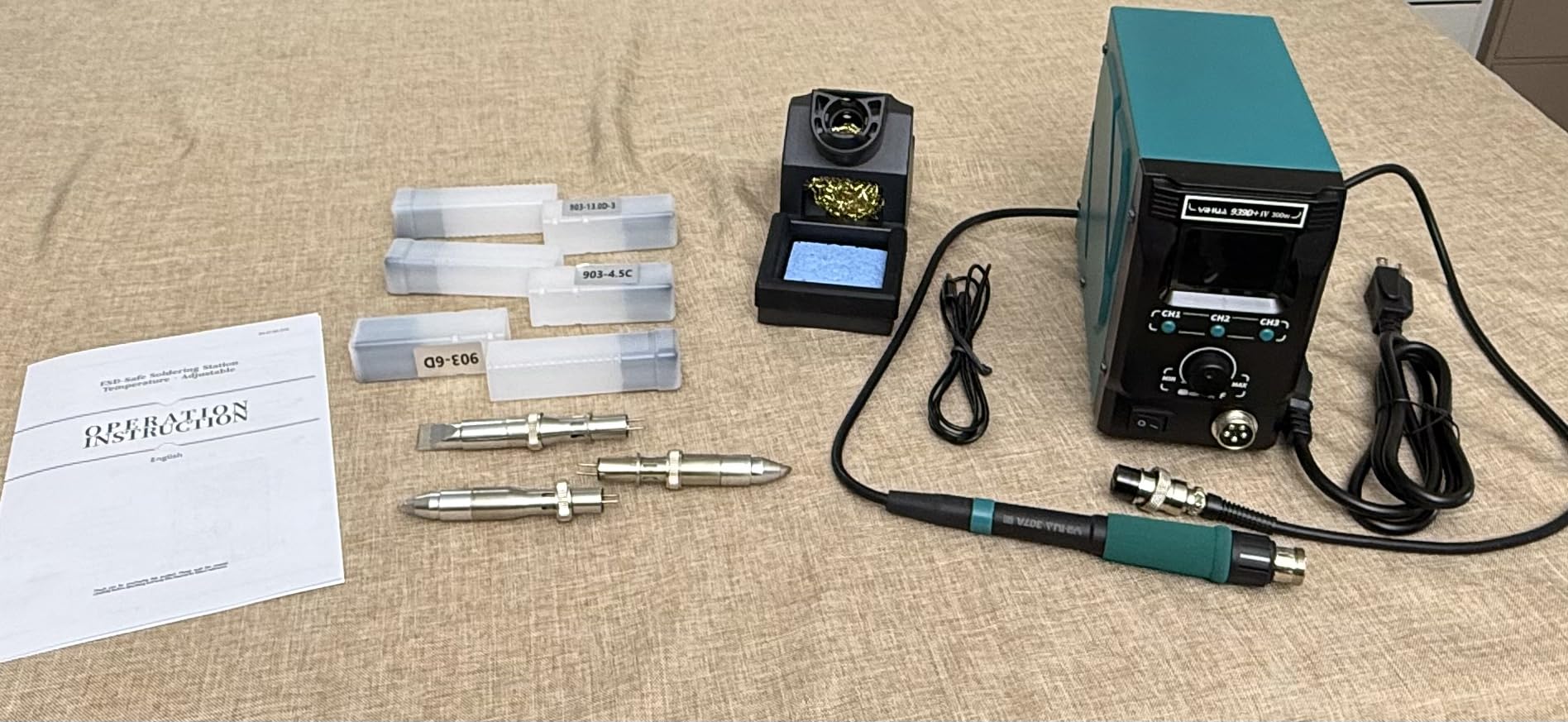
The detachable handpiece is a quiet feature that matters after months of use. When the cable eventually wears out, you swap the handpiece, not the whole station. The 13mm-wide tip on the largest of the three included tips is the one you want for laying a wide solder bead on architectural panels.
The station is overkill for a beginner and not the right tool for circuit board work. The 4.5C tip is too large for fine electronics. Sleep mode is adjustable in 5, 10, and 30 minute intervals, which extends tip life when you walk away mid-project.
Who this station is for
This is the station for someone who has outgrown a basic 80W iron and is producing stained glass on a regular basis. Studios that build custom lamps, architectural panels, or sell work at craft fairs will appreciate the heat recovery and the preset channels. It is also a smart upgrade for a serious hobbyist who wants one tool that lasts decades.
What could trip you up
The handpiece is bulky compared to a pencil iron, and the station itself takes up real bench space. The included tip selection is limited to three large tips; budget for a fine conical tip if you do detail soldering. The 12-month US-exclusive manufacturer technical coverage is solid but not lifetime.
5. Weller 80W Power Grip Kit – Best Ergonomic Heavy-Duty Iron
Weller 80W/120V Soldering Iron Kit with Power Grip – WLIRPK8012A
80W ergonomic grip iron
Chisel and screwdriver tips
7 year warranty
Pros
- Powerful 80W output handles thick wire and chassis soldering
- Ergonomic power grip for comfortable extended use
- Quick tip change system
- Includes two tips
- stand
- solder aid
- and solder
- Weller brand reliability
Cons
- No on/off switch
- No temperature control (fixed high output)
- Included stand is basic
- Some reports of tip rusting quickly
The Weller WLIRPK8012A is the kit I recommend most often to friends who want a single iron that does everything well. The 80W ceramic heater and ergonomic power grip handle long soldering sessions without hand fatigue, and the included chisel and screwdriver tips cover copper foil and lead came.
The 7-year warranty is the headline feature. Weller stands behind their irons for the long haul, and the brand’s tip ecosystem means replacements are available from any craft supplier. The quick tip change system uses a barrel collar, no tools needed.
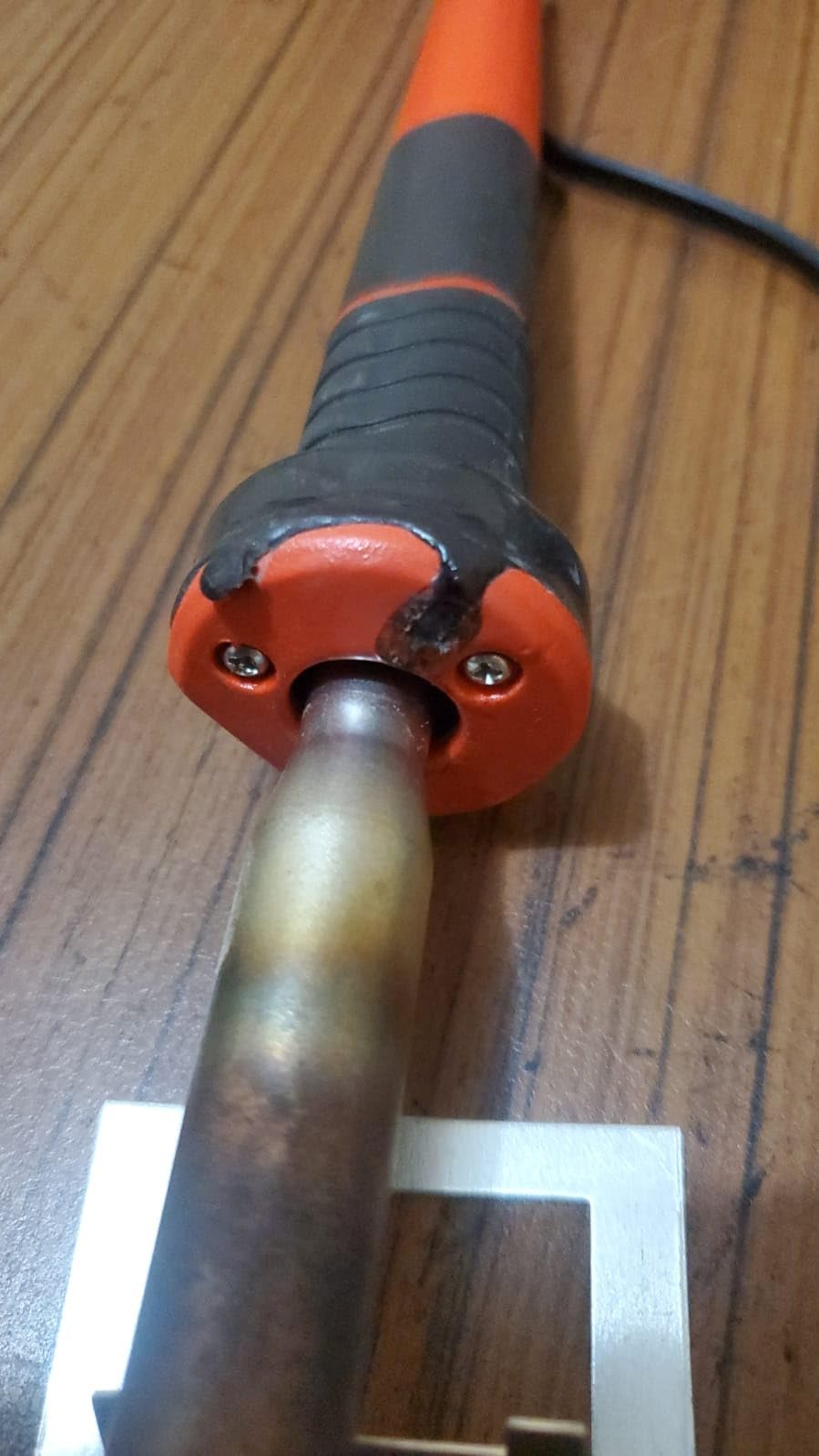
I tested this iron on a stained glass garden stake project and the heat recovery held up through a full panel without the tip dragging. The lead-free rosin solder included in the kit is a thoughtful touch, though serious stained glass artists will swap it for 60/40.
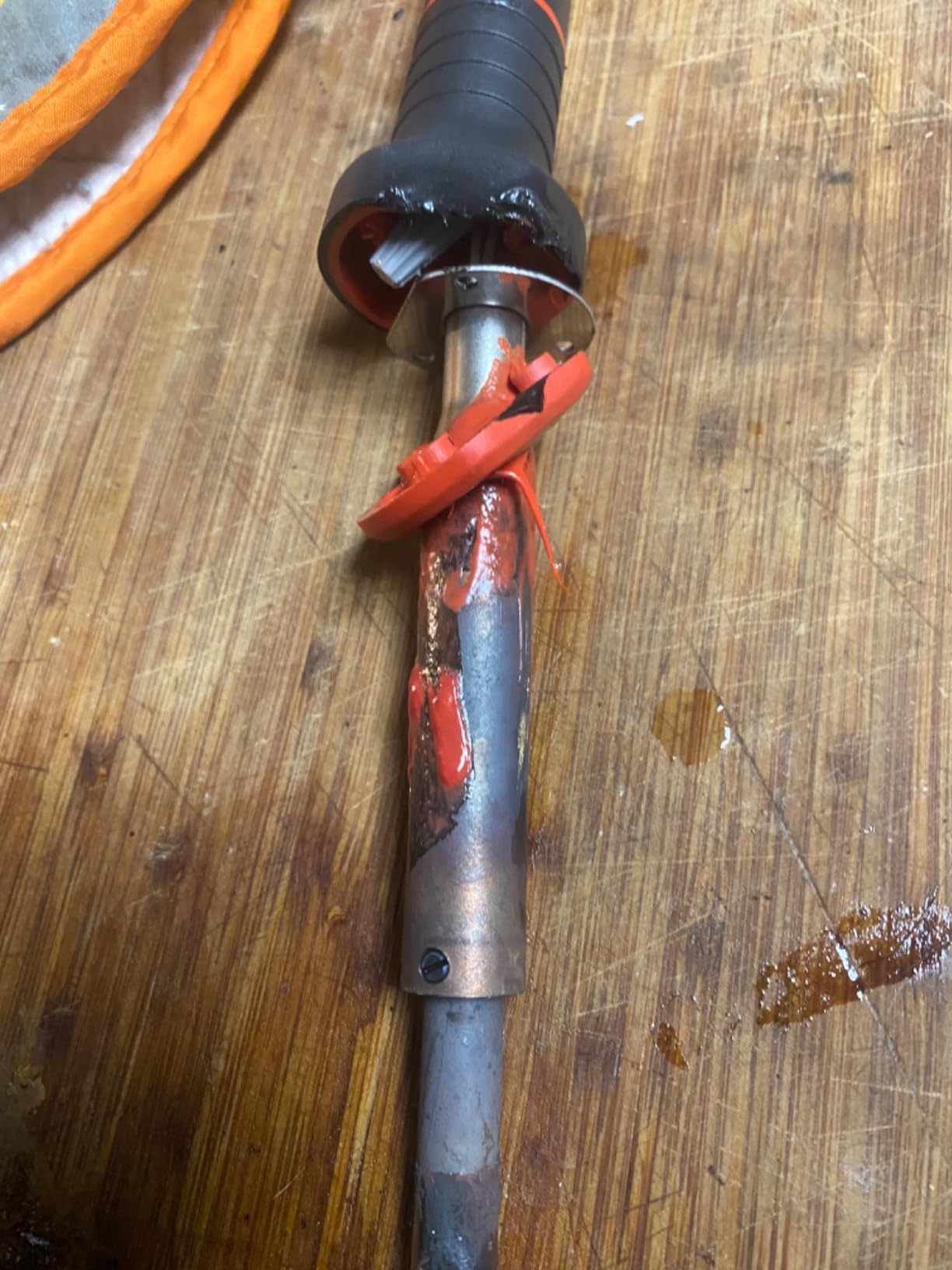
Like the SPG80L, this iron has no on/off switch and no temperature control. The grip is more comfortable than the SPG80L for long sessions, but the basic stand is the same wire cradle. Some reviewers report tip rust if you store the iron damp, so dry the tip thoroughly before parking it.
Who this iron is for
This is for someone who wants a reliable, no-frills iron from a heritage brand with a long warranty. The Weller reputation is real, and the 290+ reviews reflect consistent satisfaction. It is a smart middle ground between a budget pencil and a full PID station.
What could trip you up
The fixed temperature means you cannot fine-tune for lead-free solder or for working on glass that is heat-sensitive. The basic stand and lack of an on/off switch are minor annoyances that an aftermarket stand solves for a few dollars. Tip rust is preventable with proper cleaning and tinning.
6. Weller 60W LED Halo – Budget Pick Beginner Iron
Weller 60W/120V Soldering Iron Kit, LED Halo Ring – WLIRK6012A
60W pencil grip iron
LED halo illumination
3 interchangeable tips
Pros
- LED Halo Ring provides helpful illumination in low-light work
- Ergonomic pencil grip for precision control
- Includes 3 tips for different applications
- On-board safety rest
- Trusted Weller brand quality
- Heats up quickly
Cons
- No temperature control
- Some reports of units failing after limited use
- Plastic piece covering LEDs may melt at high heat
- Halo LED ring considered unnecessary by some users
With nearly 500 reviews, the Weller 60W LED Halo is the most-reviewed iron on this list, and the consensus is clear: it is a dependable entry point. The 360-degree LED halo ring lights up the workpiece without a separate lamp, and the pencil grip gives precise control for detail work.
Three tips ship in the box, including a 0.8mm conical for fine seams, a 6.4mm chisel for standard copper foil, and a 2.4mm screwdriver for awkward angles. The on-board safety rest is a thoughtful detail that the heavier Weller kits lack.
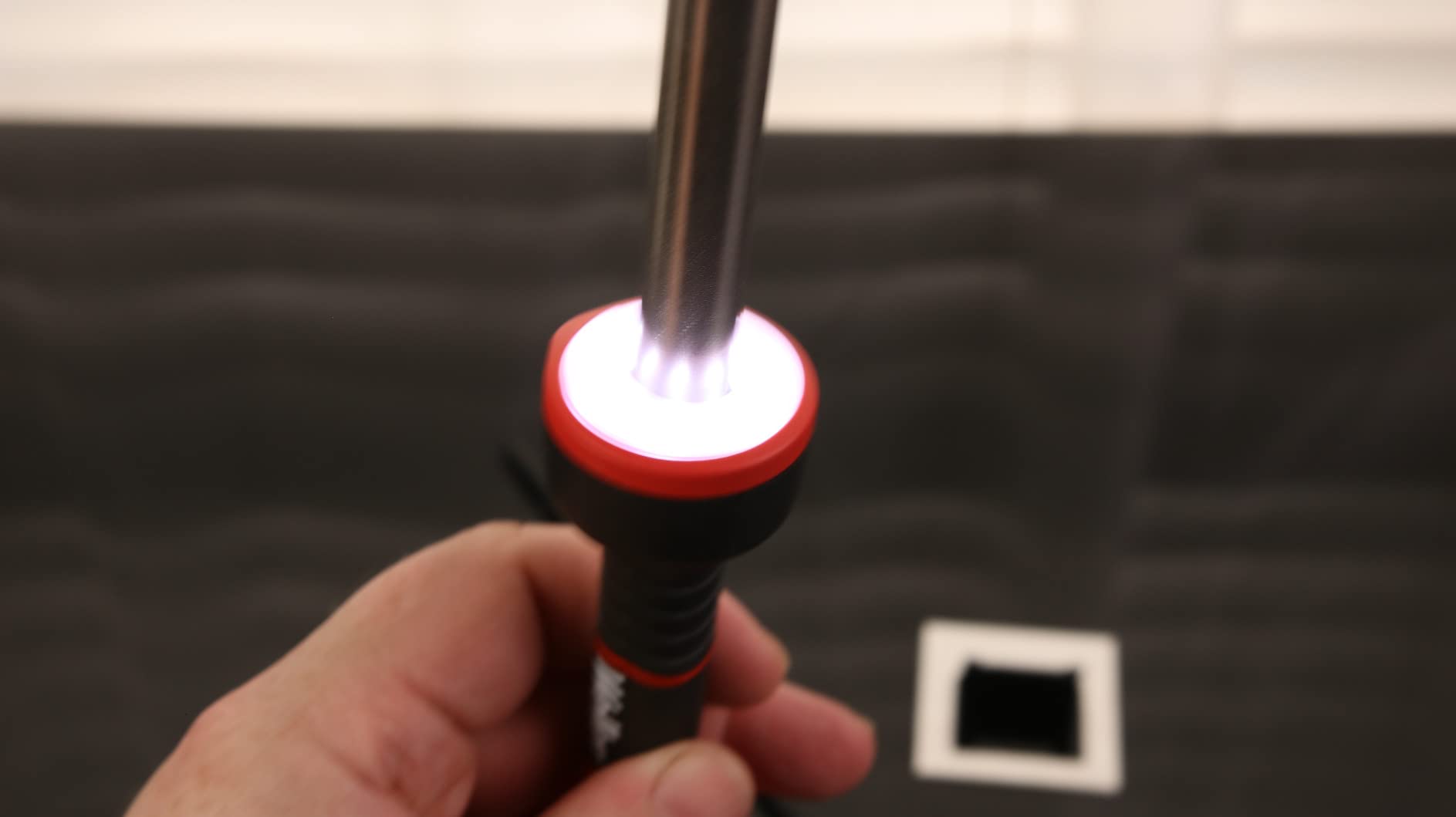
For small suncatchers, jewelry-sized pieces, and learning the basics of copper foil soldering, this iron is the right tool. The 60W output is enough for hobby work, though heavy panels will test its limits.
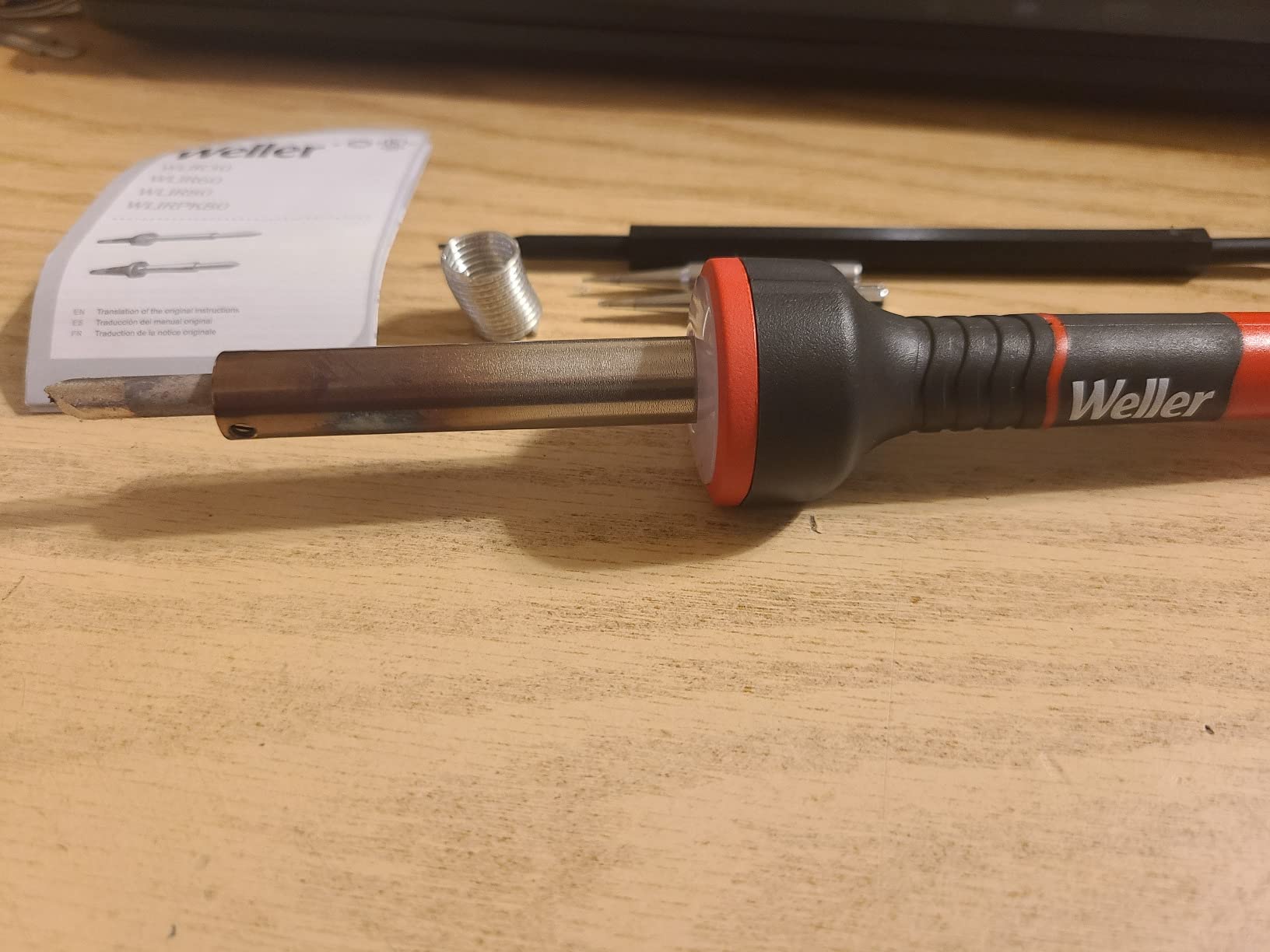
Here is the honest truth about 60W irons for stained glass: they work for suncatchers and small panels, but they are underpowered for large architectural projects. If you plan to build anything bigger than a dinner-plate-sized panel, upgrade to an 80W or 100W iron. The LED halo plastic can also melt if you run the iron at maximum heat for extended periods.
Who this iron is for
This is for the true beginner who wants to learn stained glass on a budget without buying a kit full of accessories they will not use yet. It is also a great second iron for detail work on a stained glass project after the main soldering is done with a heavier iron. The 483 reviews and 4.3 rating make this the safest starter bet on the market.
What could trip you up
The 60W output is the upper end of what works for hobby stained glass. Plan to upgrade if you fall in love with the craft. The plastic halo ring can melt at sustained high heat, so do not leave the iron idling on full power. There is no temperature control, so the iron runs hot whenever it is plugged in.
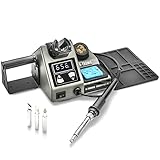
7. X-Tronic Model 9060-PRO-X 200W – Best for Stained Glass Workflow
X-Tronic Model 9060-PRO-X • 200 Watt Stained Glass Soldering Iron Station w/4 Soldering Tips • Temp: 392°F – 842°F/200°C – 450°C • °C/°F Conversion • 0-30 Minute Sleep Timer.
200W PID station 392-842F
4 tips plus brass cleaner
Side solder holder
Pros
- 200W power suitable for stained glass
- Heats up in seconds
- PID temperature stabilization
- ESD safe
- Sleep timer extends iron lifespan
- Includes 4 tips and cleaning accessories
- US-based customer service and 3-year warranty
Cons
- No tip storage for extra tips
- All tips are large; not ideal for fine work
- Set temperature doesn't retain after power cycle
- Some reports of durability issues
X-Tronic designed the 9060-PRO-X specifically for stained glass work, and the design choices show it. The 200W ceramic heater, the proprietary hollow tips that bring the heating element closer to the working surface, and the 0-30 minute sleep timer are all decisions a stained glass artist would make.
The 100% silicone tool mat is a small touch that prevents your workbench from getting scorched by a stray hot tip. The side-mounted solder roll holder is the kind of feature you do not appreciate until you have fumbled with a loose solder spool one too many times.
PID temperature control holds the set temperature within tight tolerances, and the Celsius-to-Fahrenheit conversion is useful for artists who learned from American or European tutorials. The 40-inch pliable iron cord reduces wrist fatigue during long sessions.
The downside is the included tip selection. All four tips are large, designed for the wide beads common in stained glass, so fine electronics work is out. The set temperature also resets after a power cycle, which is mildly annoying if you have a preset workflow.
Who this station is for
This is for the stained glass artist who wants a US-designed station tuned specifically for copper foil and lead came. The PID control, the sleep timer, and the ergonomic iron cord are the kind of features you only appreciate after years of soldering. The 3-year warranty and US-based customer service add real value.
What could trip you up
Durability complaints do appear in reviews, so inspect the unit carefully when it arrives. If you also do fine electronics work, the tip selection will frustrate you. The temperature memory reset is a minor annoyance but worth knowing about before you build a workflow around preset temperatures.
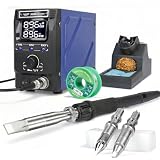
8. WEP 939D+ IV 300W – Best for Fast Heat-Up
WEP 939D+IV 300W Heavy Duty Soldering Iron for Stained Glass, Larger Electronic Projects, PID Temp. Controlled LED Solder Station with 3 Quick Change Tips, Detachable Handpiece, 3 Pre-set Channels
300W station 392-896F
Heats to 572F in 30s
3 preset channels
Pros
- 300W heavy-duty power
- Fast heat-up (572F in 30 seconds)
- PID temperature control for stability
- Cartridge-type tip design for easy replacement
- 3 preset channels
- ESD-safe with independent power switch
- Includes heat-resistant holder and lead-free solder
Cons
- Not suitable for circuit board / precision soldering
- Included tips are very large
- Tip sizes are proprietary - hard to find aftermarket replacements
- Settings menu can be unintuitive
- Grounding wire usage not documented
The WEP 939D+ IV shares its DNA with the YIHUA station above (both come from the same Guangzhou manufacturer), and the experience is similar with subtle differences. The headline is heat-up speed. The unit reaches 572F in 30 seconds, which is faster than most stained glass irons manage at full temperature.
The cartridge-style tip design swaps tips without screws, which is faster than the older barrel-collar systems. Three preset channels store frequently used temperatures, and the multi-function menu lets you lock the settings with a password so studio partners cannot accidentally change them.
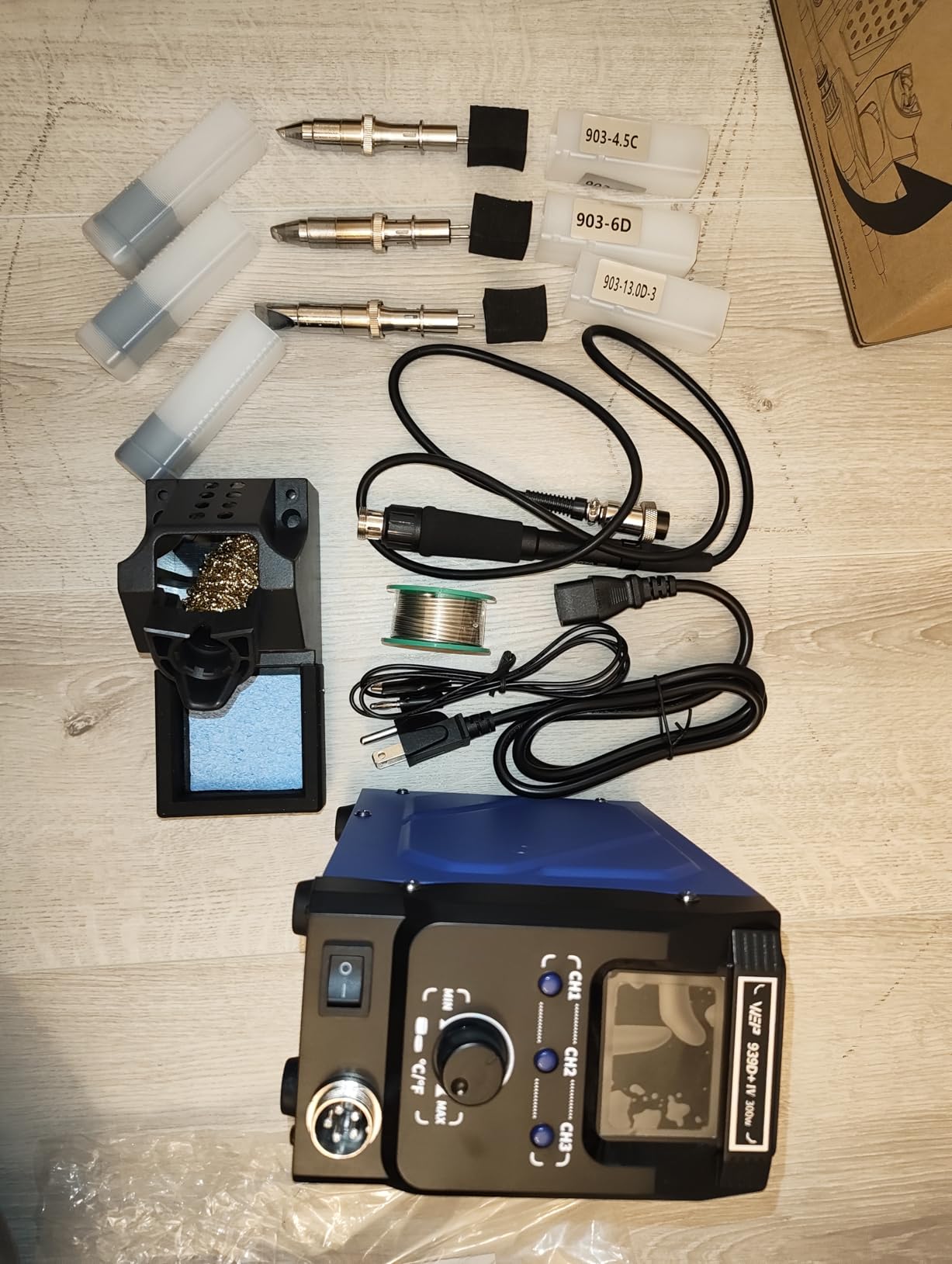
The build quality feels solid, with an all-metal heat-resistant holder and a clear LED display. The 1-year USA technical support with 24-hour assistance is a real plus for studios that cannot afford downtime.
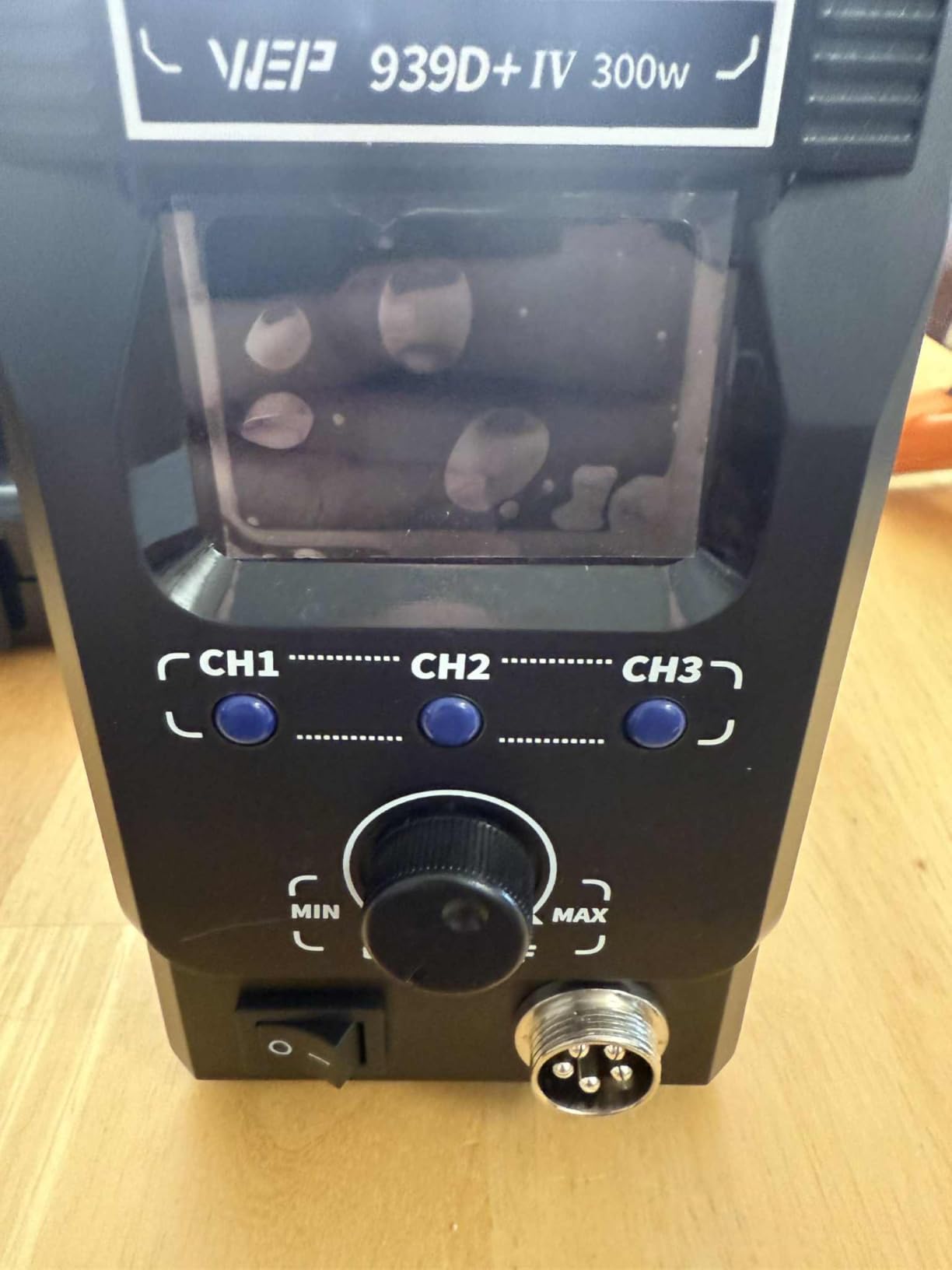
The honest trade-offs: included tips are very large, and the proprietary tip format means aftermarket replacements are harder to source than standard Weller or Hakko tips. The settings menu is feature-rich but takes time to learn, and the documentation does not cover the grounding wire fully.
Who this station is for
This is for someone who values heat-up speed and a cartridge-style tip system over the Weller ecosystem. Studios that run multiple stations or want fast tip swaps between projects will appreciate the design. If you already own Weller tips, factor in the cost of replacing them with the proprietary format.
What could trip you up
The proprietary tip format is the biggest long-term consideration. The settings menu also has a learning curve; budget an hour to read the manual and explore before your first project.
What to Look for in a Soldering Kit for Stained Glass?
Choosing a stained glass soldering kit comes down to five factors that matter more than brand recognition or feature lists. Here is what I look for in every iron before recommending it.
Wattage matters more than anything else
A 40W or 60W electronics iron cannot maintain the heat needed to flow solder smoothly along a stained glass seam. The iron cools faster than the solder can melt, leaving cold joints and frustration. Look for 80W minimum, with 100W to 300W being the sweet spot for studio work.
For comparison, a 60W pencil iron works for a 4-inch suncatcher but struggles on anything larger. A 100W iron handles full lamp panels comfortably, and a 200W to 300W station is what professional studios run because it recovers heat in under a second on long seams.
Temperature control separates toys from tools
Fixed-temperature irons work, but adjustable temperature control is the difference between a hobby iron and a serious tool. PID (Proportional-Integral-Derivative) temperature stabilization holds the tip within a few degrees of your set point, which matters when you switch between lead-free solder (which needs more heat) and 60/40 (which flows at lower temperatures).
Look for stations with preset channels if you switch between copper foil and lead came regularly. The ability to lock in three temperatures and switch with one button saves real time on a production line.
Tip style and replacement availability
For copper foil work, a 1/4 inch chisel tip is the workhorse. For lead came, you want a larger tip that can hold enough solder to flow along the H-shaped channel. For detail work, a small conical tip is essential.
Tip replacement cost and availability matter long-term. Weller, Hakko, and American Beauty have established tip ecosystems. Proprietary tip systems (like the WEP 939D+) save money upfront but lock you into the manufacturer’s replacement parts.
Stand, sponge, and tip cleaner
A safe iron stand is not optional. Look for a weighted base that will not tip when you set down a hot iron mid-project. Brass wool tip cleaners are gentler on tip plating than wet sponges and do not cause thermal shock.
Wet sponges are still useful for wiping excess solder, but brass wool is the daily driver for keeping tips tinned. Stations that include both give you the flexibility to choose.
Solder and flux are separate purchases for a reason
Most kits include a small amount of solder and flux to get you started, but you will buy more. For copper foil, 60/40 leaded solder (60% tin, 40% lead) is the standard because it flows at a low temperature and creates bright, smooth beads. Lead-free solder is healthier but harder to work with and produces duller beads.
Liquid flux is the traditional choice, but gel flux has become popular with beginners because it stays where you put it. Either works. The key is using enough flux that the solder flows freely; too little flux causes cold joints and burnt-looking residue.
Workshop ventilation is non-negotiable
Stained glass soldering produces fumes from flux and from leaded solder. A small fan pointed to draw fumes away from your face is the bare minimum. A proper fume extractor with a charcoal filter is what serious studios use.
Work in a ventilated room, position the fan to pull fumes away from your breathing zone, and consider a respirator if you solder for hours at a time. Lead-free solder reduces but does not eliminate the fumes, since the flux still off-gasses when heated.
Frequently Asked Questions
What wattage soldering iron do I need for stained glass?
You need at least 80 watts for stained glass work. A 40W or 60W electronics iron cools faster than the solder can melt on a copper foil seam, leading to cold joints. For full lamp panels and architectural work, 100W to 300W is the studio sweet spot. Anything under 80W is best reserved for small suncatchers and learning exercises.
What is the best soldering iron for stained glass beginners?
The Weller SPG80L 80W Marksman is our top pick for beginners because it has the wattage to do real stained glass work, comes with a 1/4 inch chisel tip that is the standard for copper foil seams, and ships from a brand with a long warranty. Beginners who want everything in one box should consider the YOTINO 43-Piece Kit or the MEETDUMPL 100W bundle instead.
Are Weller soldering irons good for stained glass?
Yes. Weller has been making soldering irons for over a century, and the SPG80L, WLIRPK8012A, and WLIRK6012A are all proven in stained glass studios. The Weller tip ecosystem means replacements are easy to find, and the brand’s warranty support is reliable. The main limitation is that most Weller stained glass irons have fixed temperature and no on/off switch.
What temperature should a soldering iron be for stained glass?
For 60/40 leaded solder on copper foil, set your iron between 700F and 800F. For lead-free solder, plan on 750F to 850F because lead-free alloys need more heat to flow. Lead came soldering runs slightly cooler at 650F to 750F to avoid burning the came. Always test on scrap glass before soldering your project.
Can you use lead-free solder for stained glass?
Yes, lead-free solder works for stained glass but it requires more heat, flows less smoothly, and produces duller beads than 60/40 leaded solder. The trade-off is healthier fumes and no lead contamination on finished pieces. If you choose lead-free, use a 100W or higher iron and a quality gel or liquid flux to help the solder flow.
What solder do you use for stained glass?
Most stained glass artists use 60/40 solder, which is 60 percent tin and 40 percent lead. It flows at a low temperature and creates bright, smooth beads. Some artists use 50/50 for a slightly duller finish. Lead-free options like Sn99/Cu1 are available for health-conscious buyers but require more heat and skill to work cleanly.
Final Verdict
After testing eight kits, the Weller SPG80L Marksman 80W remains my top pick for the best soldering kits for stained glass in 2026. It has the wattage, the tip style, and the brand reputation to grow with you as your projects get bigger.
If you want a single kit that covers cutting and soldering, the MEETDUMPL 100W bundle is the strongest all-in-one. For studios producing stained glass at volume, the YIHUA 939D+ IV 300W station is the upgrade that pays for itself in heat recovery and preset channels. Whichever iron you choose, invest in a proper stand, brass wool tip cleaner, and ventilation, and your iron will outlast every other tool in your studio.